


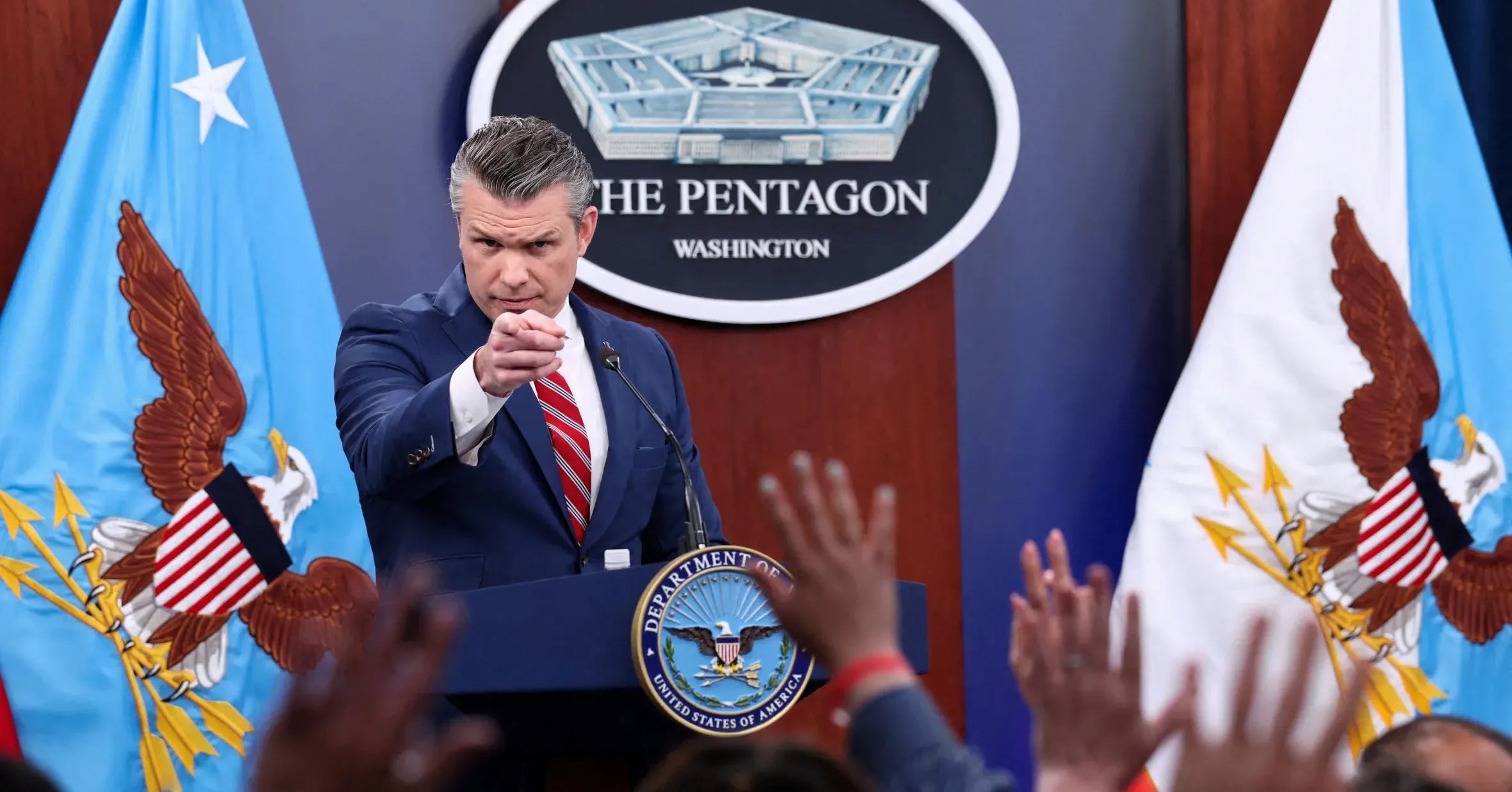
Defense Secretary Pete Hegseth said Tuesday that the ceasefire with Iran is “not over,” even after U.S. and Iranian forces exchanged fire around the Strait of Hormuz.
Reuters reported that Hegseth made the remarks during a Pentagon briefing as the U.S. military continued “Project Freedom,” a campaign to help merchant ships move through the strategic waterway. The U.S. military said it sank six Iranian small boats and intercepted Iranian cruise missiles and drones during the operation.
Gen. Dan Caine, chairman of the Joint Chiefs of Staff, said Iran’s recent attacks remained “below the threshold” for restarting major combat operations. That distinction is now central to the ceasefire: U.S. officials are arguing that defensive action and escort operations do not automatically mean the war has resumed.
The situation remains disputed. Iran has denied that IRGC vessels were hit and has accused the U.S. of escalating the crisis by forcing passage through restricted waters. Al Jazeera reported that some Iranian claims, including allegations about civilian casualties, had not been independently verified.
Subscribe free for daily political analysis they won’t broadcast. Join 110K+ readers →
The practical stakes are large. Reuters reported that more than 1,550 commercial vessels carrying about 22,500 mariners were stuck in the Gulf, unable to transit. The Strait of Hormuz carried about one-fifth of global oil and liquefied natural gas before the war, making any extended closure a risk for shipping, energy prices and allied economies.
For now, the Pentagon’s message is narrow but significant: the ceasefire still exists, but the boundary between enforcement, deterrence and renewed war is getting harder to maintain.
The next test is whether more commercial ships can pass through the strait without triggering a larger U.S.-Iran exchange.
Subscribe free for daily political analysis they won’t broadcast. Join 110K+ readers →