


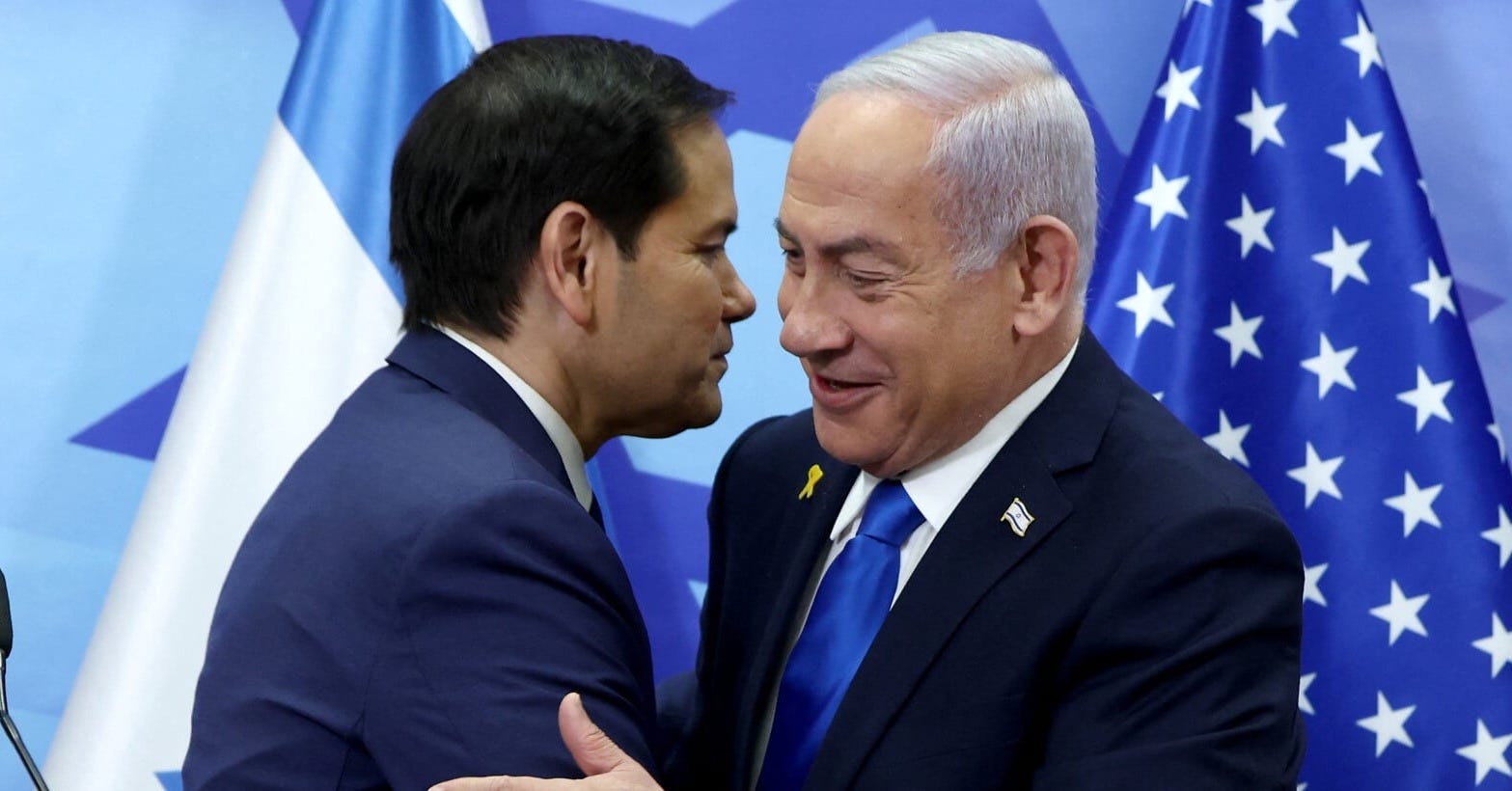
U.S. officials have opened rare direct talks between Israel and Lebanon in Washington, but the effort is unfolding as fighting continues on the ground.
Secretary of State Marco Rubio is hosting the meeting between the countries’ ambassadors, marking the first direct negotiations in decades and a potential turning point in the regional crisis, according to Reuters and Axios.
The talks come after weeks of war between Israel and Hezbollah that has killed more than 2,000 people in Lebanon and displaced over a million, while a separate U.S.–Iran ceasefire remains fragile, according to Reuters and Associated Press reporting.
But the core divide is immediate.
Lebanon is seeking a ceasefire, while Israel has refused to halt military operations unless Hezbollah is disarmed, and Israeli forces are still carrying out strikes and ground assaults during the negotiations.
“These talks are the start of a process,” Rubio said.
Subscribe free for daily political analysis they won’t broadcast. Join 110K+ readers →
The situation is further complicated by Hezbollah’s outright rejection of the talks and its statement that it will not be bound by any agreement reached, raising doubts about enforcement even if diplomats reach terms.
There is also an unresolved dispute over whether Lebanon was included in the U.S.–Iran ceasefire, with Iran and its allies saying it was, while Israel denies that interpretation.
That contradiction is fueling continued violence and undermining trust at the negotiating table.
What happens next depends on whether the U.S. can bridge the gap between a ceasefire-first approach and Israel’s demand for Hezbollah’s disarmament, as pressure builds to prevent the wider war from expanding.
For now, diplomacy and conflict are moving forward at the same time.
Download a FREE Pocket Constitution NOW →
