


On April 5, 2025, Americans did what we’ve always done when pushed to the edge: we took to the streets.
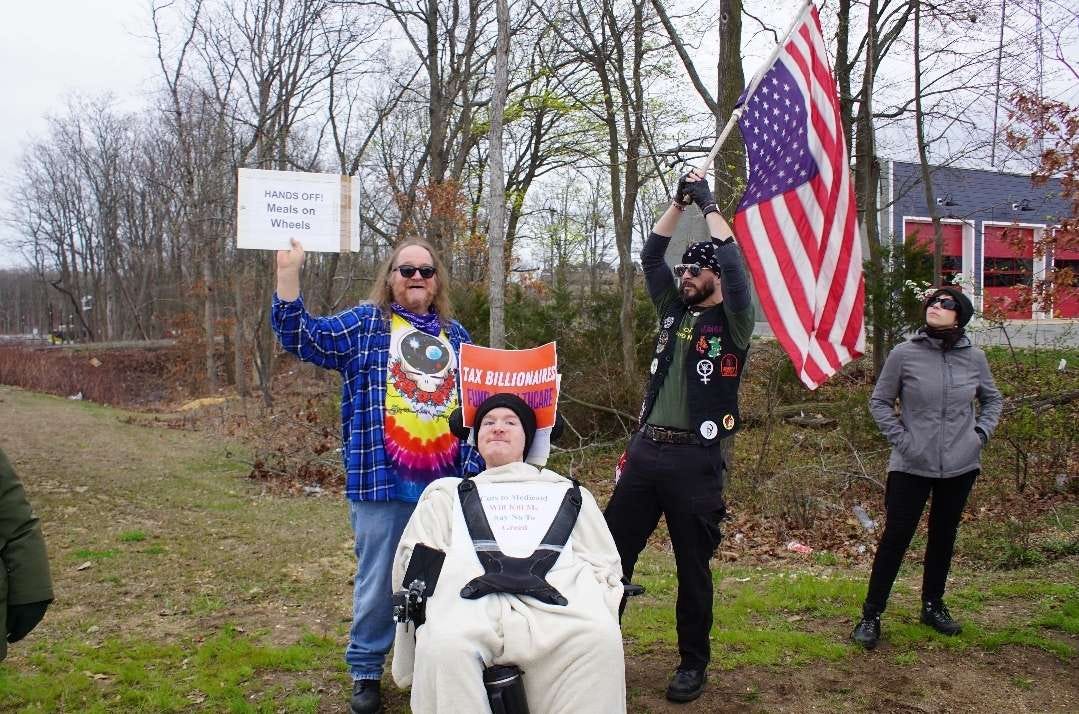
From Seattle to Savannah, Anchorage to Austin, over 5.2 million people joined more than 1,200 coordinated demonstrations under the banner of “Hands Off!”—a national protest against authoritarian overreach, political corruption, and the disturbing fusion of state power and private tech empire, embodied by the alliance between Donald Trump and Elon Musk.
Estimates vary: some sources report over 5.2 million participants, while others suggest the number may have reached the tens of millions. The decentralized nature of the protests made exact counts difficult, but the message was undeniable: this was no fringe uprising. This was the voice of a nation pushed to the edge.
It was beautiful. It was loud. It was necessary.

Independent News. Just $1/Week.
We just hit 10,000 subscribers—thank you! We’re offering full access to The Coffman Chronicle for just $1 a week ($52/year) to celebrate.
Get exclusive analysis and fearless reporting you won’t find in corporate media.
Support truth. Stay informed.
Washington, D.C., a woman named Camila stood at the base of the Capitol with her daughter on her shoulders. “I’m here so she won’t grow up thinking this is normal,” she said. “I’m tired of being afraid of what my country is becoming.” In Denver, protest signs lined the bridges. In Tallahassee, state workers quietly called in sick and marched with homemade banners. In rural counties, car caravans honked their resistance down main streets.
But as powerful as that day was, it’s not enough.
If all we do is show up when the headlines break, the system will wait us out—it always does. The question now isn’t whether we can mobilize; we’ve answered that. The question is: Can we stay mobilized long enough to win?
If the answer is yes, history is on our side.
The 3.5% Rule & What It Actually Means
Political scientist Erica Chenoweth studied resistance movements from 1900 to 2006 and found something staggering: every nonviolent campaign that actively engaged at least 3.5% of the population succeeded in achieving its goal—not most, but every single one.
Let’s break that down:
The U.S. population is about 330 million, and three and a half percent is 11.55 million people. That’s not a majority, but it’s more than enough to reshape systems, topple entrenched power, and redraw the political and moral landscape—if we act strategically and consistently.
And no, those 11.5 million people don’t need to show up at the same protest on the same day. The rule isn’t about one moment of eruption. It’s about ongoing, visible, organized noncooperation over time.
Read more about the 3.5% theory here:

Note: This article is more than 45 days old and now lives in our archive. Please consider becoming a paid subscriber for full archive access, exclusive content, and occasional early content.
From Moment to Movement
The April 5 protests were a moment, an exhilarating flash of national energy. But moments fade. Movements don’t. Movements build, stretch, adapt, and survive even when the media stops watching.
To move from protest to pressure, we must:
Clarify our demands: What exactly are we fighting for? Specific legislation? Protection of direct democracy? Real accountability?
Diversify our tactics: Resistance takes many forms, including boycotts, sickouts, sit-ins, digital disruption, and mutual aid.
Organize locally and coordinate nationally: Top-down movements are vulnerable. Local pods and horizontal networks are durable.
Stay visible and relentless: Weekly actions. Rotating targets. Escalating strategy.
What Nonviolence Looks Like in Action
Nonviolence is not passivity. It’s strategic confrontation.
When bus riders in Montgomery boycotted the transit system for 381 days, they were executing an economic siege.
Students who filled lunch counters in Greensboro and Nashville weren’t “expressing themselves.” They were staging direct resistance to injustice.
You don’t need weapons to shake a regime. You need withdrawal of consent.
Remember who we are fighting for.
Power Doesn’t Fear Outrage. It Fears Persistence
Authoritarians expect protests. They plan for them. They wait them out.
What they can’t plan for is discipline.
Workers who strike and don’t return.
Consumers who boycott and divest.
Students who walk out again and again.
Communities who stop cooperating with unjust laws.
Persistence breaks power.
Three Steps You Can Take This Week
You don’t need to be an expert. You just need to start.
Join or form a local organizing group. Start with five people. Meet weekly. Choose a pressure point. Connect with national efforts.
Pick a pressure point—a school board, a utility, a local company enabling injustice, a state bill—something clear and winnable.
Plan a nonviolent action. Not next year. Not next month. This week. A protest, a phone zap, a teach-in, a disruption. Just keep going.
Need help? Start here:
The Moveable Middle & the Moral Imagination
We win when we grow. And we grow when we speak to the middle, not by softening our message but by expanding the frame, not by changing minds but by softening hearts.
Most people aren’t pro-authoritarian. They’re overwhelmed. Disconnected. Unconvinced that change is possible.
That’s why stories, art, and culture matter. They stir the soul. They unlock imagination.
Because when people see 11 million others refusing to back down, they begin to believe. And once they believe, they join.
What Happens If We Don’t?
If we let April 5 fade without follow-through, we send the message that we’ll settle for the symbolism of protest over the substance of transformation.
We confirm the status quo’s deepest hope: that we’ll get loud, then quiet.
But if we stay mobilized—not just in spirit but in structure—then we can do what others before us have done: make change inevitable.
Final Word: From 5.2 Million to 11 Million
This isn’t about being loud. It’s about being unshakable.
The system doesn’t fear a majority. It fears a relentless, organized 3.5% who refuse to stop.
We don’t need permission. We don’t need perfection. We need to move together, now, and without pause.
April 5 was a signal flare. The country is awake.
Now it’s time to act.
Because 5.2 million marchers are a message.
But 11 million movers?
That’s a revolution.
We just hit 10,000 subscribers—thank you! We’re offering full access to The Coffman Chronicle for just $1 a week ($52/year) to celebrate.
Get exclusive analysis and fearless reporting you won’t find in corporate media.
Bibliography
Chenoweth, Erica. The Success of Nonviolent Civil Resistance. TEDxBoulder. 2013.
BBC Future. “The ‘3.5% Rule’: How a Small Minority Can Change the World.” May 13, 2019.
The Guardian. “More Than 1,000 ‘Hands Off’ Anti-Trump Protests Hit Cities Across the US.” April 5, 2025.
CBS News. “In Photos: ‘Hands Off!’ Protesters Rally Against Trump Across the U.S.” April 5, 2025.
The Verge. “More Than 1,200 Rallies Worldwide Protest Trump and Musk.” April 5, 2025.
Common Dreams. “Millions Rally at Over 1,300 ‘Hands Off!’ Protests Across the U.S.” April 5, 2025.
Axios. “'Hands Off!' Protests Draw Massive Crowds, Surpassing Organizers’ Expectations.” April 5, 2025.
NPR. “Thousands Flood Streets in Nationwide ‘Hands Off!’ Demonstrations.” April 5, 2025.
Economic protests are the most effective. Fascists need our money to fund their hate machine. Starve them. Whether a single “no buy day” or singling out companies that support fascists and fascism, it gets their attention and reduces their funding. We need a weekly or monthly no buy day to get them to take notice.
I pledged not making purchases on the 15th and 30th of every month for the next 3.5 years.