


Justice at Gunpoint
“What do you mean, he's gone?”
The preschool staff in Beaverton, Oregon, were confused when a father failed to return after dropping off his son. Minutes earlier, he'd smiled, kissed his boy’s head, and promised to bring home ice cream. What no one saw coming were the ICE agents waiting in an unmarked SUV down the block.
They shattered his car window. They didn’t identify themselves. They didn’t have a warrant.
He was gone before morning snack.
This wasn’t an isolated incident. It’s part of a chilling pattern playing out across the country, one that’s reached a new legal breaking point. Immigrants are being arrested not in back alleys or at border checkpoints, but inside our courtrooms after their cases are heard, sometimes even after they win.
Want to Know Your Rights?
Download a free digital copy of the U.S. Constitution—the same document Trump is trying to bulldoze. Learn exactly what he's breaking… and how to fight back.
📬 Stay Informed. Stay Loud.
Subscribe to The Coffman Chronicle for no-BS political analysis, action guides, and weekly truth bombs you won’t get from corporate media.
This is not enforcement. This is entrapment with a badge.
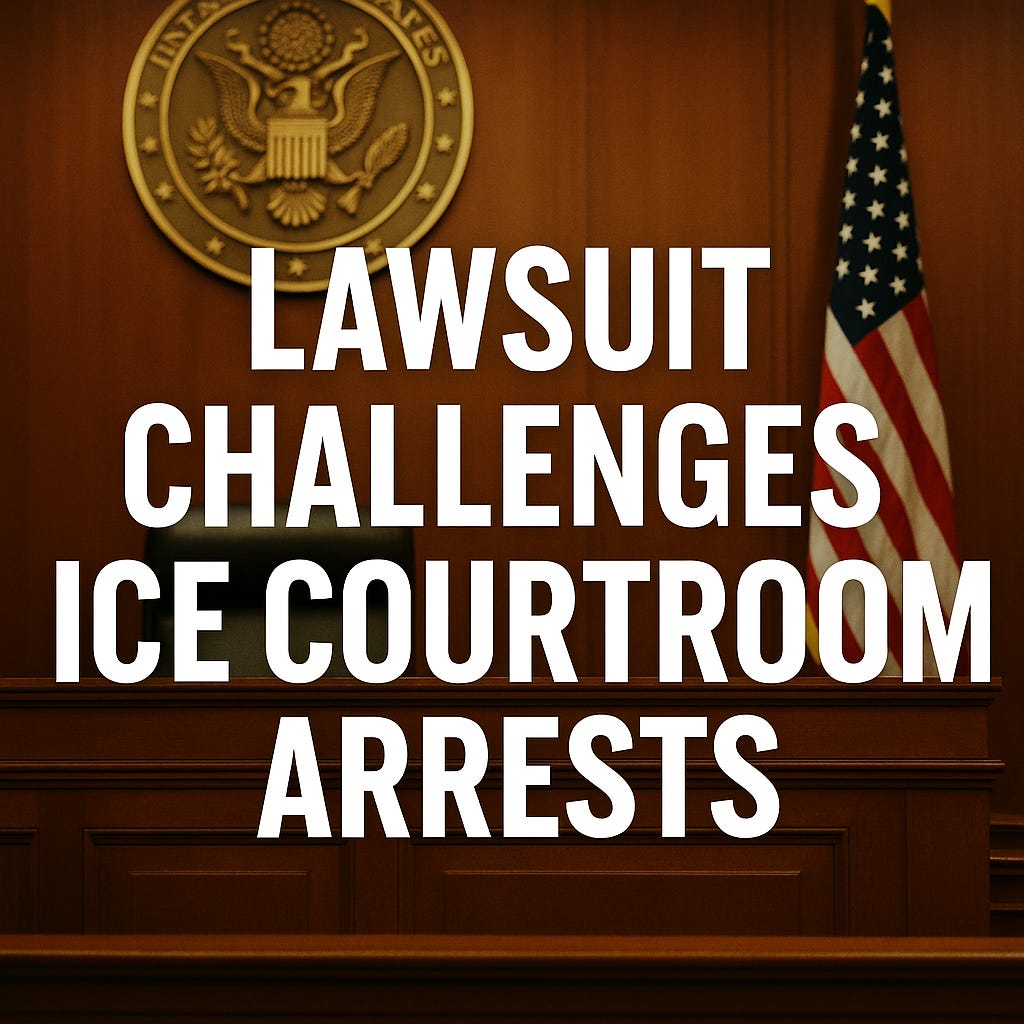
In Washington, D.C., a new class-action lawsuit is forcing the nation to confront a question it has long tried to avoid: Can justice exist in a courtroom when ICE agents are waiting at the door?
The plaintiffs include asylum seekers from Venezuela, Guinea, Liberia, Cuba, and Chechnya. Some had their cases dismissed. Some were awaiting relief. All were snatched by ICE moments after leaving immigration court, often after a judge explicitly decided they should not be deported. Now they’re suing, and rightly so.
Their case argues that these ambush arrests violate their Fifth Amendment rights, gut due process, and weaponize the very spaces Americans are taught to believe are safe, impartial, and fair.
But this isn’t just about immigration. It’s about the kind of country we’re becoming.
Because if the government wins—if ICE is allowed to keep doing this—it won’t stop at immigration courts. It never does. If the courthouse becomes an extension of the jail, what’s left to protect anyone?
We are watching a democracy test its own boundaries, and if we don’t pay attention now, we’ll find ourselves applauding the rule of law in buildings that no longer deliver it.
This lawsuit could become one of the most important civil rights cases of the decade. However, few Americans are even aware that it’s happening.
Let’s fix that.
The Lawsuit at a Glance
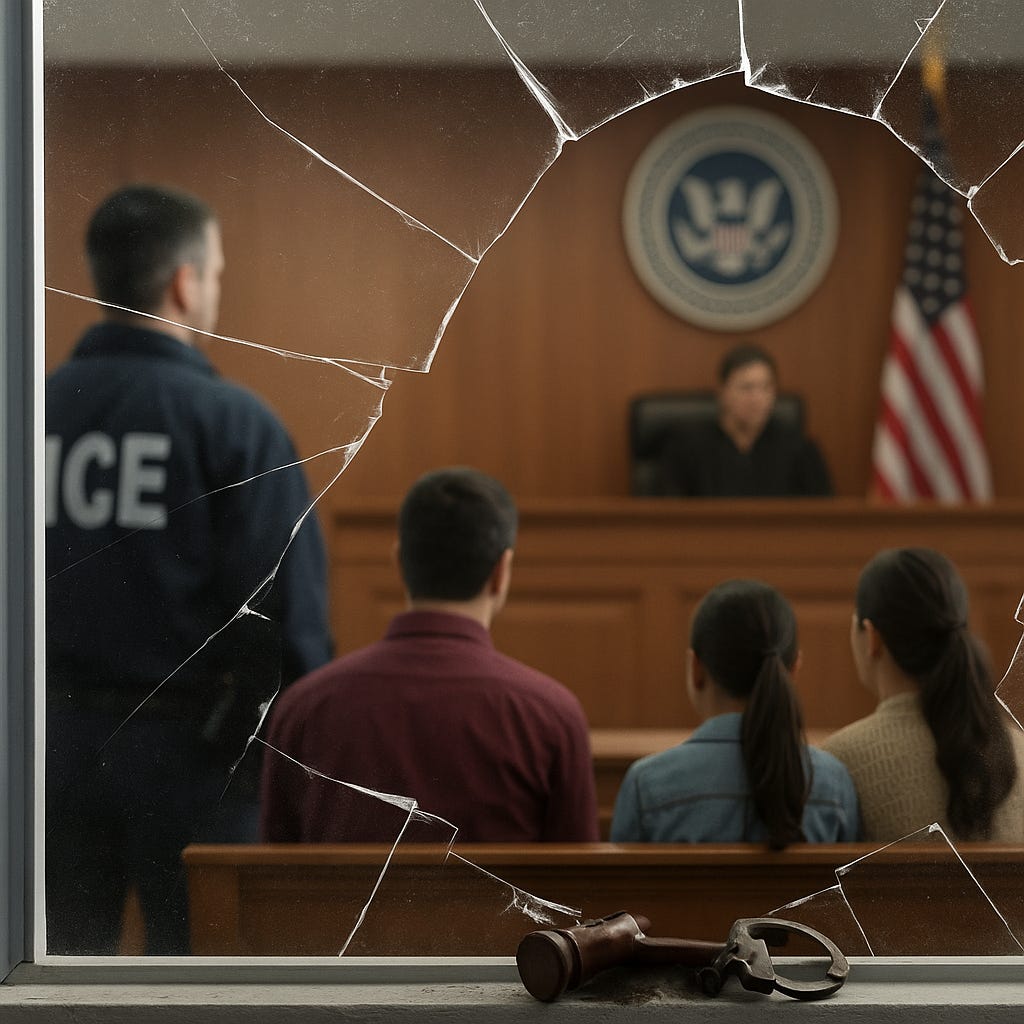
On July 16, 2025, in a federal courtroom in Washington, D.C., a coalition of immigrants and legal advocacy groups filed a class-action lawsuit that could reshape the future of immigration enforcement, and possibly the integrity of the justice system itself.
The defendants:
ICE (U.S. Immigration and Customs Enforcement)
The Department of Homeland Security (DHS)
The Department of Justice (DOJ)
The plaintiffs:
Twelve immigrants from Venezuela, Cuba, Chechnya, Guinea, Liberia, and Ecuador
Backed by Democracy Forward, NIJC, American Gateways, and others
The complaint details a disturbing trend: ICE agents are targeting people at immigration court hearings, often after their cases have been dismissed or closed. Sometimes, even after they’ve been granted relief.
The lawsuit charges that this practice:
Violates the Fifth Amendment right to due process
Deters immigrants from participating in legal proceedings
Turns courts into ambush zones, eroding judicial integrity
And the fallout is already visible. Immigration attorneys report a rise in no-shows as clients fear arrest and deportation. Some skip court and are deported in absentia, not because they lost, but because they were too afraid to attend.
When the courtroom becomes a trap, justice loses its most essential tool: voluntary participation.
Keren Zwick of the NIJC put it bluntly:
“If the courtroom is no longer a neutral space—if showing up to plead your case leads to an ambush—then we no longer have a justice system. We have a performance.”
DHS defends the practice, calling it “efficient” and “safe.” But efficiency doesn’t justify violating fundamental rights.
This case isn’t just about immigration. It’s about whether the law still has meaning when enforcement can override it with the use of handcuffs.
The Legal Battlefield: What’s at Stake
At its core, this case is about due process—the guarantee that every person, regardless of citizenship, has the right to fair treatment under the law.
But what happens when ICE arrests someone the moment they leave a courtroom, even after a judge rules in their favor?
That’s not due process. It’s entrapment.
The plaintiffs are invoking something older than ICE itself: the common-law privilege against courthouse arrests. This principle, dating back to English law, has long barred civil arrests in or near courthouses, allowing people to access justice safely.
This isn’t theory. In State of New York v. ICE (2020), Judge Jed Rakoff wrote:
“Civil arrests of those attending court deter participation... and are antithetical to the court’s function.”
ICE argues that arresting people at court is “efficient”, but that’s exactly what makes it so dangerous. Courts become predictable hunting grounds, not legal forums.
And if winning your case doesn’t protect you, then justice becomes a theater. The gavel means nothing if it’s silenced by cuffs.

The Precedent – What Courts Have Already Said
Courts across the country have already rejected ICE’s tactics.
In New York (2020), Judge Rakoff blocked ICE arrests at courthouses, citing centuries of common law.
In Massachusetts, DA Rachael Rollins sued ICE for disrupting prosecutions and won a temporary ban.
In Oregon and New Jersey, court orders now prohibit ICE from making arrests near courthouses unless they have a warrant.
Legal experts agree: courts must be safe zones. If ICE turns them into snare traps, people will flee—not just immigrants, but witnesses, survivors, and even victims of crime.
This lawsuit doesn’t ask the court to create new protections.
It asks the court to reinstate protections ICE has already bulldozed.
If Plaintiffs Win: Justice Resurrected
A ruling in favor of the plaintiffs could:
Ban civil ICE arrests in or around immigration courts
Reinforce the Fifth Amendment and judicial independence
Encourage immigrants to attend court without fear
This would restore trust, not just in immigration law, but in the court system as a whole.
It would send a powerful message:
You can follow the law, and that still matters.
It would also establish a legal precedent to protect other civil spaces, such as schools, shelters, and hospitals, from becoming hunting grounds for state power.
This is more than legal reform. It’s a moral reset.
If ICE Wins: Justice on Trial
If ICE wins, the damage will be immediate and irreversible.
More immigrants will vanish rather than risk court.
Legal victories will mean nothing; judges’ rulings will be overruled by armed agents.
The courtroom will become a stage, not a sanctuary.
ICE refers to it as “civil enforcement.” But when people flee justice, that’s not enforcement. That’s fear policy.
A win would expand ICE's reach into other civic spaces. It would signal that no legal victory is safe from executive override.
And once the courts stop protecting people, they cease to be courts.
Bigger Picture: Courts as the Last Firewall
This isn’t just about immigration; it’s about the balance of power.
In the 1930s, German courts gradually surrendered to the executive, not overnight. Quietly. Legally.
Judges began ruling in favor of the regime. Protective custody replaced trials.
Courtrooms legitimized oppression, not with violence, but with procedure.
Today, ICE arrests immigrants outside court under “civil enforcement.”
The names have changed. The pattern has not.
The horror didn’t begin with gas chambers. It began when courts became stamps, not shields.
If the judiciary doesn’t draw the line here, there may be no line left to draw.
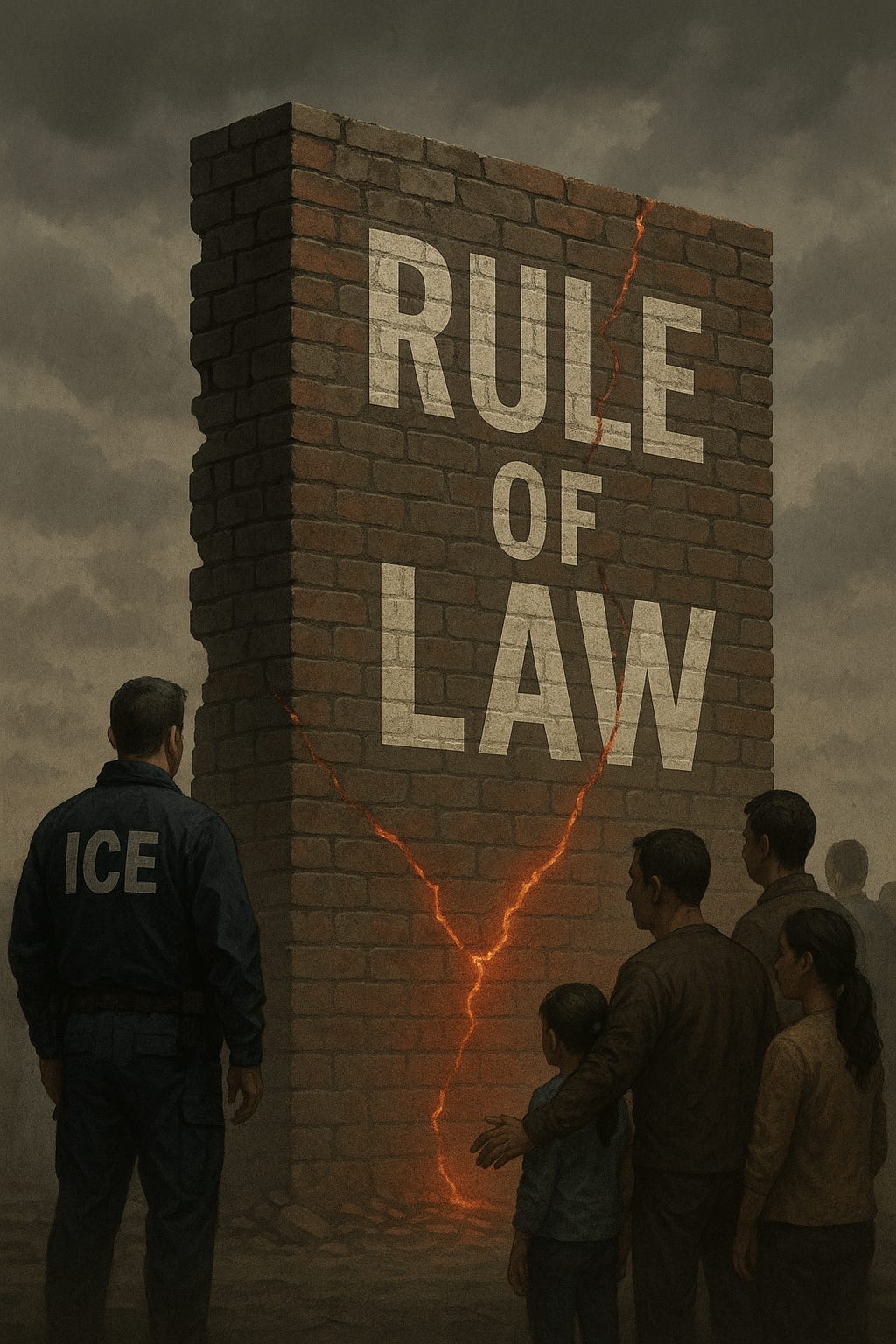
The courts are the firewall. This case will reveal whether that wall still stands.
What You Can Do
This lawsuit matters, but what we do next matters more.
Contact Your Representatives
Demand legislation to ban civil immigration arrests at courts.
Capitol switchboard: (202) 224-3121
Ask your rep: Support federal court protection for immigrants. Stop ICE from weaponizing justice.
Support the Legal Front Lines:
Donate or volunteer with:
Push Local Policy
Advocate for state-level protections:
Court rules requiring warrants
Local ordinances defending legal space neutrality
Public court system commitments to access without fear
Educate and Share
Spread this story. Link this article. Host discussions. Help people understand what’s at stake.
Because if ICE can override judges today, the next line to fall could be yours.
The courtroom must be a firewall. Let’s fight like hell to make sure it stays that way.
Stay Informed. Stay Loud.
Subscribe to The Coffman Chronicle for no-BS political analysis, action guides, and weekly truth bombs you won’t get from corporate media.
Bibliography:
State of New York v. U.S. Immigration & Customs Enforcement, No. 19‑CV‑8876 (JSR)
(S.D.N.Y. June 10, 2020). Opinion & nationwide injunction.
Ryan v. U.S. Immigration & Customs Enforcement, No. 1:19‑CV‑11726 (D. Mass. June 20, 2019). Preliminary Injunction banning ICE courthouse arrests.
Martha Bellisle, “Homeland security officials defend immigration court arrests after being sued,” AP News, July 17, 2025.
“Federal lawsuit seeks to stop ICE agents from arresting people at immigration courts,” AP News, July 17, 2025.
“ICE Out of Courts in New York! A Policy Overview,” Immigrant Defense Project, Oct. 2020.
“Federal Judge Rules ICE Can No Longer Make Civil Arrests In Massachusetts Courts,” WGBH News, June 20, 2019.
Müller, Ingo. Hitler’s Justice: The Courts of the Third Reich. Cambridge, MA: Harvard University Press, 1991.
so very wrong (quota driven mentality, like a used car salesmen). thanks for keep it in the news.
This can happen to YOU. To anyone. If ICE can take actions like this, no one is safe - dissent is all that is necessary for "accidental" deportation. And that's the point - the fear is the point. This is how authoritarian states get started.