


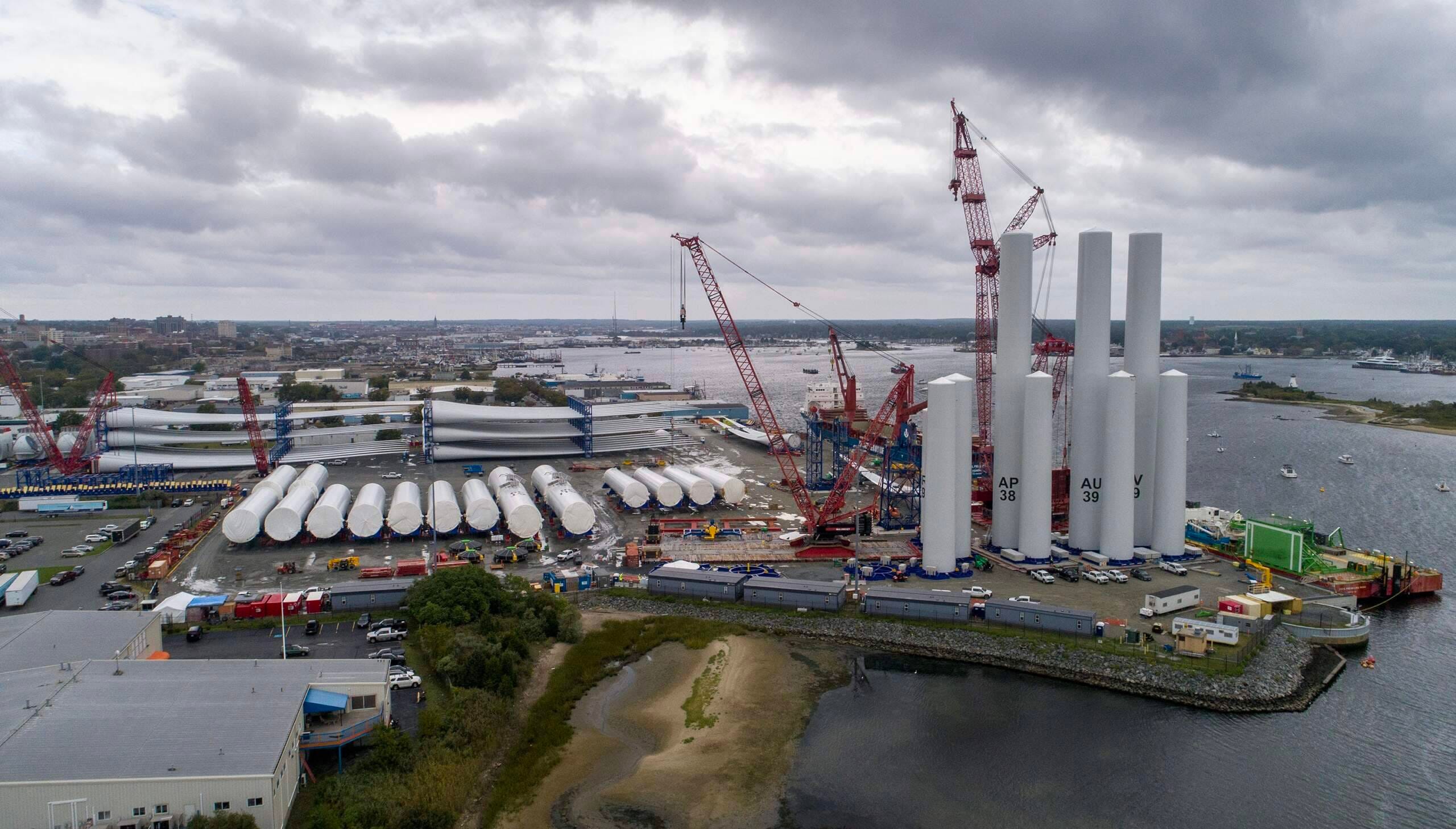
In Washington, they call it a “pause,” a “review,” a temporary reassessment of priorities. The language is sterile, procedural, almost comforting, like someone telling you not to worry while quietly turning off the lights.
But on the docks, in the ports, and across the supply chains that were supposed to power the next decade of American energy jobs, there’s a different word for it: stop work.
The Trump administration’s decision to freeze federal approvals for offshore wind projects and to pause construction activity under the banner of review has been described as cautious governance. According to them, this is a prudent step back, a chance to “take another look.”
That framing collapses the moment it meets reality.
Infrastructure doesn’t survive uncertainty. Financing doesn’t wait politely. Workers don’t get paid on intentions. When the federal government deliberately injects ambiguity into a capital-intensive industry, the effect is immediate and brutal. Projects stall, contracts freeze, insurers balk, lenders pull back, and jobs evaporate long before any formal decision is announced.
This is not an accident. It’s a method.
No law was passed. No vote was taken. No debate was held. There was no moment where elected officials stood up and said they were willing to sacrifice jobs, port investments, and long-term energy stability in exchange for political optics. Instead, power was exercised the modern way—quietly, administratively, and with just enough distance to deny responsibility for the fallout.
In Washington, it’s called a review. Everywhere else, it’s a shutdown by another name.
Want to Know Your Rights?
Download a free digital copy of the U.S. Constitution, the same document Trump is trying to bulldoze. Learn exactly what he’s breaking, and how to fight back.
80,000+ strong — and counting.
This holiday, become a paid subscriber for just $1 a week and help us keep the truth alive.
Join The Coffman Chronicle — $1/Week
The “Review” That Stops Work
To understand what’s happening, you have to strip away the euphemisms.
A federal “review” of offshore wind doesn’t mean analysts sitting around a table re-running spreadsheets. It means agencies are instructed to pause approvals, permits, leases, and related federal actions until further notice. In industries that depend on federal sign-off to move steel, lay cable, or secure financing, that pause functions as a hard stop, whether the administration admits it or not.
This is how regulatory sabotage works in practice.
Large-scale infrastructure projects don’t operate on vibes or press releases. They run on synchronized timelines. Permitting, financing, insurance, labor contracts, manufacturing schedules, and port availability all move together. When one link freezes—especially the federal one—the entire chain locks up.
Banks don’t finance projects with uncertain regulatory futures. Insurers don’t underwrite work that might be retroactively invalidated. Contractors don’t mobilize crews when stop-work orders can drop at any moment. Even if a project is technically allowed to continue, the risk profile changes overnight. And when risk spikes, money vanishes.
That’s why the word “temporary” does so much damage here. A 90-day pause sounds harmless on paper. In reality, it’s long enough to blow up construction schedules, trigger contractual penalties, and permanently derail projects whose margins were already thin. Infrastructure momentum, once lost, is not easily regained.
Administrations know this. They rely on it.
This tactic isn’t new. Regulatory freezes have long been used to kill policies without owning the consequences. Instead of openly canceling projects and facing the political backlash that would follow, the government creates a fog of uncertainty and lets the market do the dirty work.
When layoffs happen, officials can shrug and point to “business decisions.” When projects collapse, they can blame investors for losing confidence. When communities feel the pain, there’s no single vote or bill to hold accountable. There’s just a paper trail of memos and reviews.
That’s not governance. It’s abdication with plausible deniability.
This is particularly effective in sectors like offshore wind, where upfront costs are high, timelines are long, and federal involvement is unavoidable. You don’t have to oppose the industry outright to cripple it. You just have to slow it down enough that it collapses under its own weight.
That is precisely what’s happening now.
The administration’s defenders insist this is merely a pause for due diligence. However, diligence implies a destination, a point at which the review ends and decisions resume. What’s been offered instead is open-ended uncertainty, paired with stop-work authority that sends the clearest signal possible to the market: don’t move.
And when Washington tells an industry not to move, workers are the first to feel it.
When Washington Pauses, Paychecks Stop
Washington can argue about words all it wants. Pause. Review. Temporary reassessment. But paychecks don’t run on euphemisms.
They run on hours worked, shifts filled, and contracts honored.
When the federal government signals that work might not be allowed to continue, the first thing that happens is not a policy debate. It’s a phone call, a supervisor telling a crew to stand down, a contractor explaining that hours are being cut “until we know more,” a worker looking at the calendar and doing the math—rent due, truck payment coming, groceries already more expensive than they were last month.
That’s what a stop-work order looks like at the kitchen table.
You don’t need an official shutdown notice to shut down a job. You just need enough uncertainty that no one is willing to take the risk of moving forward. That’s exactly what a federal “review” delivers.
In infrastructure, uncertainty is lethal. When approvals freeze, so does the money. When money freezes, work stops. When work stops, the damage cascades outward, far beyond whatever site or project Washington is pretending not to target.
A dockworker doesn’t get paid for “future potential.” An electrician doesn’t bill for “pending clarity.” A welder can’t tell the landlord that the government is still thinking about it.
So when the administration insists this is merely procedural, it’s asking working families to absorb the cost of its indecision immediately. It isn’t asking executives or policymakers. The people who feel it first are the ones whose jobs depend on continuity, who planned their year around steady work, who believed—reasonably—that once a project was approved and underway, the government wouldn’t pull the rug out halfway through.
Because a “pause” doesn’t just delay today’s work. It poisons tomorrow’s. Contractors stop hiring because they don’t know if the work will still exist next month. Training programs slow down. Apprenticeships stall. Local suppliers cancel orders. Ports delay upgrades. Entire communities that were told to expect investment are left holding the bill for preparation costs with no timeline for relief.
None of that shows up in a press release.
This is the quiet cruelty of bureaucratic power. The damage is real, but it’s diffuse, spread across hundreds of households rather than concentrated in a single dramatic announcement. What is easy to ignore in Washington is impossible to forget when you’re sitting at a kitchen table trying to explain to your kids why summer plans just got canceled.
There’s a reason administrations favor this approach. It lets them deny intent while enjoying the outcome. They can claim no one ordered layoffs, even as their actions make layoffs inevitable. They can insist no jobs were “cut,” even as jobs quietly disappear because the work they depended on has been frozen in place.
That’s not neutrality. That’s governance by attrition.
It reveals the real trade being made here: political comfort in Washington in exchange for economic instability everywhere else. It is a decision to protect talking points at the expense of people who build things for a living.
Who Pays When Washington Hits Pause
When Washington pauses, it doesn’t pause evenly.
The damage doesn’t spread upward to cabinet offices or policy staff. It moves downward—fast—into ports, towns, and households that were told to prepare for work that is now frozen in place. And unlike a press conference, those consequences don’t come with talking points or expiration dates.
They show up as layoffs, lost hours, and plans quietly abandoned.
Offshore wind wasn’t just an environmental project. It was an industrial jobs pipeline, deliberately built around port redevelopment, union labor, and domestic manufacturing. States and cities didn’t bet on it casually. They spent years upgrading ports, expanding training programs, and recruiting skilled trades under the assumption that once projects were approved, the work would actually happen.
That assumption no longer holds.
Ports that expanded capacity are now stuck with underused infrastructure. Training pipelines slow down when apprentices don’t see jobs waiting on the other side. Local suppliers, such as steel fabricators, transport companies, and equipment vendors, cancel orders and shelve hiring plans because demand just evaporated.
Workers who were counting on months—or years—of steady employment are now pushed back into uncertainty. Some will find other jobs. Others won’t. Many will be forced to leave specialized fields altogether because mortgage lenders, grocery stores, and utility companies don’t accept “pending federal review” as a form of payment.
This is where policy choices collide with the kitchen table.
The administration can insist that no one ordered layoffs. That’s technically true, but functionally meaningless. When federal approvals stop, layoffs happen anyway. Contractors don’t keep crews on payroll out of goodwill. Ports don’t run deficits indefinitely. Local governments don’t keep borrowing for projects that may never restart.
So the costs shift—predictably—onto workers, towns, and families that were told this transition would include them.
There’s a deeper economic trap here. Once work disappears, it doesn’t automatically return when the pause ends. Skilled labor disperses. Supply chains reconfigure. Investment flows elsewhere. Even a temporary freeze can permanently hollow out local capacity.
Economists call this “path dependence.” Workers call it losing the ladder they were halfway up.
Meanwhile, households feel the impact in quieter ways. Reduced hours mean tighter budgets. Tight budgets mean delayed repairs, canceled plans, and mounting debt. When entire regions absorb that shock at once, the ripple effects spread to restaurants, retail, and local tax bases. School districts feel it. Municipal budgets feel it. Everyone downstream pays.
And still, Washington insists this is just a review.
That insistence ignores a fundamental truth. Economic damage doesn’t wait for final decisions. It arrives the moment confidence collapses.
Because when the federal government hits pause, it isn’t pausing its own comfort. It’s pausing someone else’s life.
The Energy Bill Always Comes Due
The damage from a federal freeze doesn’t stop at the job site. It doesn’t even stop at the port. Eventually, it shows up somewhere every household understands: the monthly energy bill.
Infrastructure delays always cost consumers—maybe not immediately or loudly—but predictably.
Energy systems are built years in advance. Capacity has to be planned, permitted, financed, constructed, and integrated long before demand peaks. When that process is interrupted, the system doesn’t magically adjust. It compensates by leaning harder on whatever already exists, usually older, more expensive, and less flexible sources of power.
That’s how a “temporary review” today turns into higher prices tomorrow.
Offshore wind was never supposed to replace everything overnight. It was meant to add capacity, diversify supply, and reduce exposure to fuel price volatility. When you freeze that expansion, you don’t preserve the status quo. You make it more fragile.
Utilities still have to meet demand. When new generation is delayed or canceled, they rely more heavily on existing sources tied to fuel markets, maintenance backlogs, and aging infrastructure. Consumers then pay twice: once through higher direct energy costs, and again through rate increases meant to cover system strain.
Delays also lock in costs. Restarting stalled projects is never clean. Financing terms worsen, construction costs rise, and supply contracts are renegotiated at higher prices. Those added costs don’t disappear. They get baked into rates households will be paying years from now.
This isn’t saving money. It’s deferring the bill and adding interest.
Once again, that burden isn’t shared equally. Higher-income households absorb rising energy costs as an inconvenience. Lower- and middle-income families feel it as a crisis, one more fixed expense squeezing groceries, rent, and medical care.
All of this flows from the same choice: delay instead of decision.
If the administration believed offshore wind was a bad investment, it could make that case openly. What it has chosen instead is the most expensive option of all—uncertainty.
Why? Because uncertainty doesn’t freeze demand. It just freezes preparation.
The Pattern, Not the Project
If this were just about offshore wind, it would already be serious enough. However, the greater danger here isn’t the fate of one industry. It’s the method being used to decide its fate.
Instead of legislating, administrations increasingly govern through delay. Instead of making choices, they commission reviews. Instead of owning outcomes, they let uncertainty do the work for them.
A canceled program has authors. A failed vote has names attached. A “review,” by contrast, floats above responsibility. It can last weeks or years. It can quietly starve an initiative until the market abandons it.
This is governance without fingerprints.
Once “review” is accepted as neutral—even when it predictably causes harm—it becomes a universal tool. Any project can be paused. Any industry can be reshaped. And the public is left arguing over labels while damage accumulates.
That should concern everyone.
Today it’s offshore wind. Tomorrow it could be infrastructure, disaster response, or health care delivery. If livelihoods can be paused indefinitely without accountability, trust collapses.
You Can’t Feed a Family on a “Review”
In Washington, this will be remembered as a procedural moment. Elsewhere, it will be remembered as something else entirely, by workers who were told the job was real until it wasn’t, by communities that invested in projects that vanished into bureaucratic limbo, and by families who learned the hard way that stability can be paused without notice.
A review doesn’t show up on a résumé. It doesn’t cover rent. It doesn’t keep the lights on.
This isn’t just an energy dispute. It’s a warning about how power is being exercised—quietly, administratively, and without accountability.
In Washington, it will always be called a review.
At the kitchen table, it will always be called something else.
This story didn’t vanish because it wasn’t real. It disappeared because it was quiet, procedural, and inconvenient to power.
The Coffman Chronicle follows what happens after the press release, when “reviews” turn into layoffs and Washington’s pauses hit the kitchen table. If you want reporting that tracks consequences rather than just talking points, become a paid subscriber and help keep this work independent.
Because accountability doesn’t happen by accident
Sources:
“The Trump Administration Protects U.S. National Security by Pausing Offshore Wind Leases.” U.S. Department of the Interior, December 22, 2025.
Temporary Withdrawal of All Areas on the Outer Continental Shelf from Offshore Wind Leasing and Review of the Federal Government’s Leasing and Permitting Practices for Wind Projects. The White House, January 20, 2025.
“Trump order halts offshore wind projects for at least 90 days.” AP News, December 23, 2025.
“US freezes five offshore wind projects, sending shares lower.” Reuters, December 22, 2025.
“Trump administration pauses 5 offshore wind projects on the East Coast, citing security concerns.” PBS, December 22, 2025.
“Trump administration halts all large-scale offshore wind projects under construction in US.” Utility Dive, December 22, 2025.
“Trump administration suspends Vineyard Wind and 4 other offshore wind projects.” The New Bedford Light, December 22, 2025.
“UPDATED: President Trump’s Administration Orders Pause to Offshore Wind Projects.” GoLocalProv, December 22, 2025.
“Federal judge throws out Trump order blocking development of wind energy.” AP News, December 9, 2025.
The AI bubble is the least our worries. Dollar debasement is gathering an unbelievable head of steam.. The Buffett indicator is off
the rails. We have no clue if government statistics are anything more than guesswork. We are in so deep, it will take an absolute miracle. Even the muskrat said we'll need a universal basic income to keep our heads above water.
Every cut translates into cascade of loses downstream. The quasi domino effect will cause businesses and retailers to pull back as demand for goods and services falls. Not looking forward to the t-Rump-cession. Especially when the AI bubble pops.