


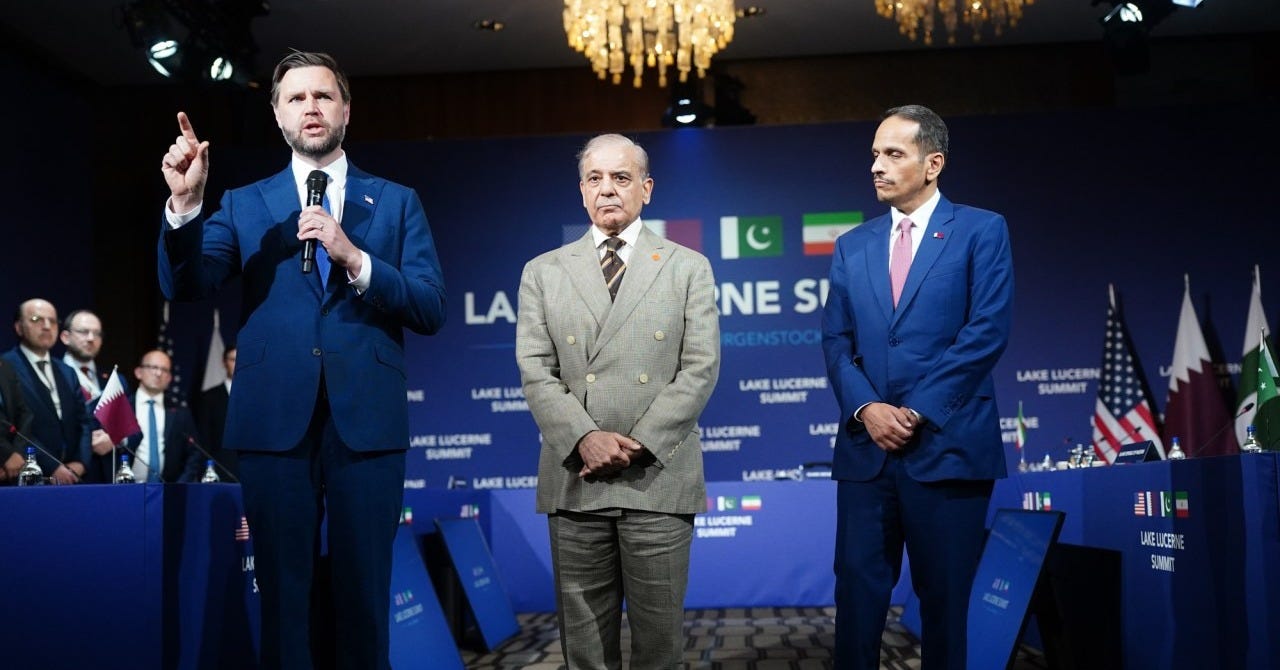
Iran’s announcement that it is closing the Strait of Hormuz is placing immediate pressure on a newly negotiated agreement with the United States, raising questions about whether recent diplomatic progress can survive renewed regional tensions.
Iranian officials linked the move to continued Israeli military operations in Lebanon and suggested the talks underway in Switzerland may struggle to produce major breakthroughs if fighting continues.
Vice President JD Vance traveled to Switzerland to lead discussions aimed at preserving a broader framework that includes nuclear inspections, sanctions relief negotiations, and efforts to maintain maritime access through the Strait of Hormuz.
The strait is one of the world’s most important shipping lanes, carrying a large share of global oil exports. Any sustained disruption could affect energy markets and potentially increase fuel costs worldwide.
Subscribe free for daily political analysis they won’t broadcast. Join 110K+ readers →
The dispute also highlights the interconnected nature of Middle East diplomacy. While negotiations are focused on U.S.-Iran relations, developments involving Israel and Lebanon are influencing whether the agreement can remain intact.
Online discussion has focused heavily on potential economic consequences, the credibility of the diplomatic process, and whether the closure represents a negotiating tactic or a sign of deeper instability.
For now, negotiators in Switzerland are attempting to keep talks moving forward while preventing a broader regional escalation that could undermine recent diplomatic gains.
Subscribe free for daily political analysis they won’t broadcast. Join 110K+ readers →