


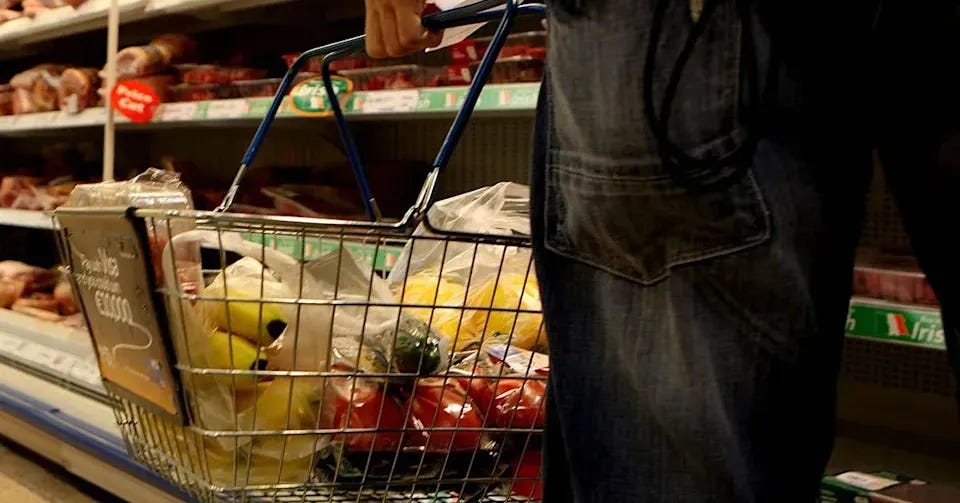
Irish grocery price inflation slowed to its lowest level since February 2025, offering some relief for shoppers but not a return to cheaper supermarket bills.
Grocery inflation stood at 4.16 percent in the 12 weeks to July 12, down from 4.77 percent in June and 6.7 percent in April, according to Irish Examiner reporting based on Worldpanel by Numerator data.
The practical meaning is important. Prices are still rising compared with last year, but the pace of those increases has slowed. For households, that can ease pressure at the checkout without undoing the higher prices already built into weekly shopping.
Take-home grocery sales increased 6.3 percent in the four weeks to July 12 compared with the same period last year. Shoppers made 44 million supermarket trips during that period, up 3.6 percent year over year.
Subscribe free for daily political analysis they won’t broadcast. Join 110K+ readers →
Dunnes Stores retained a narrow lead over Tesco in Ireland’s supermarket spending share. In the 12 weeks to July 12, Dunnes held 23.7 percent of spending, with shoppers increasing trips to its stores by 1.2 percent and adding €10.1 million to its overall performance.
The data lands in a broader cost-of-living debate. Sinn Féin previously criticized food-price increases as evidence of pressure on households, while Retail Ireland has argued that the grocery market remains competitive and that recent increases are largely driven by costs further up the supply chain.
That competing framing matters. Retailers can point to easing inflation and strong competition, while shoppers may still judge the economy by the size of their weekly receipt.
The next data release will show whether July marks continued cooling or only a temporary slowdown before autumn food and energy costs feed back into household budgets.
Subscribe free for daily political analysis they won’t broadcast. Join 110K+ readers →