


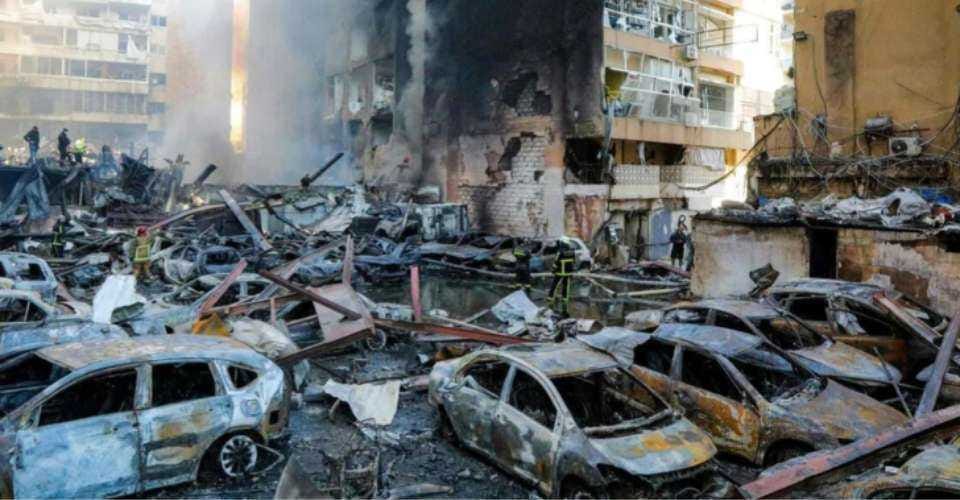
Israel struck Beirut’s southern suburbs on Sunday, days after a U.S.-supported ceasefire agreement went into effect and despite Washington’s request that Israel not attack Lebanon’s capital.
Lebanon’s state-run national news agency reported an initial toll of two people killed and 11 wounded. The strike hit a residential building, damaging several floors, and an unexploded weapon was found in the rubble, according to AP reporting republished by The Philadelphia Inquirer.
Israel said the strike targeted Hezbollah command centers and was retaliation for fire toward northern Israel earlier in the day. Hezbollah did not immediately claim responsibility for that earlier fire. Reuters reported that Prime Minister Benjamin Netanyahu and Defense Minister Israel Katz described the target as a “terrorist” headquarters in Dahiyeh, a Hezbollah stronghold.
Subscribe free for daily political analysis they won’t broadcast. Join 110K+ readers →
The strike carries consequences beyond Lebanon. Iran had warned that an attack on Beirut could renew full-scale war across the region. After the strike, Iranian officials threatened retaliation, and Iran later launched missiles toward Israel, according to Guardian and Axios reporting.
That makes the central issue the durability of the ceasefire system Washington is trying to hold together. AP reported that the fighting threatens efforts to end the Iran war and reopen the Strait of Hormuz, a key transit route for oil, gas, and fertilizer.
More than 3,500 people have been killed in Lebanon since fighting began March 2, and more than 1 million people have been displaced, AP reported. At least 31 Israeli soldiers and three civilians have also been killed.
The next question is whether the U.S.-supported ceasefire can survive retaliatory strikes, or whether Beirut becomes the trigger for a broader Israel-Iran escalation.
Subscribe free for daily political analysis they won’t broadcast. Join 110K+ readers →