


Let’s talk about freedom of the press. You know, that quaint little idea that journalists are supposed to keep the powerful in check? It’s right there in the First Amendment — the press is supposed to challenge authority, expose corruption, and hold truth to power.
Well, here’s a little inconvenient truth: the billionaires are the power now. And they’ve figured out the easiest way to avoid scrutiny is to buy the watchdogs and turn them into lapdogs.
Take Jeff Bezos, for example. The Washington Post — one of the most influential newspapers in America — is supposed to be a beacon of journalistic integrity. But when a Pulitzer Prize-winning cartoonist, Ann Telnaes, drew a cartoon depicting Bezos and other tech billionaires kneeling before a statue of Donald Trump and offering bags of cash, the paper refused to publish it. Why? Because it might hurt Jeff Bezos’ image.
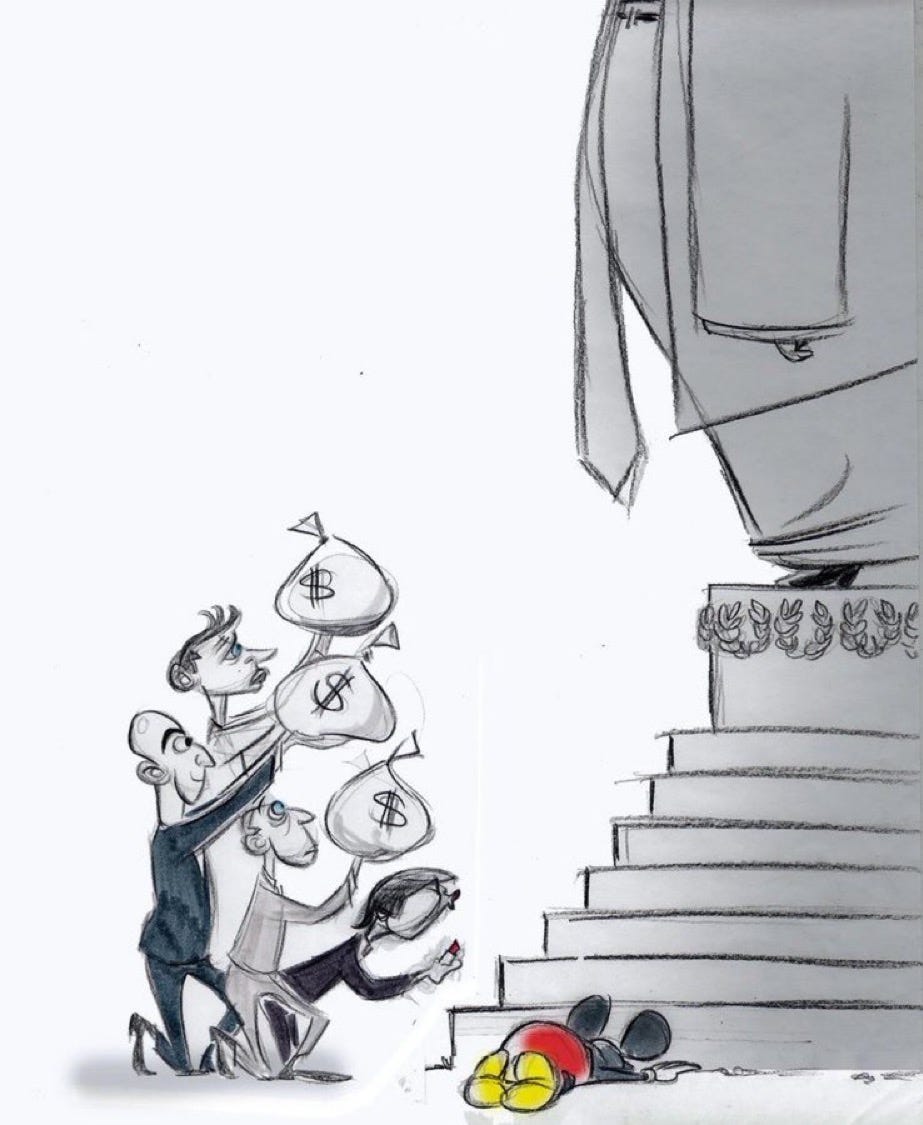
Think about that. The owner of the Washington Post — a man who profits off surveillance capitalism, union busting, and tax avoidance — was criticized by one of his own cartoonists, and the newspaper decided to kill the cartoon. The paper that prides itself on its slogan, “Democracy Dies in Darkness,” suddenly went dark when it came to their billionaire boss.
Telnaes resigned in protest, claiming the cartoon was pulled because of Bezos’ influence. The paper’s editorial page editor, David Shipley, denied it, saying it wasn’t censorship but a matter of avoiding “repetition.” Right. And I’m sure the fact that Bezos is one of the richest and most powerful men in the world had nothing to do with it.
This is what happens when billionaires own the press. They don’t buy newspapers because they love journalism. They buy them for control. They buy them to make sure the stories that get printed don’t threaten their empires. And the press — the one institution that’s supposed to hold these people accountable — suddenly finds itself unable to bark at the hand that feeds it.
Why Billionaires Buy Newsrooms: It’s About Power, Not Truth
Here’s a question: why does a man like Jeff Bezos — a guy who made his fortune selling cheap crap on the internet and exploiting warehouse workers — want to own a newspaper in the first place? It’s not because he loves journalism. It’s because owning a newspaper gives him power.
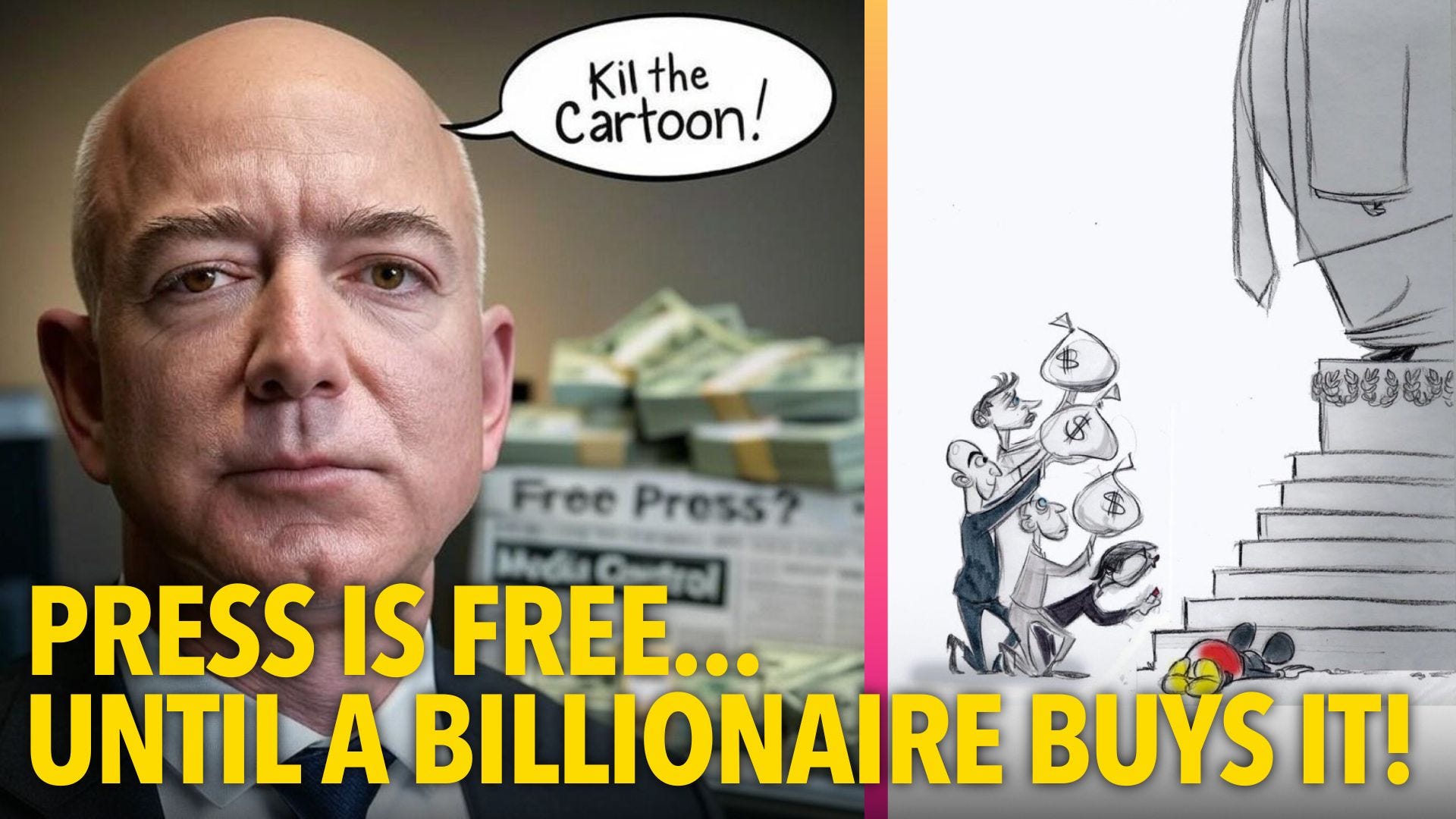
A billionaire like Bezos doesn’t want the press to challenge him. He wants it to polish his image. He wants to be seen as a benevolent genius — a modern-day innovator, not a ruthless capitalist who crushes unions and dodges taxes. And what better way to do that than by controlling one of the most trusted newspapers in the world?
This isn’t just about Bezos, though. He’s part of a bigger trend. Billionaires have been buying up media outlets for years. Rupert Murdoch owns Fox News. Elon Musk bought Twitter and turned it into his own personal circus. Marc Benioff owns Time Magazine. Laurene Powell Jobs owns The Atlantic. Even Patrick Soon-Shiong — a pharmaceutical billionaire — owns the Los Angeles Times.
Do you really think all these billionaires are buying media outlets because they care about the public good? No. They’re buying them because controlling the narrative is the best way to protect their wealth and power. And that should terrify anyone who believes in democracy.
Journalists Used to Hold Power Accountable. Now They’re Stuck in a Billionaire’s Pocket.
Journalism is supposed to be the “fourth estate” — the check on government, corporations, and the powerful elite. But what happens when the people you’re supposed to be holding accountable own the newspaper? What happens when your boss is the very billionaire whose crimes you’re supposed to investigate?
The result is exactly what we’re seeing now. Newsrooms are neutered. Journalists are told to avoid certain topics, to be more “measured” in their criticism. And the stories that do get published are watered down to avoid offending the people who pay the bills.
And it’s not just about individual stories. The Washington Post recently faced backlash for refusing to endorse a candidate in the 2024 presidential election. Why? Because Bezos didn’t want to alienate his customers or his political connections. Think about that. A major newspaper, with a responsibility to inform the public, chose to remain silent on one of the most important elections of our time — all to protect the business interests of its billionaire owner.
Journalists like to tell themselves that they’re free to report the truth. But how free can you really be when your paycheck depends on a man worth $150 billion who has a vested interest in keeping certain stories out of the news?
This Isn’t Just About the Media — It’s About Our Democracy
The billionaire takeover of the press isn’t just a problem for journalism. It’s a problem for democracy. The press is supposed to be one of the pillars of a functioning democracy. It’s supposed to provide the public with the information they need to make informed decisions. It’s supposed to shine a light on corruption and abuse of power.
But how can it do that when the people who own the press are the corruption? When the media is controlled by billionaires, the stories that get told are the ones that benefit them. The stories that don’t get told? The ones that expose their exploitation, their tax evasion, their anti-union activities? Those stories quietly disappear.
This is why we need to talk about media ownership. We can’t have a functioning democracy when the free press is owned by the very people it’s supposed to challenge. We can’t trust the media to hold the powerful accountable when the powerful are signing their paychecks.
The Absurdity of Bezos’ Thin Skin: A Cartoon Was Too Much?
The most absurd part of this whole story is the cartoon itself. Jeff Bezos, one of the richest men in the world, was so offended by a cartoon — a drawing! — that his newspaper refused to publish it. Imagine being that rich, that powerful, and still so thin-skinned that you can’t handle a little satire.
This is the guy who builds rockets to go to space but can’t handle a cartoonist drawing him kneeling before Trump. The man runs a global empire, exploits workers, and dodges taxes, but a little doodle was too much for him to bear.
It’s pathetic. And it shows just how fragile these billionaires really are. For all their money and power, they still can’t handle being criticized. They can bulldoze unions and crush competitors, but the minute someone makes fun of them? They panic.
And that’s exactly why we need journalists who are willing to make fun of them. Who are willing to hold them accountable. Who aren’t afraid to publish the truth — even when it makes their billionaire owners uncomfortable.
The Solution? Break the Billionaire Hold on Media.
If we want a free press — a real free press — we need to break the billionaire stranglehold on media ownership. We need independent newsrooms, funded by the public, not by billionaires. We need journalists who are free to investigate corruption, even when it involves their own bosses.
Because here’s the truth: freedom of the press doesn’t mean much if billionaires own all the presses.
Until we break that stranglehold, we’ll keep getting the same sanitized news. We’ll keep getting newspapers that protect their owners instead of the public. And we’ll keep living in a world where democracy dies — not in darkness, but in plain sight, while the billionaires laugh all the way to the bank.
A Warning from History
There’s an old saying: “The man who controls information controls the world.” That’s never been more true than it is today. The billionaires have figured that out. They’re buying newspapers, magazines, and social media platforms because they know that if they control the narrative, they control you.
If we don’t fight back, we’ll wake up one day to find that the only news we get is the news they want us to hear. And by then, it’ll be too late.
Great article 👏
So being rich and powerful fix self-esteem issues? Too bad they buy media instead of therapy with all that money.