


Jimmy Carter was never flashy, and maybe that’s why we didn’t deserve him.
In a world where political leaders are often measured by the size of their bank accounts or the drama of their scandals, Carter was an anomaly. He didn’t fit the mold of the American presidency we’ve come to know—a role too often occupied by larger-than-life figures with egos to match. Instead, Carter quietly did the work.
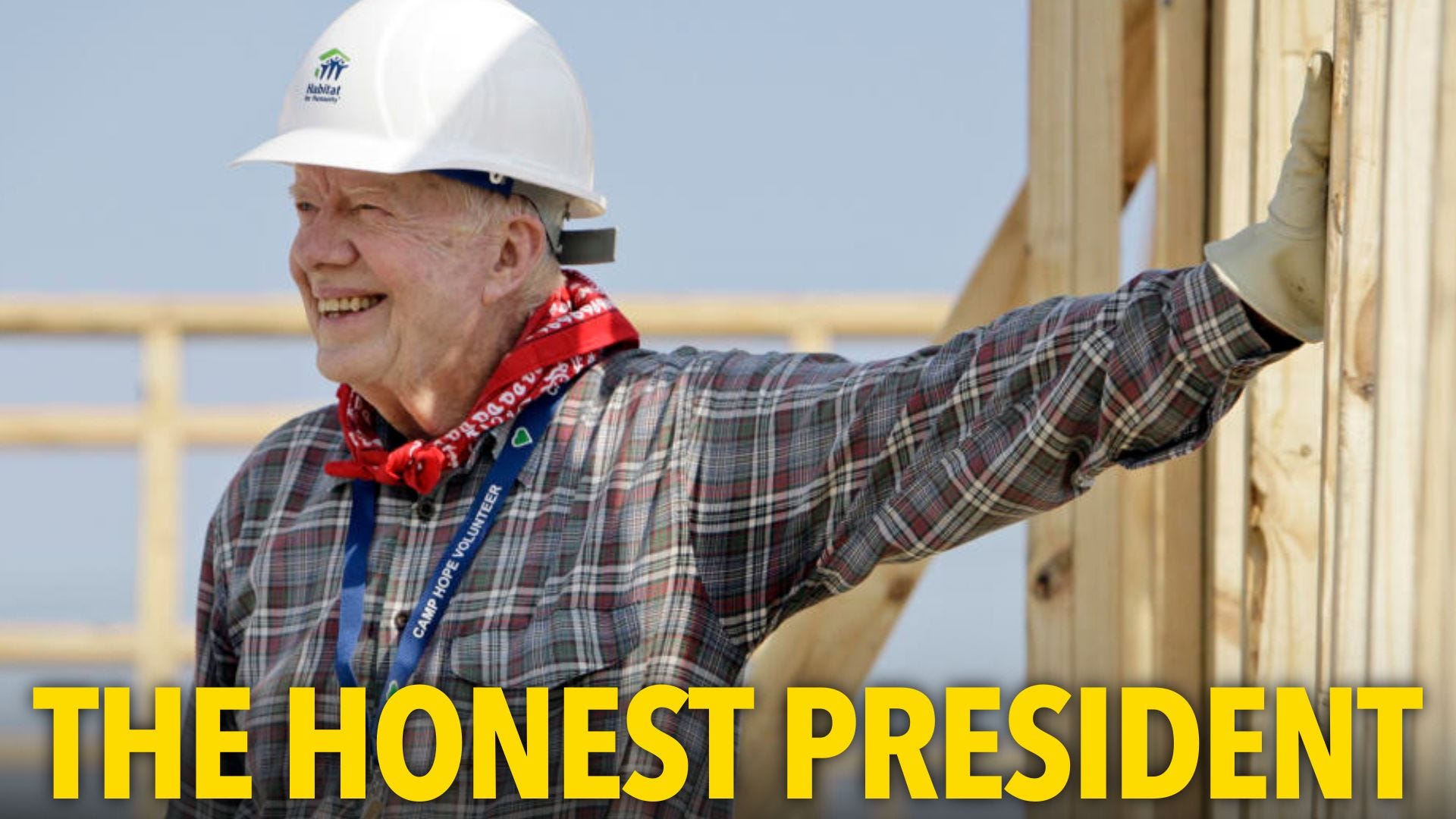
And what work it was. After leaving the White House in 1981, he didn’t follow the well-worn path of big-money book deals, corporate board seats, or lobbying gigs. No, Jimmy Carter picked up a hammer. Literally. The man spent decades building houses with Habitat for Humanity, working alongside everyday Americans to provide something as simple and as essential as a roof over their heads.
Think about that for a second: a former leader of the free world, out in the sun with a toolbelt, hammering nails. No Secret Service agents holding his coffee. No cameras documenting every swing. Just a man, doing the kind of work most presidents wouldn’t touch unless it came with a ribbon-cutting ceremony and a donor gala.
A Legacy That Shames the Modern Presidency
It’s impossible to look at Carter’s post-presidency without comparing him to the parade of grifters and egomaniacs who came after him. Some of these folks have turned retirement into a gold rush, raking in millions from speaking fees, memoirs, and shady international deals. Others have spent their time playing golf and posting unhinged social media rants. And yet, here was Carter—an actual Nobel Peace Prize winner—using his golden years to broker peace deals, monitor elections, and fight river blindness.
River blindness! Most of us hadn’t even heard of it until Jimmy Carter showed up to fix it. Compare that to the modern crop of ex-presidents, who are far more likely to show up to a ribbon-cutting for their namesake hotel or library.
And it wasn’t just his post-presidency that set Carter apart. Even during his time in office, he dared to be practical in ways that seem unthinkable today. He put solar panels on the White House—decades before renewable energy became a mainstream talking point. Those panels were a symbol of foresight, a signal that maybe America should think about its future. And what happened? Reagan tore them down, because God forbid we offend the oil lobby.
Why Carter Never Fit In
The truth is, Carter never really fit into the power-hungry, image-obsessed world of Washington politics. He was too honest, too humble, and—dare I say it—too decent. The same qualities that endeared him to voters in 1976 made him a fish out of water in a system built on money and manipulation.
He didn’t kiss up to the right people. He didn’t pander to the press. And he didn’t pretend to be a bigger deal than he was. Carter’s unpretentiousness made him an easy target for ridicule. Political commentators called him weak. His opponents painted him as ineffectual. But maybe we got it all wrong.
Weakness is ignoring a housing crisis while you cash a seven-figure check from a hedge fund. Weakness is sending other people’s kids to war while your own kids rake in corporate board seats. What Carter had was strength—the kind that doesn’t need applause to keep going.
The Hammer Versus the Golden Throne
If Carter’s hammer symbolizes his presidency, then the other guys’ legacies look like a golden toilet. They’ve spent their careers building monuments to their own egos, while Carter spent his building homes and hope.
Look, I get it. Politics is a dirty game. But Carter’s life proves that it doesn’t have to be. You can be a leader without selling your soul. You can leave office without making millions off the system. And you can do something meaningful with your time on this planet—even if it doesn’t come with a round of applause.
What Carter’s Death Says About Us
Now that Carter is gone, we’re left to reckon with what his life says about our country—and what we’ve lost. Carter represented a kind of leadership that feels almost alien now: humble, service-driven, and focused on the common good. His passing is a reminder that the bar for political decency has been lowered so much, we’re practically tripping over it.
We’ve traded Carter’s hammer for a reality-TV presidency. We’ve swapped humility for hubris, service for self-promotion, and honesty for whatever polls better in Iowa. Maybe Carter’s legacy is so striking because it shows us how much worse things have gotten.
The Challenge Jimmy Carter Left Us
If there’s one thing Carter’s life teaches us, it’s that you don’t need power or wealth to make a difference. You just need the will to act. Carter didn’t wait for someone else to step up. He didn’t whine about how broken the system was. He grabbed a hammer and got to work.
So the next time you hear a politician talk about “fixing” America, ask yourself: are they grabbing a hammer, or are they just grabbing more for themselves? Because Carter’s life shows us the difference. And if we’re smart, we’ll use it as a blueprint—not just for our leaders, but for ourselves.
Rest in peace, Jimmy Carter. You showed us what leadership could look like, even if we were too blind to appreciate it. Let’s hope we figure it out before it’s too late.
Great work my friend
Thank you, and exactly. Those of us old enough to remember understand and won't forget what he did, who he was and what decent politicians were. There once was a time. RIP President Carter and thank you for making the world a little bit better for a while 💙🇺🇲🗽💙