


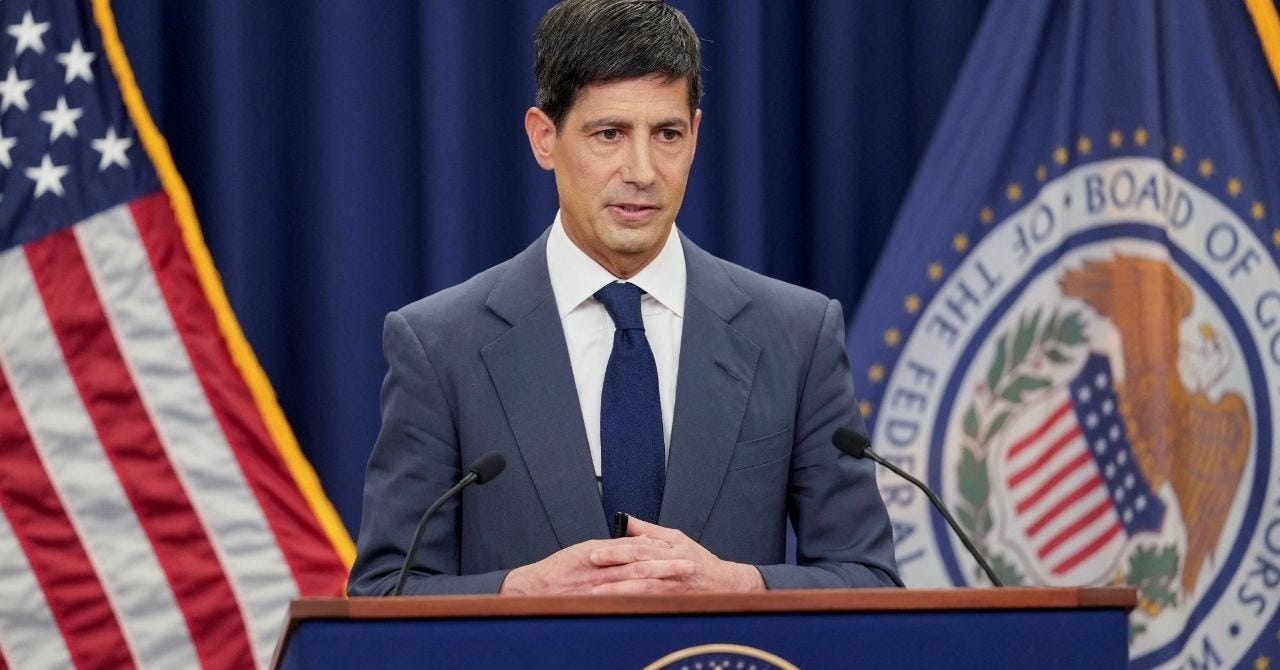
Federal Reserve Chair Kevin Warsh is beginning his tenure with a significant departure from how the central bank has operated for much of the past two decades.
At the center of the shift is something economists call forward guidance. The Fed’s practice of signaling future policy intentions so investors, businesses, and consumers can prepare for coming interest-rate decisions. Since the financial crisis, Fed leaders have increasingly used this approach to stabilize markets and influence economic expectations.
Warsh believes the strategy has gone too far.
According to recent remarks and reporting on his first major policy meetings, Warsh wants markets to rely more on economic fundamentals and less on central-bank forecasting. He has begun scaling back guidance in official communications and press conferences.
The practical effects could be significant.
When investors are less certain about future interest rates, they often demand higher returns to compensate for that uncertainty. Those higher yields can flow through the economy in the form of more expensive mortgages, auto loans, business financing, and government borrowing costs.
Subscribe free for daily political analysis they won’t broadcast. Join 110K+ readers →
Supporters argue the change could restore healthier market behavior and reduce the perception that the Fed is managing asset prices.
Critics counter that modern financial markets are deeply interconnected and that removing guidance risks amplifying volatility during periods of economic stress. Bond-market strategists and economists have warned that stocks and bonds may experience larger swings as investors react to every major economic report without the stabilizing influence of Fed projections.
The Federal Reserve does not directly set mortgage rates, stock prices, or business investment levels, but its decisions influence nearly every borrowing cost in the economy.
If Warsh's approach results in greater market uncertainty, Americans could see the effects across their financial lives. Mortgage rates may become more volatile, credit card and auto loan costs could rise, businesses may face higher borrowing expenses, and fluctuations in financial markets could affect retirement accounts and investment portfolios.
Whether this strategy ultimately strengthens market discipline or leads to greater economic volatility is likely to become one of the defining questions of the Warsh era at the Federal Reserve.
Subscribe free for daily political analysis they won’t broadcast. Join 110K+ readers →