


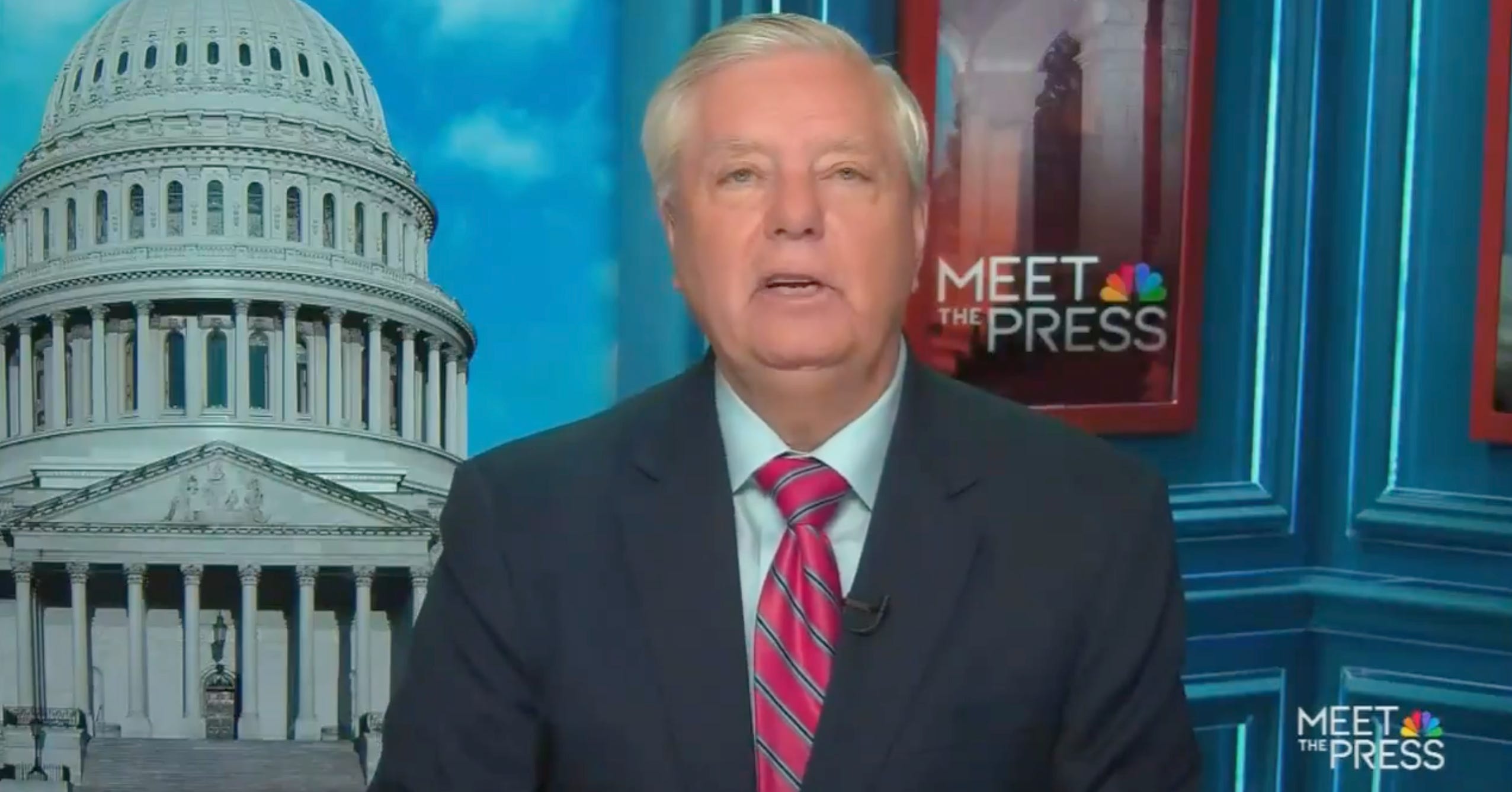
Sen. Lindsey Graham on Sunday made clear he rejects calls for a detailed U.S. plan guiding Iran after recent military strikes, insisting the focus should be on eliminating Tehran’s role as a terror backer.
In a combative Meet the Press appearance, the South Carolina Republican was pressed repeatedly on whether President Donald Trump has a strategy for ensuring Iran does not re-emerge as the “largest state sponsor of terrorism.” According to The Independent, Graham flatly replied that crafting a future Iranian government isn’t the job of U.S. leaders.
Graham raised the stakes of the debate on U.S. policy toward Iran, maintaining that Washington’s objective is not to install a government but to prevent Tehran from supporting militant groups such as Hezbollah, the Houthis, and Hamas. He said the United States will not put boots on the ground, and that Iranians themselves must chart their next chapter.
Download a FREE Pocket Constitution NOW
Core confirmed facts: Graham stressed that the recent strikes by U.S. and Israeli forces have started a historic moment and that the overthrow of theocratic control in Iran could reshape Middle Eastern geopolitics. He also insisted the U.S. must avoid the pitfalls of past nation-building.
A new complication: Critics argue that without a clear roadmap, removing Tehran’s leadership could leave a power vacuum exploited by hardliners or regional adversaries — a dynamic that has unfolded in Iraq and Syria.
“Our job is to make sure Iran is no longer the largest state sponsor of terrorism,” Graham said in the interview.
Related: Tanker Strikes Rock Gulf After US-Israel Attacks on Iran, 4 Crew Hurt
This matters because lawmakers and military analysts warn that abrupt regime change without a plan can lead to chaos and unpredictable regional fallout, potentially drawing the U.S. into a prolonged conflict.
What happens next: Congress is poised for debate on war powers and oversight, and global diplomats are watching Tehran’s internal response closely. Unanswered questions remain about whether Iran’s military will continue missile attacks across the region.
Sunday’s exchange underscored a deep divide in Washington over how to balance military action with strategic planning in the Middle East.
Follow The Coffman Chronicle on NewsBreak for daily breaking political coverage.