


In Port Arthur, the Sky Never Goes Dark
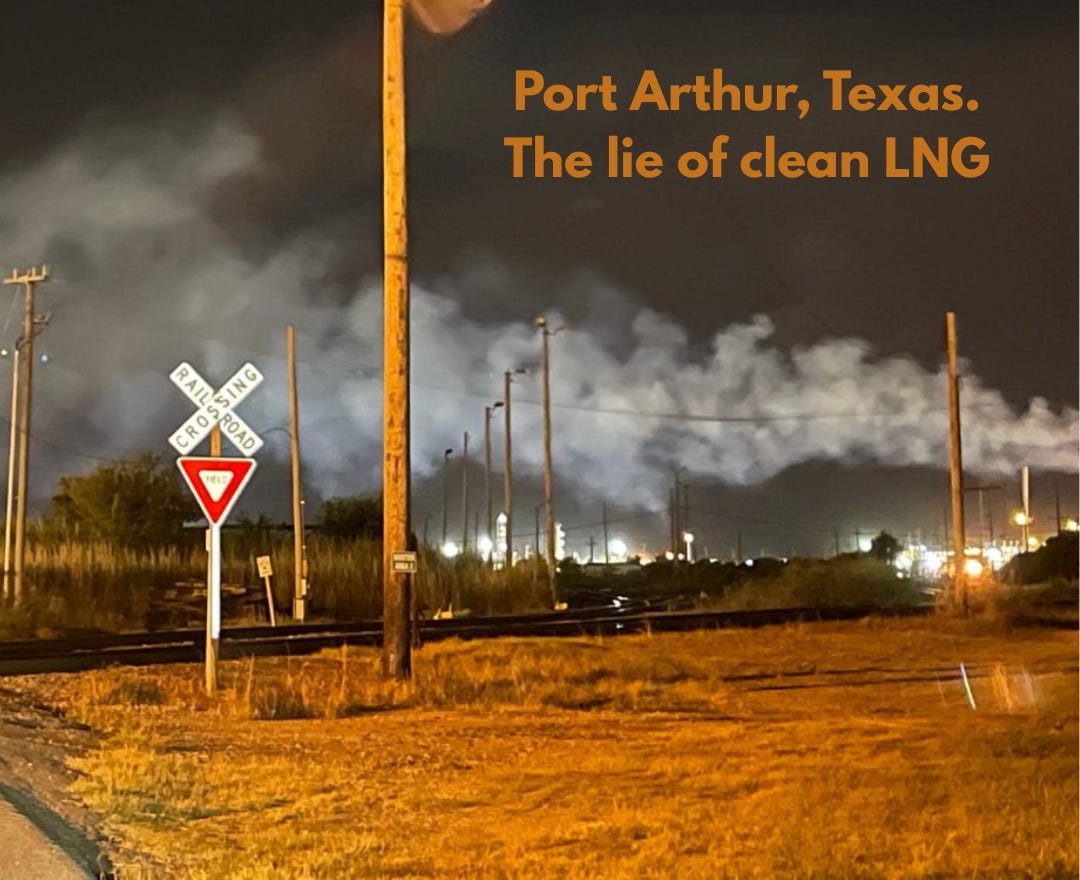
In Port Arthur, Texas, the sky never truly goes dark. It glows orange from refinery flares, black from petrochemical smokestacks, and now, from the rising shadows of massive LNG terminals along the Gulf Coast. For generations, residents here—mostly Black, Latino, and low-income families—have lived in the toxic footprint of America’s fossil fuel empire. They were promised jobs, prosperity, and hope. Instead, they got cancer, asthma, poisoned water, and streets choked with flaring gas and heavy truck traffic.
When liquefied natural gas (LNG) arrived, it was sold as the “clean” alternative, a bridge to a better future. But in Port Arthur, it’s clear: this isn’t a bridge. It’s a pipeline back to the same suffering, paved over with greenwashed lies.
LNG isn’t the future.
It’s methane in a fancy suit, dressed in green for good measure.
Independent News. Just $1/Week.
We just hit 12,000 subscribers—thank you! To celebrate, we’re offering full access to The Coffman Chronicle for just $1 a week ($52/year).
Get exclusive analysis and fearless reporting you won’t find in corporate media.
Support truth. Stay informed.
The Dirty Science Behind LNG’s “Clean” Image
They call it "natural" gas. They call it a "bridge" to the future. They dress it up with ads showing blue skies and smiling children. But when you strip away the branding, what remains is simple and damning.
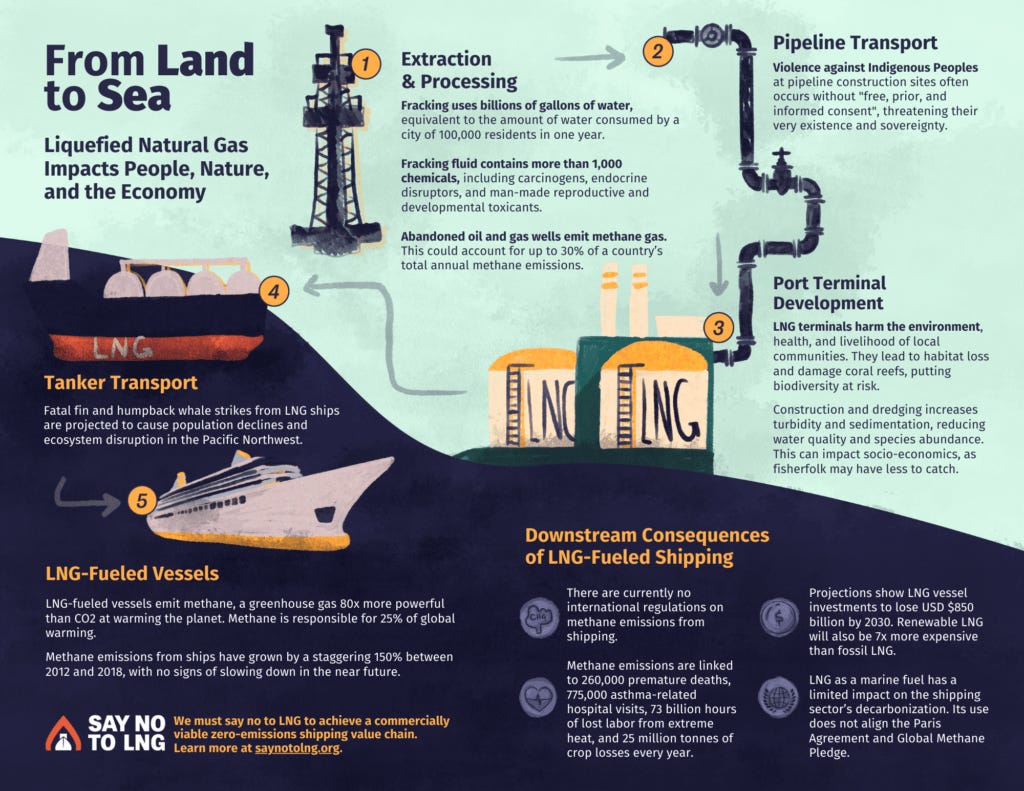
LNG, or liquefied natural gas, is primarily methane, a greenhouse gas 86 times more potent than carbon dioxide over the short term. To produce LNG, natural gas is extracted—often by fracking—then piped to massive terminals where it’s cooled to -260°F to turn it into a liquid for shipping. Every step of this process—extraction, transport, processing, liquefaction, and shipping—leaks methane into the atmosphere.
Every step of LNG's life cycle—extraction, transport, processing, liquefaction, and shipping—leaks methane into the atmosphere.
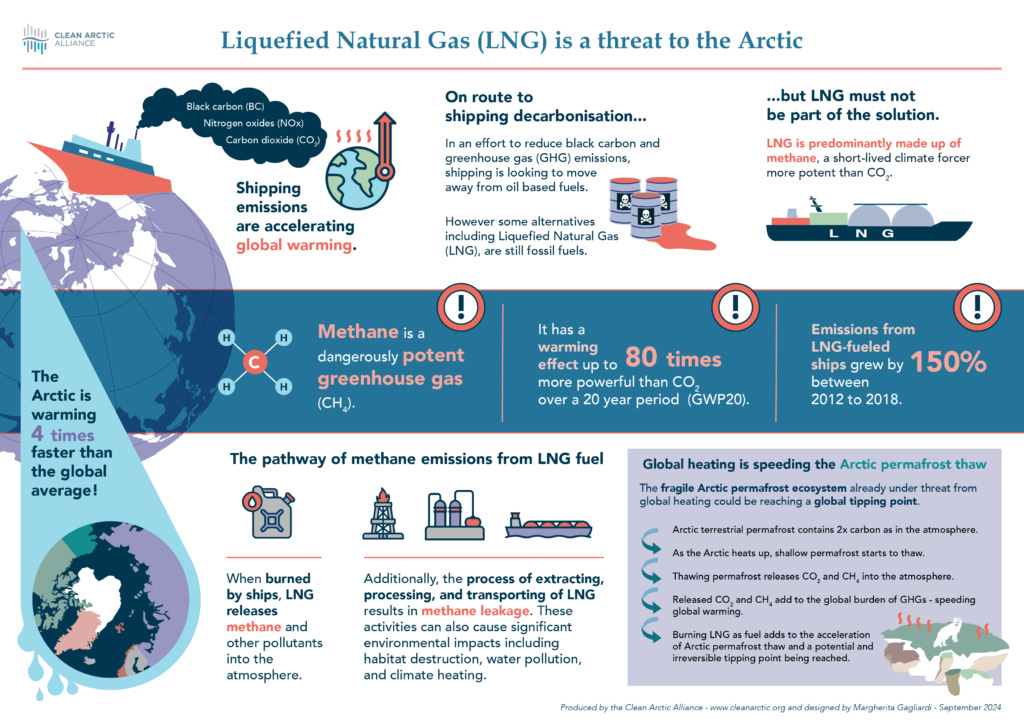
A landmark study from the Environmental Defense Fund found that U.S. oil and gas operations are leaking about 2.3% of their methane into the air, a number high enough to erase any supposed climate advantage LNG might have over coal, especially over the critical next two decades.
Even before it leaves the U.S., LNG leaves an enormous carbon and methane footprint, and shipping it across oceans only deepens the damage.
Greenwashing Methane: The Billion-Dollar Lie
If you listen to the fossil fuel industry, LNG is the miracle we've been waiting for. Their ads show happy families, pristine fields, and sunny skies. Their executives speak about "lower emissions" and "transition fuels." Their lobbyists whisper in Congressional ears about energy security and jobs.
What they don't show is the truth.
Liquefied natural gas is still a fossil fuel. It's still primarily methane, and no matter how you package it, ship it, or spin it, methane is a climate killer. The only thing that changed was the branding.
The greenwashing isn't an accident. It's a deliberate, calculated strategy.
Over the past decade, the oil and gas industry has spent hundreds of millions of dollars rebranding gas as "natural" and "clean" to extend the lifespan of fossil fuels in a world moving—slowly—toward renewables.
They didn’t change the fuel. They didn’t change the damage. They just changed the outfit—methane in a fancy green suit.
The goal isn’t to build a bridge to the future.
It’s to pave over the collapse they helped create, and find one more way to profit from the wreckage.
See our recent reporting on the troubling history of Big Oil here:

Communities on the Frontlines
The industry can rebrand gas and dress methane in green, but communities living near wells, pipelines, and export terminals know the truth better than any advertising executive. Before LNG even leaves the United States, it leaves scars on water, land, bodies, and futures.
In Pennsylvania, residents watch heavy water trucks thunder past their homes, breaking roads, polluting the air, and leaking contaminants into the earth. The water pulled from deep underground—millions of gallons per well—doesn't return clean. It comes back laced with arsenic, radioactive material, and heavy metals, too toxic to safely reinject and too dangerous to simply dispose of.
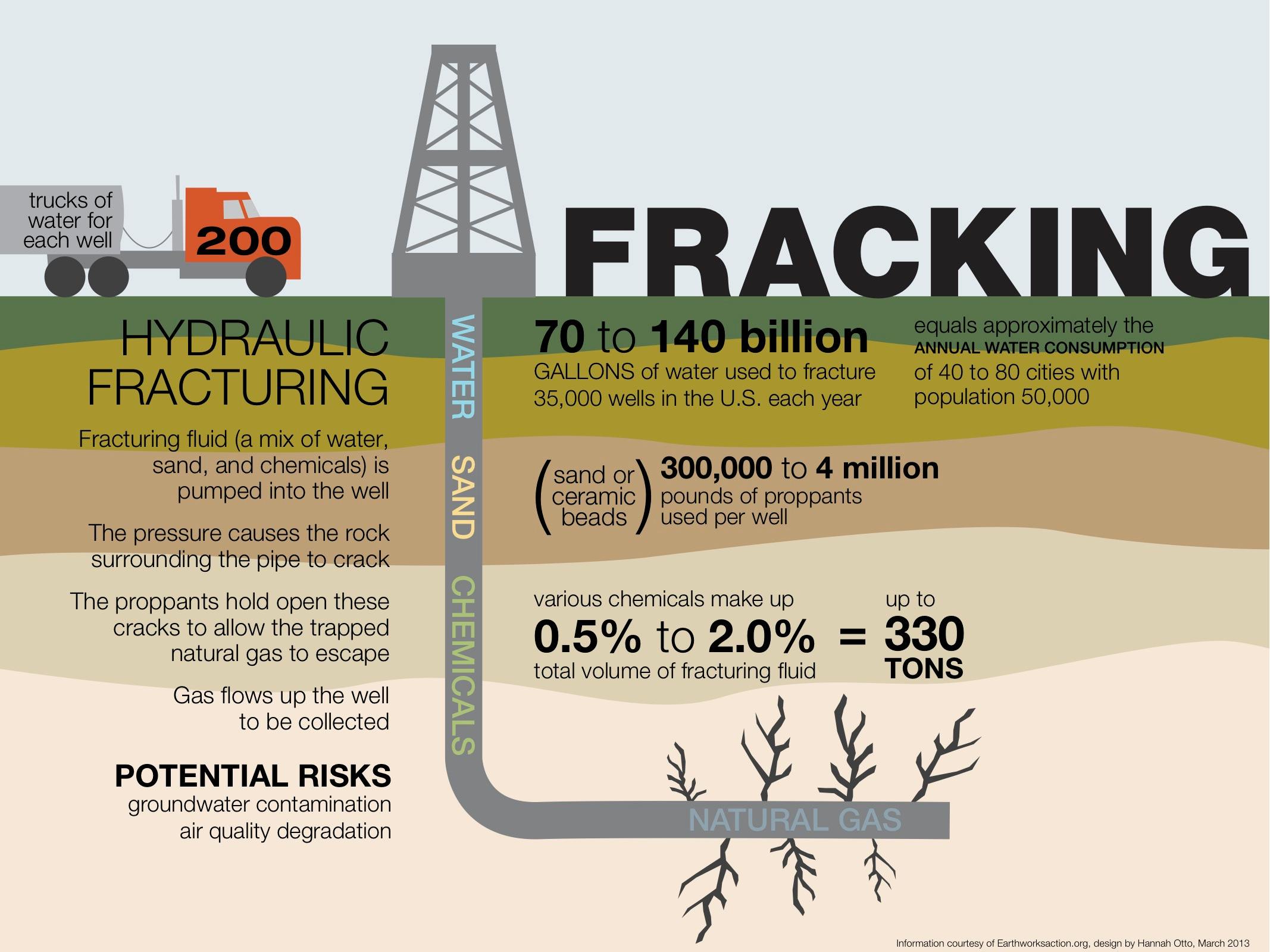
See our previous reporting in which we discussed the impacts on Dimock, PA:
Note: This article is over 45 days old and now lives in our archive. Consider becoming a paid subscriber for full access, exclusive reporting, and occasional early access.

In Oklahoma, the ground itself is shifting. Residents once lived without fear of earthquakes, fracking operations, and wastewater injections, but their stability has shattered. Hundreds of earthquakes rattle the state each year, cracking foundations, buckling roads, and undermining water supplies—sacrifices made far from the glossy LNG terminals and billion-dollar export deals.
And in places like Port Arthur, Louisiana’s Plaquemines Parish, and beyond, the pattern repeats. Communities already burdened by decades of petrochemical pollution now face the second blow: more pipelines, more emissions, more sickness—delivered by an industry still selling itself as a “clean” alternative.
This isn’t innovation. It’s escalation.
Sacrifice Zones: Who Pays the Price for LNG?
If LNG were truly the clean, safe energy solution its backers claim, you’d find export terminals nestled among luxury waterfront homes and manicured suburban neighborhoods. You don't. You see them next to rural towns, historically Black communities, and Indigenous lands—places already burdened by pollution, poverty, and political neglect. Places where the glossy ads and greenwashed promises never needed to be real, only convincing enough to silence protest.
Studies show that industrial projects like LNG terminals are overwhelmingly sited near low-income and minority communities, where resistance is easier to steamroll and political influence is thinner.
For these communities, LNG isn’t a bridge to a better future. It’s just another pipeline to exploitation dressed up in the same green suit that hides the methane beneath.
Follow the Money: Who Really Profits from LNG
If LNG is such a clean, community-boosting, climate-friendly miracle, why does it always seem to benefit the same small group of people and devastate the same communities left behind by every other fossil fuel boom?
Because LNG isn't about the future.
It's about money.
And for the industry insiders, lobbyists, and political enablers, it has always been about money.
In 2023 alone, the oil and gas industry spent over $124 million lobbying Congress, with LNG giants like Venture Global, Cheniere Energy, and Sempra LNG leading the charge. Trump’s executive orders fast-tracked LNG export approvals, slashed methane regulations, and opened federal lands to fossil fuel extraction with almost no environmental review.
This isn’t energy independence. It’s just the next phase of fossil fuel extraction—more globalized, more greenwashed, more ruthless.
Most LNG produced in the United States isn’t destined for domestic use. It’s exported for maximum profit. Meanwhile, communities like Port Arthur don’t get clean energy or opportunity. They get cancer rates, broken roads, poisoned water, and a government more interested in balancing corporate portfolios than protecting human lives.
We recently reported on the efforts to give more public land to these and related companies here:

LNG Isn’t a Bridge. It’s a Trap.
They call it a bridge.
But LNG doesn't look like a bridge to the future for communities like Port Arthur, families living near fracking wells in Pennsylvania, and quake-shattered towns in Oklahoma. It seems like the same broken promises, the same poisoned water, the same air thick with lies—and this time, the damage is dressed in a fancier, greener suit.
Liquefied natural gas isn’t a stepping stone to clean energy. It’s an anchor dragging us deeper into climate chaos, environmental injustice, and corporate exploitation.
We’ve seen this story before:
In the oil fields.
In the coal towns.
In the chemical corridors.
Now, they’re just playing it faster, bigger, and on a global scale.
LNG isn’t our bridge. It’s their lifeboat built to float away from the disasters they profit from while the rest of us sink.
The choice is simple: We can keep letting them dress up devastation and sell it as salvation. Or we can call LNG what it really is and refuse to let them sell our future, one greenwashed lie at a time.
We just hit 12,000 subscribers—thank you! We’re offering full access to The Coffman Chronicle for just $1 a week ($52/year) to celebrate.
Get exclusive analysis and fearless reporting you won’t find in corporate media.
Bibliography:
Note: Due to the removal or relocation of many EPA and other federal environmental sources, constructing this bibliography required significantly more effort than usual. The difficulty of accessing basic scientific information today is not incidental. It reflects a broader trend toward suppressing environmental transparency, at the very moment it is most needed.
Environmental Defense Fund. "Methane: The Other Important Greenhouse Gas." Accessed April 2025.
U.S. Environmental Protection Agency. Hydraulic Fracturing for Oil and Gas: Impacts on Drinking Water Resources. December 2016.
OpenSecrets.org. "Oil & Gas: Lobbying Profile 2023." Accessed April 2025.
Oil Change International. "Big Oil Reality Check 2023." Accessed April 2025.
U.S. Geological Survey (USGS). "Induced Earthquakes."Accessed April 2025.
Environmental Health Project. "Liquefied Natural Gas (LNG): Health and Climate Impacts." March 20, 2023.
CBS News. "Environmental Concerns Grow Over Impact of Liquefied Natural Gas as the U.S. Becomes a Top Supplier." February 7, 2024.
Cornell University. "Liquefied Natural Gas Carbon Footprint Worse Than Coal, Cornell Research Finds." October 2024.
Physicians for Social Responsibility. "Fracked Gas: The Bridge Fuel Myth: Why Liquefied Natural Gas (LNG) Is Not an Environmentally Friendly Fuel." November 2019.
Thank you for the report and calling out the companies and politicians profiting from liquified natural gas while it destroys our environment.
Thank you for this informative report. LNG is even worse than I thought.