


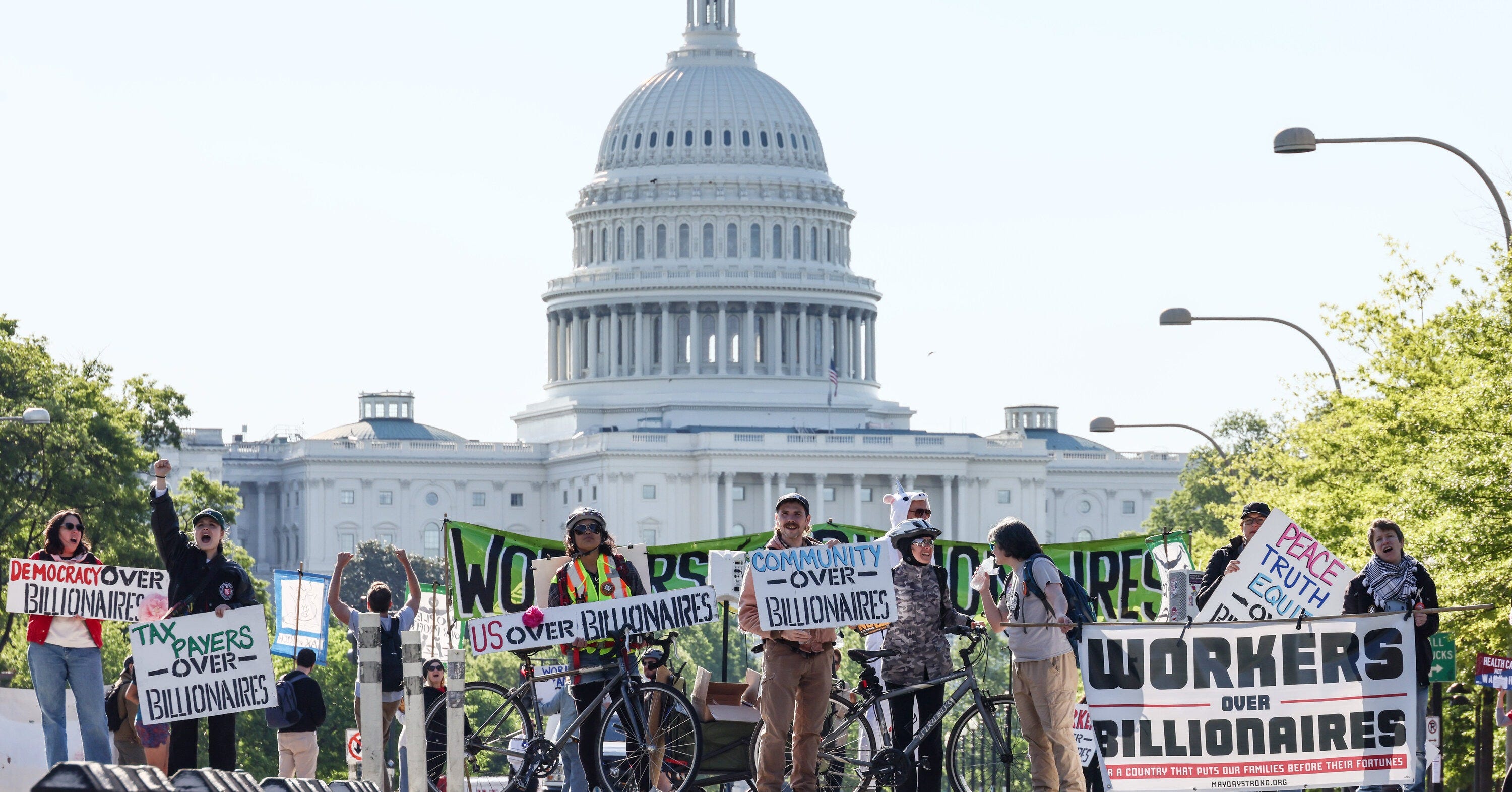
May Day protests took place across the United States this week, as labor groups and activists organized coordinated demonstrations calling for stronger worker protections, higher wages, and greater attention to economic inequality.
Observed globally on May 1 as International Workers’ Day, May Day has long served as a focal point for labor activism. This year’s events unfolded across multiple U.S. cities, reflecting continued concern among workers over cost-of-living pressures, wage growth, and workplace conditions.
Organizers framed the demonstrations as a nationwide effort to elevate labor issues in federal policy discussions, with a particular focus on how the White House and federal agencies approach wage standards and labor enforcement. The protests followed a period of increased union activity in the U.S., including strikes and organizing drives across several industries.
Subscribe free for daily political analysis they won’t broadcast. Join 110K+ readers →
The scale of the demonstrations marks a continuation of that momentum, signaling that labor concerns remain a central issue in the broader economic landscape. While specific turnout figures and city-level details vary, the coordinated nature of the protests underscores a sustained push from labor groups.
With the demonstrations now complete, attention is turning to potential responses from federal officials. The protests could increase pressure on the White House to address labor policy through regulatory action, enforcement priorities, or support for legislative changes.
What happens next will depend on whether the protests translate into sustained political engagement or concrete policy shifts. For now, the nationwide scope of the May Day actions reinforces that worker-related issues remain a significant force in U.S. economic and political debates.
Subscribe free for daily political analysis they won’t broadcast. Join 110K+ readers →