


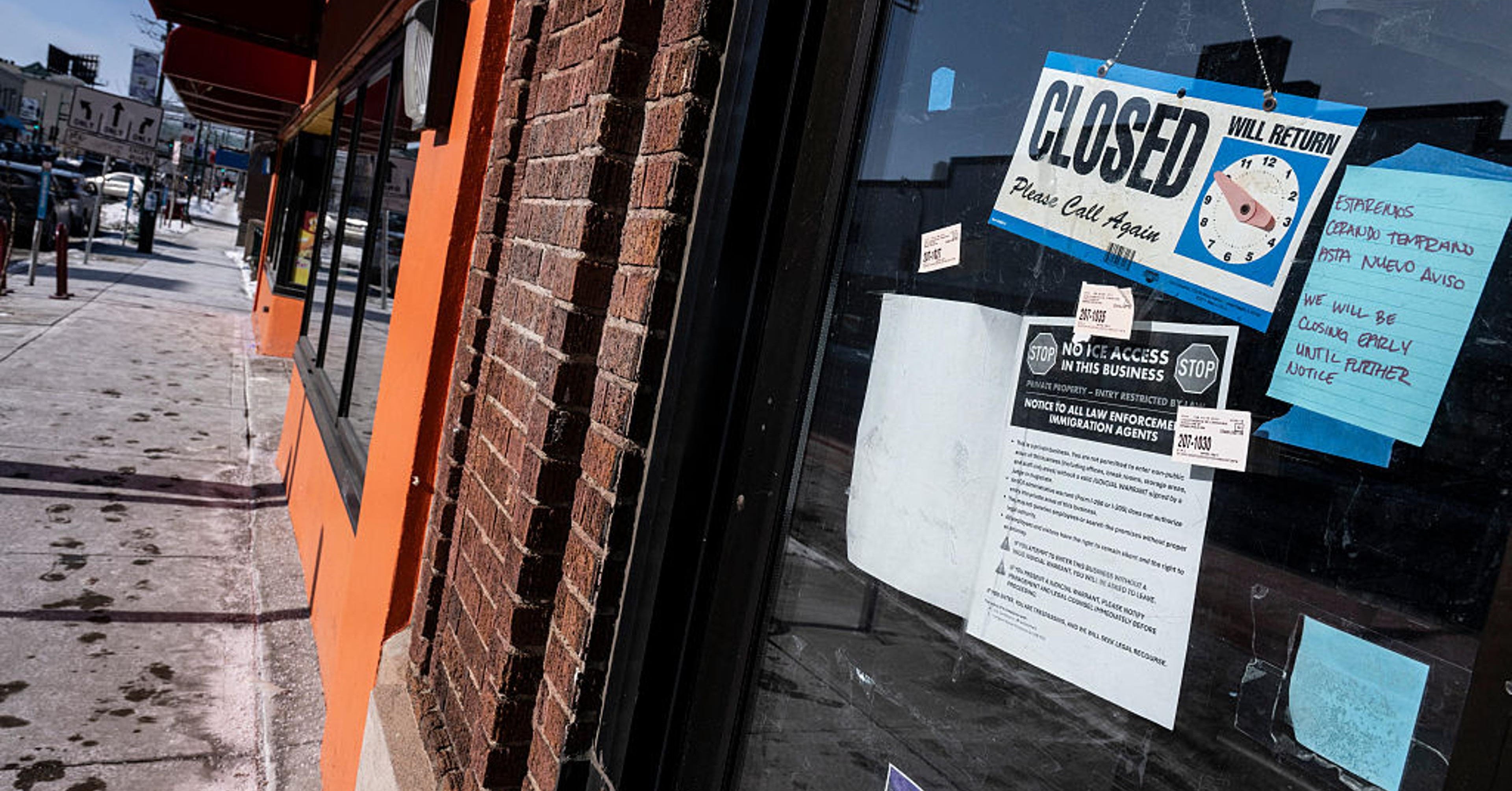
Minnesota’s lawsuit over Operation Metro Surge is now centered on a new number with statewide implications: about $610 million. In an amended federal complaint, the state, Minneapolis, and St. Paul say the immigration crackdown did not just provoke protests and lawsuits, but also drained business revenue across the Twin Cities.
That matters now because the case is no longer only about police powers and constitutional claims. The new filing tries to show that the operation carried a measurable economic cost for workers, storefronts, and local tax bases.
The amended complaint says Minneapolis businesses lost an estimated $444.9 million and St. Paul businesses lost $165.4 million, with the filing describing both figures as lower-bound revenue-loss estimates. It also says workers lost roughly $243.8 million in wages across the two cities.
The same exhibits say 60.0% of Minneapolis businesses and 61.0% of St. Paul businesses reported negative effects. Businesses cited weaker customer traffic, customers avoiding commercial areas, payroll stress, unexpected debt, missed shifts, resignations, and hiring trouble.
Subscribe free for daily political analysis they won’t broadcast. Join 110K+ readers →
“This is, in essence, a federal invasion of the Twin Cities in Minnesota, and it must stop,” Attorney General Keith Ellison said when the case was first filed.
The economic argument also fits a broader pattern emerging in other cities. In Omaha, a June 2025 raid at Glenn Valley Foods left the plant with about 30% of its staff and cut production to about 20% of normal, according to Reuters and AP. In Los Angeles County, a county-commissioned report said enforcement actions disrupted labor supply, spending, and business operations, while a recent SSRN paper found ICE actions can reduce employment and increase fiscal strain in affected counties.
What happens next depends on whether the federal court treats those estimates as persuasive evidence of concrete harm, and whether Minnesota can turn that economic record into legal relief against future crackdowns.
For now, the fight over Operation Metro Surge is becoming a fight over cost as much as law.
Download a FREE Pocket Constitution NOW →
