


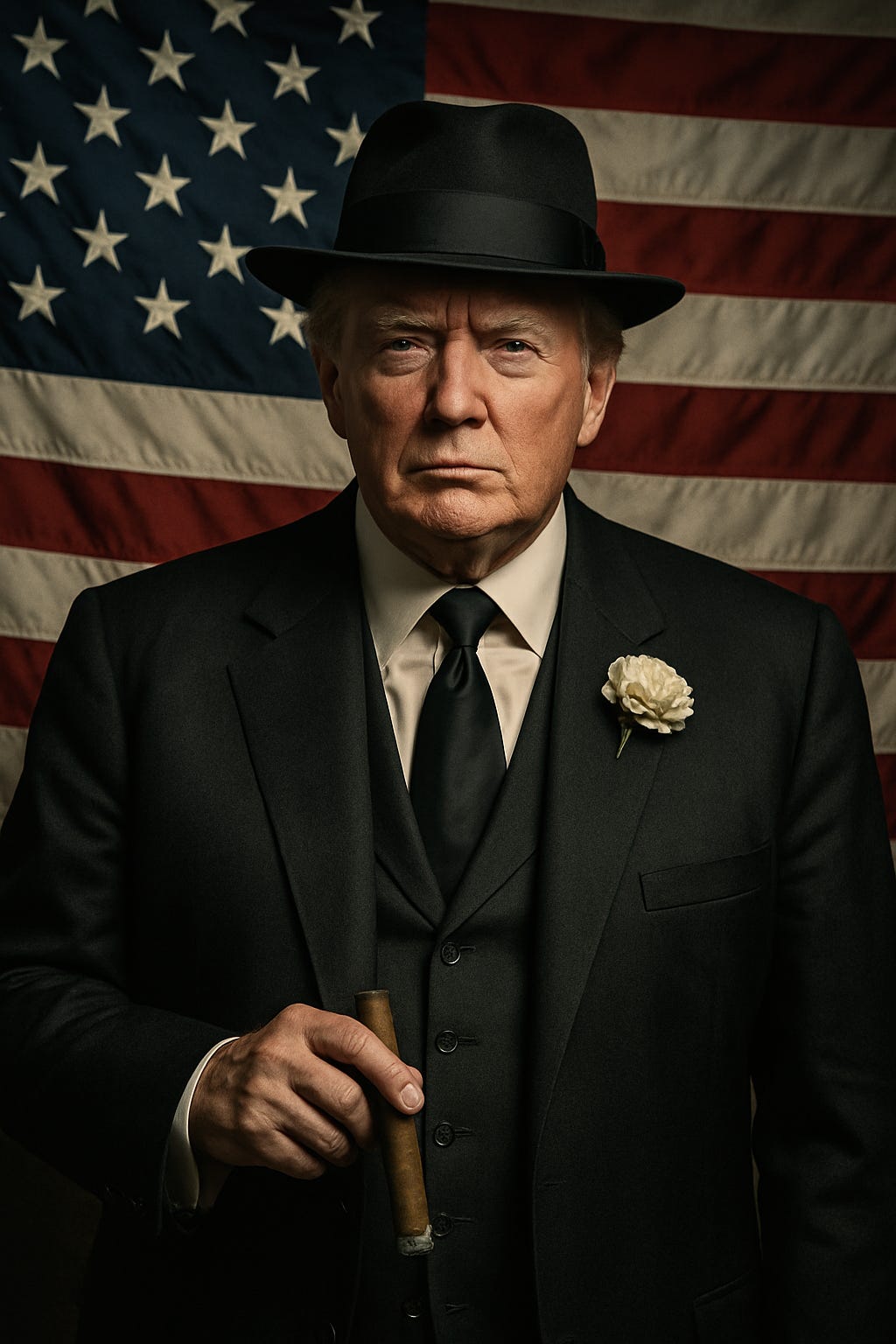
Donald Trump’s April 1st address to the nation on Iran was supposed to steady the public. It was supposed to tell Americans what had been done, what remained to be done, and why they should believe the war was under control. Instead, he delivered something more familiar: a victory speech built on falsehoods, inflated claims, and contradictions so obvious they almost collided with each other in real time.
This was not a rally or campaign stop. It was a wartime presidential address. The standard is supposed to be higher when a president is asking the public to trust him on bombs, timelines, and the lives that hang in the balance. However, Trump did what he has done so many times before. He opened with patriotic uplift, moved into sweeping declarations of strength, painted himself as the one leader bold enough to act, and then filled the gaps with made-up numbers, recycled distortions, and certainty the public record could not justify.
The speech was designed to make escalation feel like closure. That was the trick. He wanted Americans to hear that the war was nearly over, even as he threatened to hit harder. He wanted them to hear that Iran was broken even as he described more destruction to come. He wanted them to hear control where there was still obvious volatility, finality where there was still no clear endpoint, and truth where there were already multiple documented lies.
This Community Is Powered by You
What started as a small circle has grown into something much bigger, and it’s all because of readers like you.
Every time you forward this email, post it on socials, or bring someone new into the fold, you’re helping build one of the most passionate, independent political communities out there.
Want to keep the momentum going?
Share this newsletter with someone who should be part of this conversation.
Thank you for being here. It means everything.
The pitch was simple: trust me, we’re winning
Trump’s core message was straightforward. Iran had been smashed. Its military had been crippled. Its nuclear ambitions had been pushed back. The United States had done what needed to be done, and the mission was nearing completion. That was the spine of the address.
Yet even inside his own framing, the speech did not hold together. A war that is supposedly nearing completion does not usually require fresh threats against power plants, bridges, and oil infrastructure. A regime that is supposedly broken does not usually still justify weeks of further punishment. A conflict that is supposedly under control does not usually come without a defined endpoint. Reuters reported that Trump still left open the possibility of continued strikes and gave no definitive timeline for ending the war, even while insisting the end was in sight.
That contradiction is the key to the whole address. The speech did not really say the war was over. It said the public should feel as though victory had already been achieved, so they would be less likely to question whatever escalation came next. That is not a military update. That is political conditioning.
The five biggest lies in the speech
The speech was not just slanted. It contained clear falsehoods.
First, Trump claimed Iran had killed 45,000 protesters. AP’s fact check found no verified number anywhere near that. The figure AP cited was just over 7,000. That is not normal exaggeration. That is a massive inflation of the death toll to make the moral case for war more emotionally overwhelming.
Second, he repeated the claim that Obama gave Iran $1.7 billion in cash. AP noted that this was a misleading retelling of a legal settlement over pre-1979 military purchases, not a casual payoff or gift. Trump was reviving an old distortion because it still works politically: it turns diplomacy into surrender and makes military force look like the only serious option.
Third, he said the United States now has “no inflation.” AP reported that inflation was 2.4% in February 2026. That is not zero. He did not say inflation was falling. He did not say it was manageable. He said there was none. That was false.
Fourth, he claimed the U.S. had attracted more than $18 trillion in investment. AP found no public evidence supporting that number and pointed to a far smaller figure, around $10.5 trillion, which itself included activity not solely attributable to his current term. This was the old Trump move again: say the biggest number in the room and count on its size to do the persuading.
Fifth, he said regime change was not the goal but had effectively happened anyway. AP and Reuters undercut that claim. Iran’s regime remains in place. Reporting suggested the system has not been replaced by some gentler, transformed government. This was perhaps the most revealing lie of the night because it showed Trump trying to claim the prize of regime change while denying responsibility for pursuing it. The leader was killed, but the regime he represents retains control.
Those lies were not random. Each one did work for him. The inflated protest number made Iran sound even more monstrous. The Obama cash line reactivated a familiar grievance. The inflation and investment claims cast Trump as the uniquely competent steward of both war and economy. The regime-change fiction let him claim a historic outcome without admitting how far the mission may have drifted. These were not just falsehoods. They were tools.
“Nuclear” was the permission slip
Trump leaned hard on the word nuclear the throughout the speech because it is the most powerful word in this kind of argument. It compresses fear, urgency, and permission into a single concept. Once the public hears “nuclear” over and over, the burden of proof starts to collapse. Skepticism begins to feel reckless. Delay begins to feel dangerous. The entire conversation shifts from “show us the evidence” to “why are you willing to take the risk?”
That is why the speech’s falsehoods matter so much. The more catastrophic the threat being invoked, the more truthfulness matters. If a president is using the specter of nuclear danger to justify escalation, he does not get extra room to play loose with the facts. He gets less.
He called it progress while threatening a darker war
One of the ugliest features of the speech was the way Trump blurred reassurance and menace. He spoke as though the campaign had already produced decisive success, then kept the threat of hitting more infrastructure on the table. Reuters later reported on those threats directly, including warnings about electric power facilities and other key targets.
That exposes the address's real function. He was not calming the public by describing an orderly off-ramp. He was calming the public by normalizing the possibility of a broader, harsher phase of war. The message was not, “Relax, this is almost done.” The message was, “Relax, because I still have more ways to make them suffer.”
That is a very different thing.
The familiar pattern is the point
The most important thing about the speech is not any one lie by itself. It is the pattern.
First comes the oversized threat. Then comes the claim of decisive action. Then comes the insistence that victory is near. Then comes the pressure on the public to stop asking hard questions because the mission is too important, the moment too dangerous, and the commander in chief too strong to doubt. Facts become secondary. Contradictions become background noise. The public is told to trust the feeling of control even when the details do not add up.
We have seen this before. The names change. The battlefield changes. The branding changes. The method, however, stays the same. A fearful public is given a simple script: the enemy is monstrous, the president is decisive, the operation is working, and skepticism is weakness.
Trump’s speech fit that model almost perfectly. He gave maximal certainty with minimal proof. He inflated where the facts were weak. He contradicted himself where the strategy was unclear. And he wrapped all of it in the visual authority of a wartime presidential address.
The real issue is not just that he lied. It is what the lies were for.
That is the deeper story here. These were not decorative lies. They were functional lies.
They were there to harden public opinion, to make war sound cleaner than it was, to make escalation sound safer than it was, to make Trump sound more competent than the record supports, to make doubt feel irresponsible, and to make the next step easier to sell than the last one.
That is why this speech deserves more than a standard fact check. A fact check tells you what was wrong. That is important, but it is only the beginning. The more important question is why those particular falsehoods showed up in that particular speech at that particular moment.
The answer is simple. Trump was not just describing the war. He was managing consent for it.
Americans should hear the speech for what it was
Trump wanted the country to hear a commander-in-chief report success. What Americans actually got was a salesman trying to close the deal before the evidence caught up.
The record already shows enough to say that clearly. He lied about protest deaths. He lied about inflation. He repeated misleading claims about Obama and Iran. He inflated investment numbers. He claimed regime change without actually effecting it. He portrayed the war as nearing resolution while leaving the door wide open to deeper escalation.
That is not leadership. It is narrative management under wartime lighting.
And when narrative management begins to replace factual accountability in a presidential war address, the danger is not just that a president is lying. The danger is that the lies are preparing the public for whatever comes next.
Support Independent Media
At the Coffman Chronicle, we follow the pattern, not just the headline. We look at who is lying, who benefits, and who is left carrying the cost when power wraps itself in patriotism and demands trust without proof. If that work matters to you, and you can afford to support it, please consider becoming a paid subscriber.
Sources:
“FACT FOCUS: False Claims Trump Made as He Addressed the Nation about Iran.” AP News, April 2, 2026.
“Read the Complete Transcript of Trump’s Address to the Nation.” AP News, April 2, 2026.
“Trump Touts Gains against Iran but Gives No Timeline to End War.” Reuters, April 1, 2026.
“Trump Threatens to Strike Iran’s Bridges and Electric Power Plants.” Reuters, April 2, 2026.
“Takeaways from Trump’s Speech on Iran.” Reuters, April 1, 2026.
“US to Leave Iran ‘Pretty Quickly’ and Return if Needed, Trump Tells Reuters.” Reuters, April 1, 2026.
Download a FREE Pocket Constitution NOW →

Super informative! Thank you for guiding readers towards the truth and unpacking the lies amidst this Orwellian scenario.
Release of the transcript of Jack Smith’s congressional testimony confirms, “beyond a reasonable doubt,” that Donald Trump tried to overthrow the government of the United States on January 6, 2021—a blatant act of treason.
A supermajority of Americans condemns both Trump’s treasonous attempt to overthrow our Constitutional Republic in 2021, and his criminal attack on Iran in 2026.
This supermajority condemns Trump’s Gestapo-like ICE deployments that murder and maim those who oppose his domestic crimes. Internationally, it condemns his invasion of Venezuela and his designs on Cuba, Greenland, and other sovereign nations.
The Supermajority of Americans condemns Donald Trumps sexual predations, his fraudulent financial dealings, his sales of pardons to criminal oligarchs, his murders committed on the high seas, his deployments of the U.S. military against the American people, and—most of all—this supermajority of Americans condemns and rejects Donald Trump’s compulsive and continual lying.
Opposition to Trump’s presidency grows daily. The Trump presidency—as reported by Fox News on November 18—was approved by only 38% of Americans; 60% disapproved. And, Trump’s approval continues to fall.
Every aspect of Trump’s Presidency is now rejected by the supermajority of American people. This supermajority will not rest until convicted criminal Donald Trump, and his Neo-Nazi enablers, are removed from office, prosecuted and convicted for treason, and punished as dictated by the Constitution.