


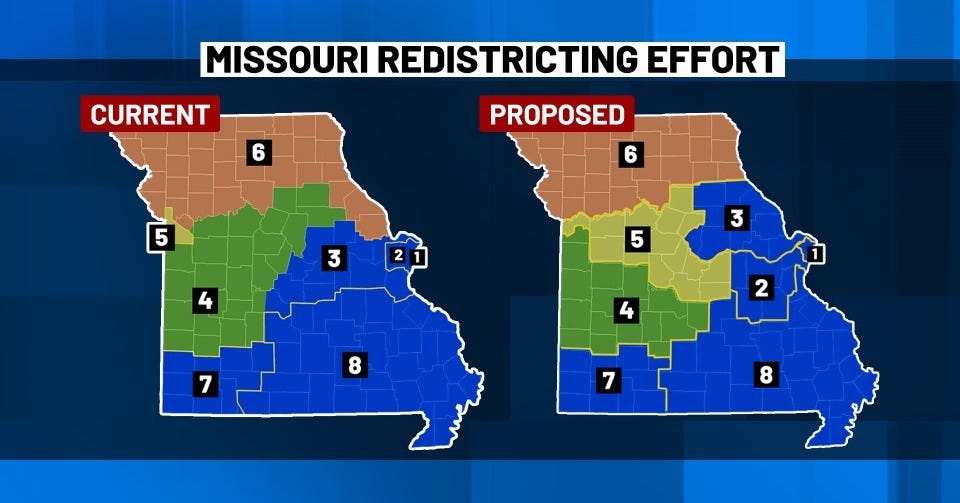
JEFFERSON CITY — A Missouri judge has ruled that Gov. Mike Kehoe did not violate the state constitution by calling a special legislative session last year to adopt a new congressional redistricting map — a decision that could shape the state’s political balance ahead of the 2026 midterm elections.
The ruling escalates tensions between Republican leaders who back the “Missouri First” map and civil rights groups who say the mid-decade redraw dilutes Democratic and minority voting power in Kansas City and beyond.
According to reporting, Cole County Circuit Judge Christopher Limbaugh issued the decision in favor of state officials, concluding that the governor had constitutional authority to convene the extraordinary session in September 2025. The court rejected the argument that the session lacked an “extraordinary occasion” as required by Article IV, Section 9 of the Missouri Constitution.
Related: Missouri Bill Would Let Employers Pay Teens Just $12.30 an Hour, Sparking Labor Backlash
Nearly five months after the special session produced a GOP-favoring congressional map, plaintiffs led by the Missouri State Conference of the NAACP contended the governor’s reasons — mid-decade redistricting and initiative petition reform — did not meet constitutional standards. The judge disagreed.
“The court finds that the governor had authority under the state constitution to call this session,” the ruling states, underscoring judicial deference to executive discretion.
Related: Virginia Democrats Agree on Controversial 10-1 Congressional Map Ahead of 2026 Election
The decision means that the map, which could give Republicans seven of eight U.S. House seats if it survives further challenges, remains in effect for now.
But the legal fight over the map is not over. Separate lawsuits and a citizens’ initiative referendum effort aim to suspend or overturn the map before the 2026 election, and appeals of this ruling are expected.
Observers say the outcome could set a precedent for how far state executives can go in mid-decade redistricting fights. Appeals and referendum deadlines are now the next big milestones in this contentious battle.
Related: Federal Judge Blocks DOJ Access to Michigan Voter Rolls, Citing Privacy Laws