


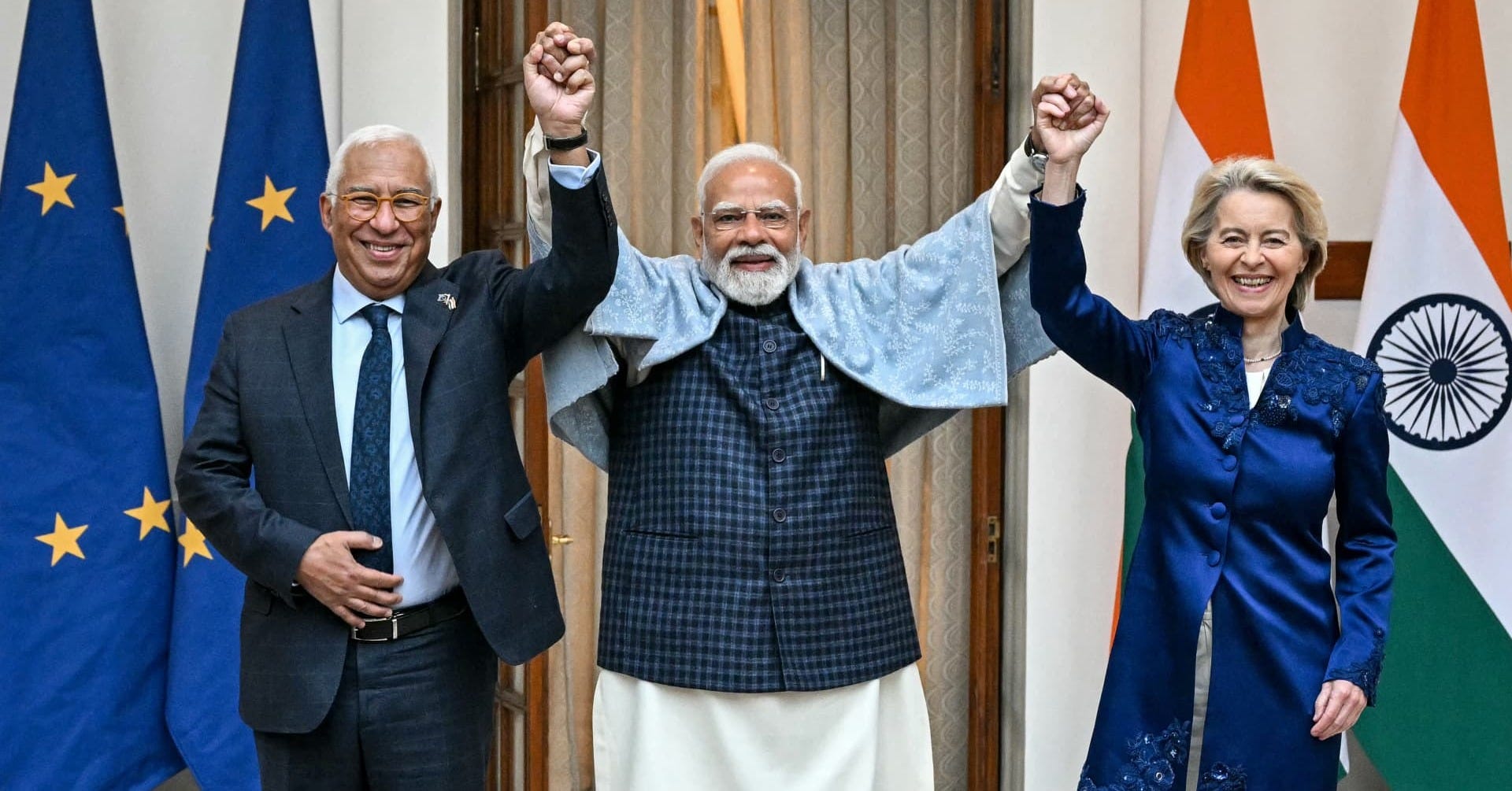
The European Union and India signed a major trade and security agreement in New Delhi on January 27, a deal leaders say could reshape global economic ties.
The pact is being touted by European Commission President Ursula von der Leyen as the “mother of all deals,” creating a free-trade zone spanning roughly 2 billion people and covering nearly a quarter of global output. That scale makes it one of the largest trade agreements of recent history.
Negotiators had spent nearly two decades hammering out terms before sealing the free-trade agreement and strategic cooperation framework this week. The core objective is reducing trade barriers and expanding market access between the 27-nation EU and India, a fast-growing economic powerhouse.
Under the deal, India will significantly reduce tariffs on imported European goods, including slashing car tariffs from previously steep levels down toward around 10 percent over time, with large tariff cuts or eliminations across machinery, chemicals, pharmaceuticals, and more. The EU will likewise cut or eliminate duties on the vast majority of Indian exports, covering textiles, marine products, and other sectors.
Follow The Coffman Chronicle on NewsBreak for daily breaking political coverage.
Beyond tariffs, the agreement expands access for EU and Indian firms in services such as finance, transport, and maritime trade, and introduces security cooperation provisions on maritime security, cybersecurity, and counter-terrorism.
“This agreement will bring major opportunities for the people of India and Europe,” von der Leyen said after the signing ceremony, underscoring the deal’s broad economic promise.
The pact still requires ratification by the European Parliament, EU member states where necessary, and the Indian government, which may stretch into 2026 or early 2027. Implementation of tariff schedules will be phased over several years, raising questions about timing and sectoral impacts.
What happens next is a series of domestic approvals and implementation timelines before full tariff liberalization and security cooperation can take effect.
Follow The Coffman Chronicle on NewsBreak for daily breaking political coverage.