


Once upon a time, the world looked to the United States as the gold standard of press freedom, a nation where truth was protected, journalists could challenge power without fear, and media served the public good rather than political factions. The First Amendment wasn’t just a legal doctrine. It was a global ideal.
But now, in 2025, that ideal has fractured, and the world is watching something very different.
From the rise of Fox News to the fall of NPR, from algorithmic manipulation to government-aligned broadcasters, America has gone from being a model of democratic media to the ground zero of media capture. And as goes America, so often goes the world.
This isn’t just an American problem. It’s an export. And it’s contagious.
Today, what began with U.S. deregulation in the 1980s and the rise of partisan outlets has metastasized into a global media crisis. Conservative empires stretch across continents. Propaganda disguises itself as journalism. Right-wing governments consolidate press power not with censorship laws, but with corporate acquisitions and broadcast takeovers. And every year, the gap between “free press” and “free-for-all” gets harder to define.
This article isn’t just about the U.S. or Rupert Murdoch. It’s about how a blueprint for ideological media control was drawn, scaled, and globalized, and how democratic societies have struggled, and often failed, to resist it.
We begin in America, where the first domino fell.
Stay Informed. Stay Loud.
Subscribe to The Coffman Chronicle for no-BS political analysis, action guides, and weekly truth bombs you won’t get from corporate media.
The United States: Deregulation and the Death of Balance
The American media system didn’t collapse overnight. It was dismantled, piece by piece, by policy decisions cloaked in the language of freedom and free markets.
It began with the Fairness Doctrine, a postwar policy enacted in 1949 that required broadcasters to present contrasting views on controversial public issues. It wasn’t perfect, but it established a baseline: if you used the public airwaves, you owed the public something close to balance.
Then came Ronald Reagan.
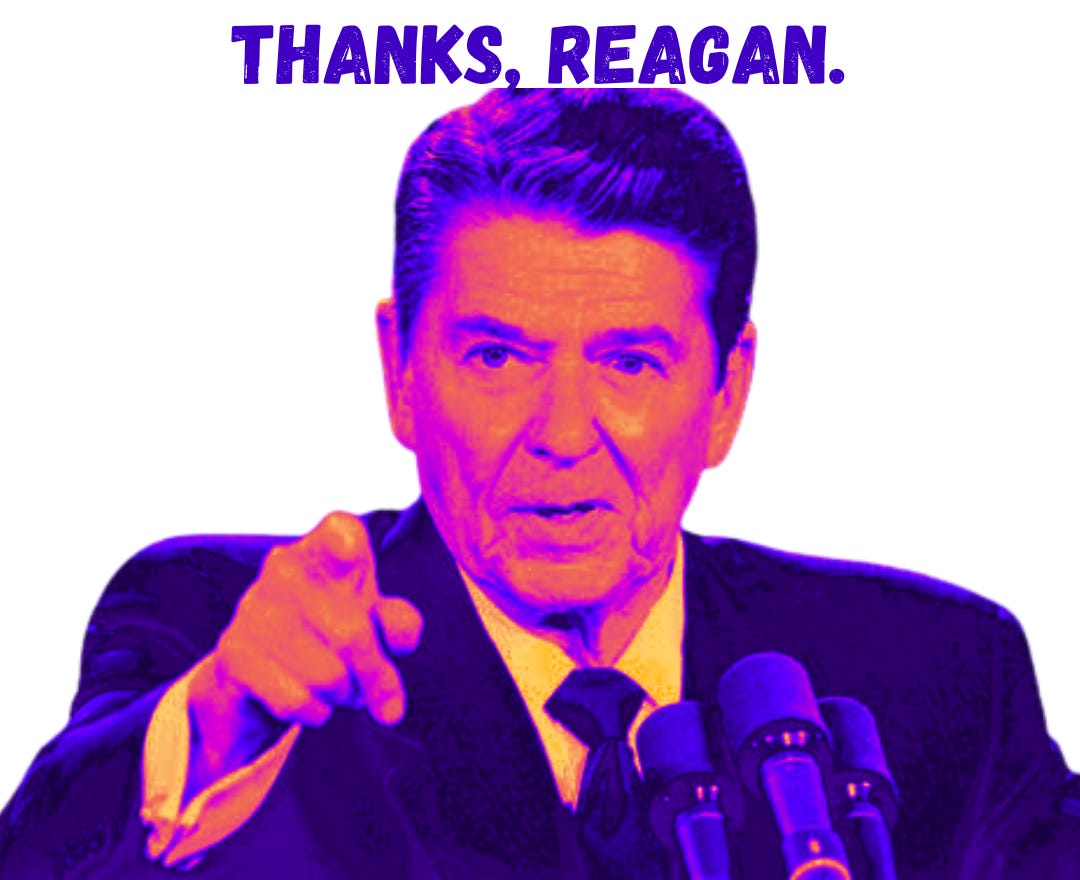
In 1987, Reagan’s FCC repealed the Fairness Doctrine, arguing that technological advances like cable TV rendered it obsolete. However, the real motive wasn’t innovation. It was ideology. Conservative thinkers had long criticized the mainstream press as biased, and Reagan’s allies saw an opportunity to remove the only federal guardrail against one-sided broadcasting.
In 1985, Rupert Murdoch became a U.S. citizen, a necessary legal move to acquire American television stations. Just two years later, Reagan’s FCC repealed the Fairness Doctrine, eliminating the last regulatory barrier standing between Murdoch and full ideological control of the airwaves.
By the mid-1990s, the deregulation wave had become a tsunami. Under Bill Clinton, the Telecommunications Act of 1996 removed longstanding caps on media ownership, allowing companies to consolidate newspapers, radio stations, and TV networks under a single umbrella.
This paved the way for the rise of Clear Channel’s radio monopoly, Sinclair’s local news propaganda network, and most fatefully, Fox News, launched by Murdoch and Roger Ailes in 1996 as a “fair and balanced” alternative to the so-called liberal media.
But with the Fairness Doctrine gone, there was no legal requirement to be either.
What followed was not just a shift in tone; it was a shift in purpose. News became entertainment. Opinion became news. And the loudest, angriest voices dominated the airwaves.
The Fairness Doctrine was dead. The market ruled. And truth became just another product.
See our previous reporting on the Fairness Doctrine here:

The Murdoch Nexus: A Global Blueprint for Media Power
No one seized the opportunity created by deregulation more effectively than Rupert Murdoch. Murdoch didn’t invent media manipulation. He just perfected it, globalized it, and embedded it inside the machinery of democracy itself.
Murdoch began his ascent not in the U.S., but in Australia, inheriting a newspaper from his father and using it to build an empire of tabloids and influence. From the start, he understood that print was power, and that in countries like Australia and the UK, print media faced virtually no legal obligation to be balanced or truthful.
In the UK, Murdoch’s purchase of The Sun and later The Times gave him unprecedented sway over British politics. His newspapers backed Margaret Thatcher, smeared labor organizers, and drove fear-based headlines that shaped public opinion. He didn’t need to be elected. He controlled the people who were.
By the 1980s, Murdoch had created a transnational playbook: build a tabloid empire, flood it with ideology, then expand into broadcast once the regulatory climate allows.
In 1985, he became a U.S. citizen, not out of love for America, but to satisfy federal ownership rules and buy U.S. TV stations. Two years later, Reagan’s repeal of the Fairness Doctrine cleared the way for his next move.
In 1996, with Clinton’s Telecom Act opening the floodgates of consolidation, he launched Fox News, the most successful and destructive partisan news outlet in modern history.
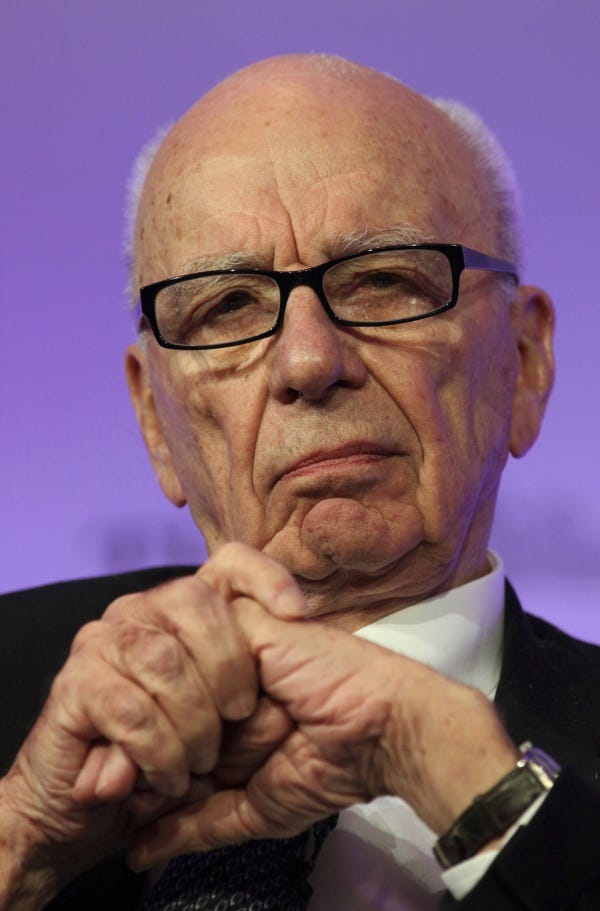
Fox didn’t invent right-wing populism. It weaponized it for mass consumption, using high production values, constant outrage, and an endless supply of talking heads. It blurred the line between journalism and propaganda, all while calling itself “news.”
From that point forward, Murdoch wasn’t just a publisher. He was a kingmaker, influencing elections in at least three democracies and reshaping public discourse to serve corporate and nationalist goals.
And others took notice.
Murdoch’s model — ideologically driven, commercially rewarded, and legally unaccountable — became a template for media consolidation and partisan control around the world.
The Global Collapse: Case Studies in Media Capture
The Murdoch model didn’t stay in the Anglosphere. Around the world, right-wing leaders, oligarchs, and media conglomerates studied it, adapted it, and unleashed it with results that continue to destabilize democracies.
These are not all identical systems. Some use corporate acquisition. Some rely on government suppression. But they all share one feature: media used as a weapon, not a watchdog.
United Kingdom
Murdoch’s influence is deep-rooted, having backed nearly every Conservative prime minister from Thatcher to Johnson. The Sun and The Times remain powerful instruments of political narrative.
Today, GB News and TalkTV mimic Fox News in tone and format, while Ofcom, the UK’s media regulator, struggles to rein in misinformation disguised as debate. Post-Leveson reform efforts collapsed under political pressure, leaving structural vulnerabilities intact.
Australia
News Corp dominates Australia’s newspaper market, owning over 60% of regional print media. Sky News Australia serves as a Murdoch echo chamber, now exported digitally to the U.S.
Attempts to investigate News Corp’s influence, such as a proposed Royal Commission, have stalled. Independent media struggles to survive, and public broadcasters face defunding and discrediting campaigns.
Israel
Under Benjamin Netanyahu, media consolidation aligned with political loyalty. Billionaire allies acquired critical outlets.
Netanyahu has repeatedly attacked press freedom and tried to restructure broadcasting authority. Independent sources like Haaretz face both state and social pressure, while pro-government outlets are rewarded with access and revenue.
Brazil
During Jair Bolsonaro’s presidency, attacks on the press escalated. Disinformation ran rampant on WhatsApp and YouTube, while the president labeled mainstream media as enemies.
Despite Brazil’s democratic framework, media companies caved to political pressure or were sidelined by digital insurgency, another iteration of the Murdoch model: ideology plus platform dominance.
India
Prime Minister Narendra Modi’s government has merged nationalist ideology with corporate media ownership. Outlets like Republic TV act as government mouthpieces, while critical journalists face raids, arrests, or digital blacklisting.
Modi’s media strategy mirrors Trump and Bolsonaro, turning public institutions into tools of spectacle and silence.
Mexico
President AMLO frequently targeted the independent press, accusing outlets of bias and corruption. Violence against journalists was endemic.
Despite the 2024 election of President Claudia Sheinbaum, press freedom remains under threat. Government control over oversight bodies has expanded, and violence against journalists continues with impunity.
Sheinbaum has maintained her predecessor’s hostile stance toward independent media, dismantling regulatory institutions and centralizing power, further chilling journalistic freedom under the guise of reform.
Hungary & Poland
Hungary under Viktor Orbán provides the most extreme case of state-aligned media. Virtually all major outlets are controlled by government allies or “donated” to friendly foundations.
In Poland, prior to 2023, the ruling PiS party turned public broadcasters into nationalist propaganda outlets. Both cases show what happens when the Murdoch model is taken to its logical extreme — total capture.
Across continents, the strategies vary, but the goal is the same: control the narrative, discredit dissent, and turn the press from a mirror into a megaphone.
Why the Right Built the Machine First
The global pattern is unmistakable: from Fox News to GB News, from India’s Republic TV to Brazil’s YouTube influencers, the rise of ideologically driven media consolidation has overwhelmingly favored the right. This isn’t just a coincidence; it’s structural, strategic, and deeply profitable.
Capitalism Rewards Simplicity, Not Subtlety
Right-wing narratives are tailor-made for modern media economics. They rely on binary thinking — us vs. them, tradition vs. chaos, strength vs. weakness. These frames are emotionally charged, easy to repeat, and perfect for a media ecosystem that rewards clicks, outrage, and speed.
Progressive politics, by contrast, often demand nuance, patience, and structural critique, none of which convert well in an attention economy driven by fear and fury.
Free Markets Favor Authoritarian Messaging
Media consolidation is a tool of economic power, and conservative movements often work to deregulate markets, defund public broadcasters, and weaken labor, all of which make it easier for corporations and ideologues to dominate the information space.
Right-wing media empires don’t fight capitalism. They are its most aggressive marketers.
Victimhood Is a Profitable Position
Conservative media thrives on the idea of being under siege by immigrants, feminists, academics, LGBTQ+ activists, or “the globalist elite.” This narrative creates constant enemies, fueling loyalty, identity, and tribalism. It also justifies extremism as self-defense.
This feedback loop isn’t just persuasive. It’s addictive. It keeps viewers coming back, not for information, but for validation and vengeance.
Regulation and Ethics Slow the Left
Progressive media outlets, especially public broadcasters and nonprofit journalism, are often bound by ethics, fact-checking, and public service mandates. They avoid propaganda. They invite dissent. They report inconvenient truths.
And in a market-driven media ecosystem, that makes them less scalable, less profitable, and increasingly vulnerable to defunding or takeover.
In short, the modern media landscape rewards the worst instincts of political messaging. The right learned how to dominate it first, not because they had better arguments, but because they were more willing to abandon the truth in service of power.
The Authoritarian Media Playbook
From India to Hungary, from Brazil to the United States, the tactics are chillingly familiar. Authoritarian-leaning governments and movements don’t just tolerate partisan media. They depend on it. Across borders, the strategies are strikingly similar.
These regimes don’t always need to outlaw opposition. They simply drown it out, discredit it, or co-opt it. Here’s how the playbook works:
Flood the Zone with Bullsh*t
Coined by Steve Bannon, this tactic overwhelms the public with so much misinformation, distortion, and outrage that truth becomes irrelevant. When everything is biased, manipulated, or fake, nothing is credible.
This tactic creates cynicism, paralysis, and tribal loyalty. It’s not about persuading the public. It’s about exhausting them into submission.
Collapse the Distinction Between News and Propaganda
Fox News in the U.S., GB News in the UK, and Republic TV in India all follow the same model: commentary dressed as journalism, partisan loyalty disguised as objectivity.
The goal isn’t to report. It’s to reinforce worldview, to turn journalism into performance, and reporting into obedience.
Undermine Institutions and Elevate the Leader
In authoritarian media systems, the state is always under attack, but the leader is always right. Dissent becomes treason. The judiciary, press, and legislature are portrayed as corrupt or elite.
At the same time, the leader becomes a mythic figure, a savior, a victim, a strongman. Media helps maintain the illusion of populism without democracy.
Turn the Audience into Soldiers
Authoritarian media isn’t just about information. It’s about mobilization. Viewers are turned into foot soldiers, outraged, armed with talking points, and ready to act online or in the streets.
This radicalizes the base and threatens critics, replacing debate with intimidation.
Weaponize Technology and Scale the Message
From social media algorithms to AI-generated content, authoritarian media adapts quickly to new tools.
WhatsApp in Brazil, YouTube in the U.S., and troll farms in Russia all serve the same purpose: spread disinformation faster than it can be debunked.
See our reporting from earlier this year here:
Note: This article is more than 45 days old and now lives in the archive. Become a paid subscriber for exclusive perks including complete access to all 800+ articles.

This is not a glitch. It’s a system. In country after country, it’s working.
Muted Across Borders: The Global Cost of Deregulated Media
This story began in America, but it no longer belongs to just one nation. The tools of ideological media control, once tested in the laboratories of U.S. deregulation, have gone global. What was once framed as the marketplace of ideas has become a battlefield.
In country after country, the pattern repeats:
A strongman or populist rises to power.
A media empire grows in lockstep, reshaping truth into loyalty.
Regulations weaken, public trust collapses, and the press becomes an arm of the regime, or a target.
What makes this moment so dangerous isn’t just the scale of disinformation, but the systemic failure to protect the very institutions meant to resist it. Public broadcasters are under attack. Journalism is underfunded. Independent media is harassed, surveilled, and in some places, murdered.
The result isn’t just authoritarian politics. It’s democratic decay — slow, quiet, and devastating.
America taught the world how to deregulate media. Now the world is watching it struggle to survive the consequences.
This is not just a crisis of journalism. It’s a crisis of democracy itself.
Truth in the Age of Capture
We’re not calling for censorship. We’re calling for sanity.
In an age where billionaires own headlines, governments threaten journalists, and opinion is sold as fact, we need more than outrage. We need reform rooted in truth, transparency, and democratic survival.
Here’s what that looks like:
Label Opinion as Opinion
Media outlets, including print, broadcast, and digital, must clearly distinguish fact-based reporting from commentary. Just as we label ads and sponsorships, we must label ideology. Viewers deserve to know when they’re watching news and when they’re being sold a worldview.
Restore Standards to the Public Airwaves
The public airwaves still belong to the people. Broadcast licenses should carry minimum requirements for accuracy, public service, and balance. Reinstate modernized versions of fairness principles, not to suppress opinion, but to protect fact-based discourse.
Require Ownership and Agenda Transparency
We deserve to know who owns the media we consume, and what political or financial interests they serve. Media empires should disclose their funders, affiliations, and ideological commitments the same way campaigns and nonprofits must.
Treat Misinformation as a National Security Threat
When coordinated disinformation undermines elections, public health, or civil rights, it isn’t just bad journalism. It’s a strategic attack on democracy. Governments must treat information warfare with the seriousness it demands, with legal tools, oversight, and international cooperation.
This isn’t about silencing voices. It’s about naming them and demanding accountability from those who pretend their megaphones are mirrors.
The next installment will explore how independent voices, such as podcasters, Substackers, and citizen journalists, are fighting back. However, they’re swimming against a tide of algorithmic invisibility, monetization bans, and cultural silencing.
It’s not enough to defend press freedom. We must rebuild a media system worthy of that freedom.
Transparency Statement
This article was independently researched and written by Marie Riverton with editorial collaboration from a generative AI assistant trained by OpenAI. All factual claims are sourced from publicly available, credible journalism and government data, with citations provided where possible.
This work is not affiliated with any political campaign, advocacy group, or media outlet. This substack is affiliated with the Tony Michaels Podcast. We are progressive liberals, but our agenda is truth, clarity, and democratic accountability.
We believe media should disclose its ownership, biases, and tools. That starts here.
Stay Informed. Stay Loud.
Subscribe to The Coffman Chronicle for no-BS political analysis, action guides, and daily truth bombs you won’t get from corporate media.
Bibliography:
“Fairness Doctrine,” Wikipedia, updated June 2025.
“Fairness Doctrine Topic Guide,” Ronald Reagan Presidential Library, accessed July 29, 2025.
“The Fairness Doctrine: History and Significance.” Encyclopaedia Britannica, July 4, 2025.
“How Deregulation Created a Corporate Media Nightmare,” Current Affairs, March 2023.
Moyers, Bill. “The Net @ Risk: Big, Bigger, Biggest Media.” PBS, 2006,
“Rupert Murdoch,” Britannica, updated 2025.
“Murdoch and the Corporate Media Clan,” FAIR.org, January 1, 1988.
“Mexico president open to modifying telecoms bill after censorship accusations,” Reuters, April 25, 2025.
“Study links U.S. polarization to TV news deregulation,” WSU Insider, September 14, 2015.
“The Age of Murdoch,” The Atlantic, September 2003.
About one year ago, I was shocked when our neighbors told us that their relatives back in Singapore watch Fox. I'm still stunned to think that that propaganda source reaches everywhere and is entertaining to other cultures.
You're right about everything. The dichotomy, the black and white thinking is a great danger. But since attention spans are constantly shrinking, most people don't want to read long and detailed articles. Do you know what the latest gadget in our „serious“ newspapers is? An AI-generated summary! That's crazy, isn't it?
Apart from that, facts are often not enough. You also need a good narrative.