


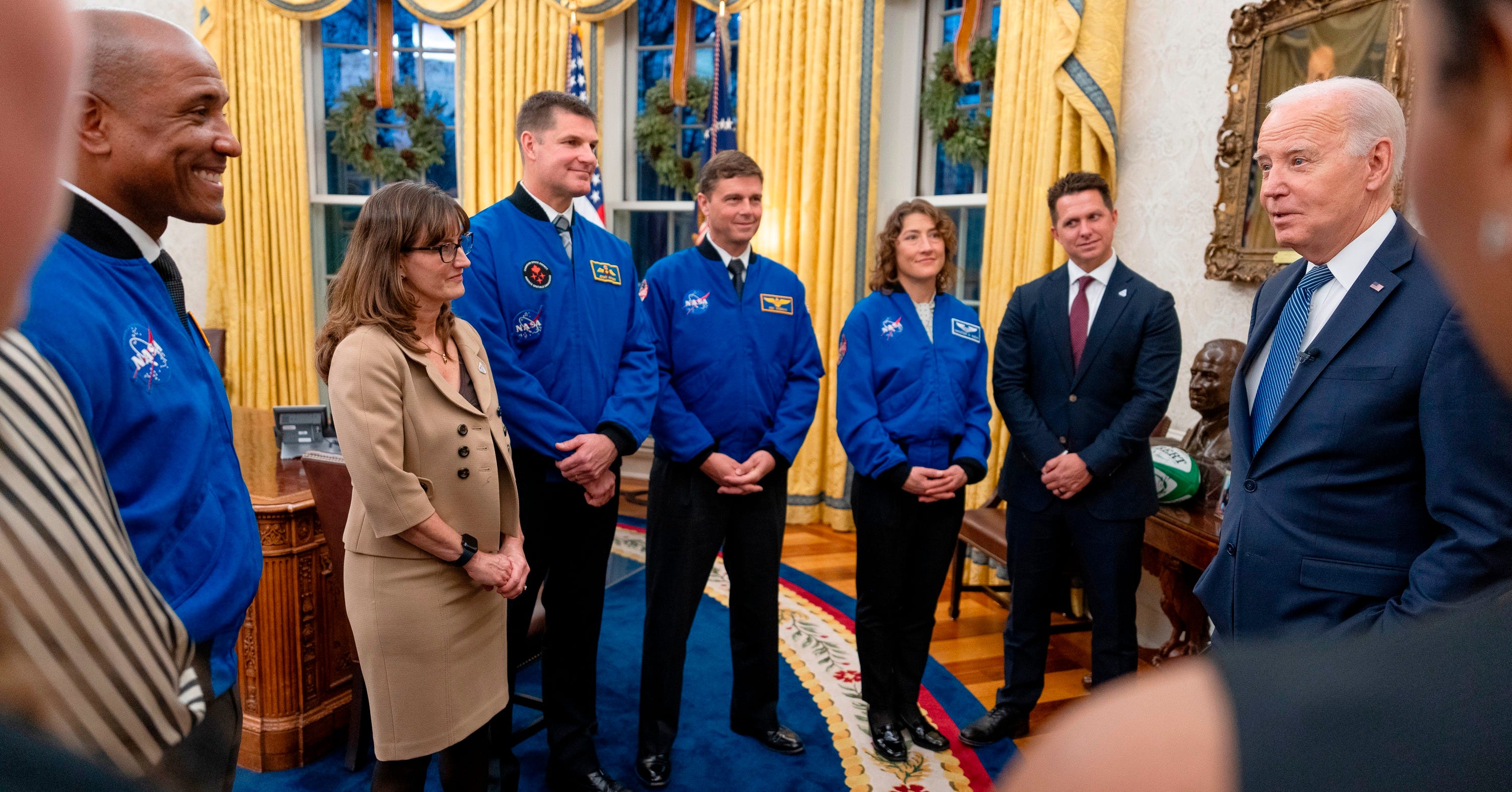
NASA’s Artemis II mission has returned from a historic flight around the Moon, reigniting a political question already circulating online: who gets credit for the program’s success?
The mission marks the first crewed journey beyond low Earth orbit in more than 50 years, but its origins stretch across multiple presidential administrations, creating tension over ownership of the achievement.
Artemis II launched April 1, 2026, carrying four astronauts on a roughly 10-day lunar flyby designed to test spacecraft systems ahead of a future landing, according to NASA and reporting from The Washington Post.
The Artemis program itself dates back to at least 2017, when NASA restructured its deep-space plans into the current framework aimed at returning humans to the Moon and eventually reaching Mars.
That timeline spans the Obama, Trump, and Biden administrations, complicating claims of direct political ownership as the mission gains global attention.
Subscribe free for daily political analysis they won’t broadcast. Join 110K+ readers →
“There’s no single administration that can claim full ownership of Artemis,” space policy analysts have noted in coverage of the program’s development.
The issue is gaining urgency as funding debates intensify, with recent reporting indicating proposed cuts to NASA budgets tied to future Artemis missions, raising concerns about long-term sustainability.
At the same time, viral posts and political messaging are beginning to frame the mission as a partisan achievement, despite its multi-year, multi-administration development.
Attention now shifts to Artemis III, the planned lunar landing mission, where questions of funding, leadership, and political credit are expected to become more visible.
For now, Artemis II stands as both a scientific milestone and a political flashpoint still unfolding.
Download a FREE Pocket Constitution NOW →
