


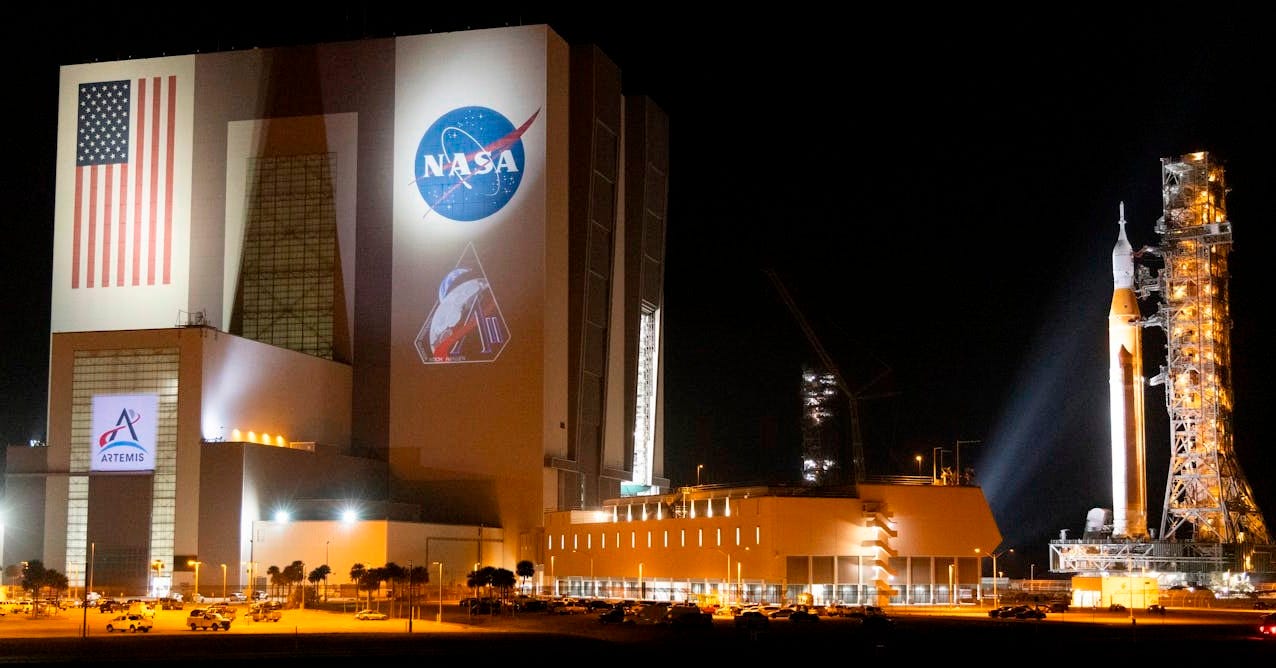
NASA’s long-term lunar ambitions are drawing renewed public attention as reports about future Moon base planning fueled widespread discussion across social media and space exploration communities this week.
At the center of the effort is the Moon’s south pole, a region scientists believe may contain significant water ice deposits that could eventually support drinking water, oxygen production, and even rocket fuel generation for future missions.
The south pole is also viewed as one of the most strategically valuable locations on the Moon because some elevated areas receive long periods of sunlight, making them attractive for solar-powered infrastructure.
NASA’s Artemis program has publicly framed future lunar missions as more than symbolic landings. Agency officials have repeatedly described Artemis as the foundation for sustained human operations beyond Earth and a stepping stone toward eventual Mars missions.
Commercial aerospace companies are expected to play a major role. Blue Origin, SpaceX, and other contractors are competing for transportation, cargo, and infrastructure contracts tied to future lunar operations.
Subscribe free for daily political analysis they won’t broadcast. Join 110K+ readers →
The renewed focus on long-term Moon infrastructure has also intensified geopolitical discussion online, particularly around growing competition between the United States and China in space exploration. Chinese officials and researchers have discussed future lunar research station concepts in recent years, increasing pressure on the U.S. to maintain leadership in deep-space exploration.
Social media reaction has ranged from excitement about permanent off-world settlements to debate over the costs and priorities of large-scale space programs. Much of the online discussion framed Artemis as the possible beginning of a modern-era space race centered on lunar infrastructure and strategic positioning.
NASA has not formally announced a timeline for a permanent Moon colony. But the direction of the Artemis program is becoming increasingly clear. The agency is moving beyond isolated missions toward a broader long-term strategy for sustained human activity on and around the Moon.
Subscribe free for daily political analysis they won’t broadcast. Join 110K+ readers →