


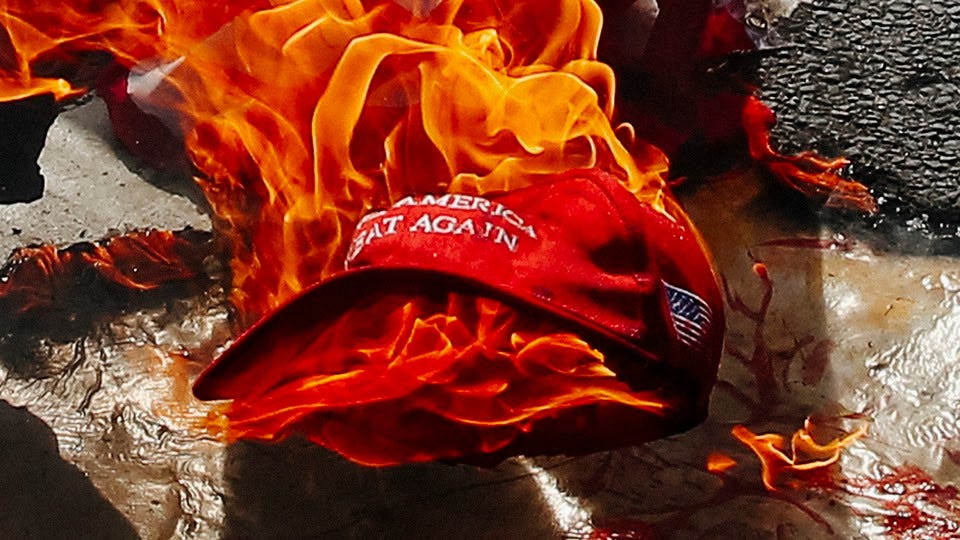
A new POLITICO survey indicates a widening divide inside President Donald Trump’s 2024 voting coalition, raising fresh questions about the stability of the political movement that powered his return to the White House. According to the poll, just 55% of Trump’s 2024 voters now identify as “MAGA Republicans,” while 38% say they do not, signaling a notable split within a bloc long viewed as unified. The poll surveyed 2,098 U.S. adults between Nov. 14–17, 2025.
Follow The Coffman Chronicle on NewsBreak for daily breaking political coverage.
According to POLITICO, this divide extends beyond simple labels and into voters’ views on major national issues. Among those who still call themselves MAGA, 47% say “the current economy still belongs fully to Joe Biden.” That figure drops to 26% among Trump voters who reject the MAGA identity — a gap suggesting that frustration over economic conditions is intensifying even among the movement’s core supporters.
The polling also shows contrasts in how the two groups evaluate Republicans on key priorities such as health care and the cost of living. Self-described MAGA voters are significantly more likely to trust the GOP on those issues, while non-MAGA Trump voters appear more skeptical of both party leadership and the direction of national policy. POLITICO reports that these voters also express more doubts about whether Republican proposals will meaningfully address rising prices.
Strategists tracking the electorate say the numbers highlight a potential vulnerability for Trump and the broader Republican Party heading into 2026. A less cohesive MAGA identity could complicate messaging, turnout efforts, and the party’s ability to maintain alignment on policy debates.
What happens next will depend on whether the White House and GOP lawmakers can bridge the divide. For now, the poll suggests a once-central political brand may be losing resonance with a sizable share of Trump’s own supporters — a shift that could influence upcoming legislative fights and the next electoral cycle.