


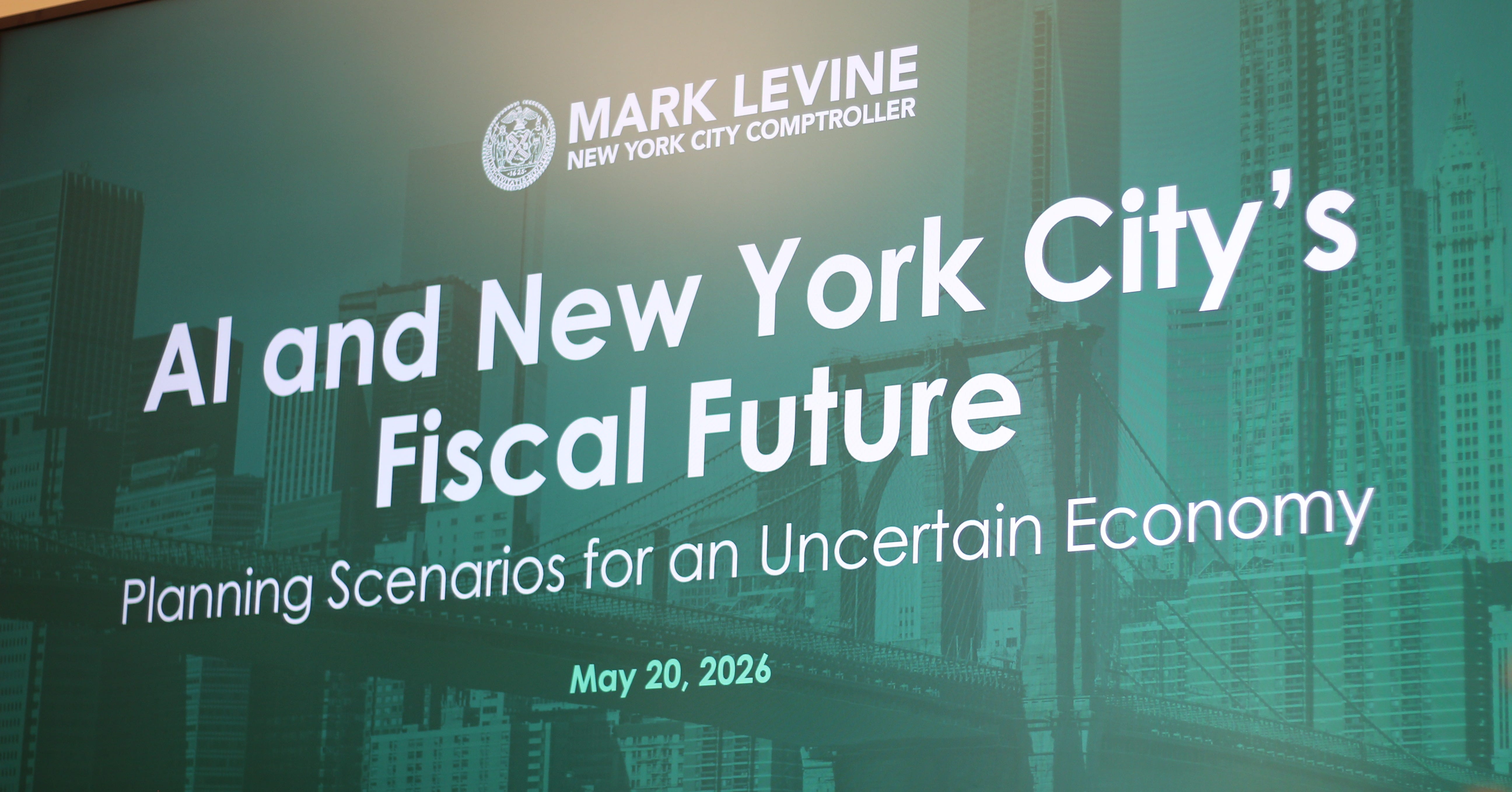
New York City Comptroller Mark Levine is warning that artificial intelligence could put major pressure on the city’s jobs, tax revenue and public services.
The warning comes in a new report from Levine’s office that models five possible paths for AI’s impact on New York City through 2030. The scenarios range from stronger productivity and growth to deeper disruption involving job losses, weaker revenue and pressure on key industries.
The report is gaining attention online because it connects a national fear, AI replacing workers, to a local New York City consequence. Posts from the comptroller’s office and local news outlets have highlighted the possibility of large-scale job disruption, while some readers have cautioned that the report describes scenarios rather than a guaranteed outcome.
That distinction matters. The report does not say mass layoffs are certain. It says the uncertainty is serious enough that New York City should prepare now.
New York may be especially exposed because its economy depends heavily on high-wage office sectors, including finance, professional services, technology and real estate. Those industries support not only workers in Manhattan office towers, but also restaurants, transit, small businesses and city tax collections tied to wages, profits and property values.
Subscribe free for daily political analysis they won’t broadcast. Join 110K+ readers →
Levine’s office is urging the city to increase its rainy day fund to 16% of annual tax revenue. The office says stronger reserves would help the city respond if AI-driven disruption leads to weaker job growth or lower revenue.
The plain-English consequence is simple. If AI hits New York’s job market faster than expected, city officials could face pressure to cut services, raise revenue or spend more on worker retraining.
The report also leaves room for upside. AI could increase productivity and create new industries. But Levine’s central argument is that New York should not wait for layoffs or revenue losses to appear before preparing for the risk.
Subscribe free for daily political analysis they won’t broadcast. Join 110K+ readers →