


The Supreme Court handed the presidency something no American institution should ever have: unchecked power. In its recent ruling regarding deportation to third-country locations, the unsigned, unexplained order expanded on its 2024 ruling, which had given the President unilateral permission. The conservative majority didn't just stretch executive authority. It obliterated accountability, declaring that if a president claims their actions are “official,” they’re likely untouchable. Think about that. From launching drone strikes to using federal power to punish political enemies, this Court says it might all be fair game.
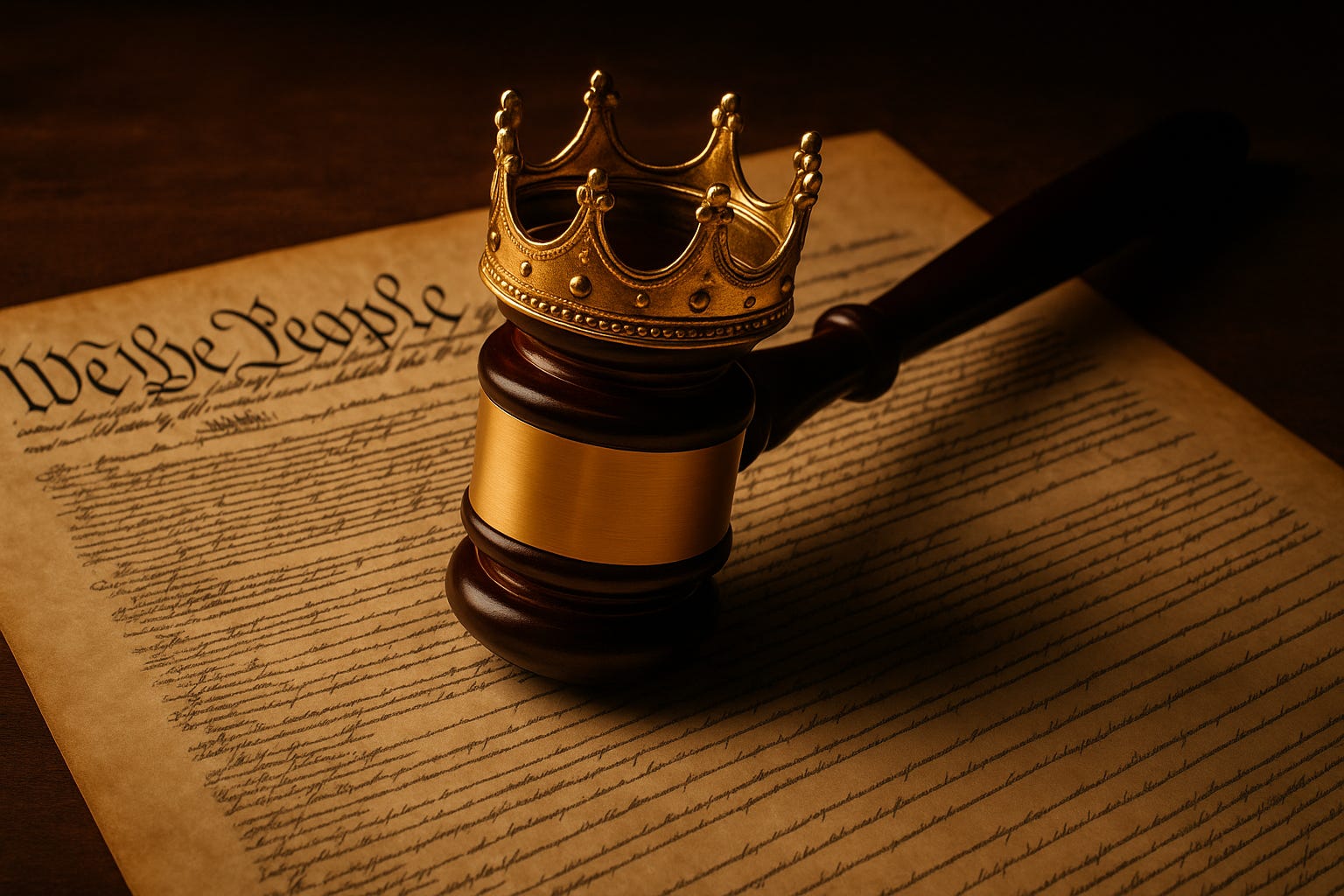
Want to Know Your Rights?
Download a free digital copy of the U.S. Constitution—the same document Trump is trying to bulldoze. Learn exactly what he's breaking… and how to fight back.
📬 Stay Informed. Stay Loud.
Subscribe to The Coffman Chronicle for no-BS political analysis, action guides, and weekly truth bombs you won’t get from corporate media.
See our reporting on the recent third-country deportation decision here:

If that wasn’t enough, the rot runs deeper. Justice Clarence Thomas accepted lavish gifts from a billionaire benefactor with business before the Court. Justice Samuel Alito flew the flag of a violent insurrectionist movement outside his home, then ruled on January 6-related cases without recusing himself. They weren’t punished. They weren’t investigated. They weren’t even asked to explain. Instead, they kept their robes, their power, and their influence over the lives of 330 million Americans.
Meanwhile, Congress shrugs. The Senate Judiciary Committee holds hearings that go nowhere. Ethics bills stall out. And the justices? They operate under no binding code of ethics, a reality unimaginable in any other branch of government. You can’t even get a job at a Starbucks without more oversight than a Supreme Court justice.
So here we are: an unelected body, serving for life, immune from prosecution, enriched by the powerful, and now empowering the executive branch to operate with near-total impunity.
This isn’t just judicial overreach. It’s a quiet constitutional coup.
But here's the truth they don't want you to hear: we are not powerless. Congress may be paralyzed. The Court may be corrupted. But the people still hold the power to fight back, and there’s a growing movement ready to take this crisis head-on.
This isn’t a call to trust the system.
It’s a call to challenge it.
Decisions That Break Democracy
So, how did we get here? Let’s look at the rulings that didn’t just stretch the law, but instead broke democracy wide open.
Start with the blockbuster: Trump v. United States. In this ruling, the Court declared that a president is shielded from criminal prosecution for “official acts.” Translation? If a president orders the military to seize voting machines or weaponizes the DOJ against political opponents, as long as it’s framed as part of their job, it might be legal. They’ve functionally created a king.
Then there’s Loper Bright v. Raimondo, the decision that gutted Chevron deference —a 40-year precedent that allowed federal agencies to interpret the laws Congress wrote. It sounds boring, but it’s seismic. Chevron allowed experts, such as scientists at the EPA, economists at the SEC, and doctors at the FDA, to determine how laws worked in real life. Now? That power shifts to unelected, unaccountable judges who have made clear they want to dismantle the administrative state. From clean air protections to labor rights, this ruling kicks the legs out from under nearly every modern regulation.
And let’s not forget the Court’s flirtation with the independent state legislature theory — the idea that state legislatures should have absolute power over federal elections, unchecked by state courts or constitutions. It was too toxic for a full endorsement, but it’s still lurking in the wings. One vote, one ruling, and the door swings open for election subversion.
These aren’t one-offs. They’re part of a deliberate, coordinated rollback of guardrails that protect democracy from dictatorship. The Court is:
Weakening regulatory power
Expanding presidential immunity
Undermining voting rights
And declaring itself the final word, with no accountability
This isn’t conservative jurisprudence. It’s political sabotage dressed in robes.
Each ruling tightens the noose on public power and loosens the leash on executive abuse. The result? A legal doctrine where the president can act with impunity, and the people can’t fight back.
These rulings don’t emerge from a vacuum. They come from justices deeply entangled with the very forces they’re supposed to restrain. Now let’s talk about the corruption behind the curtain.
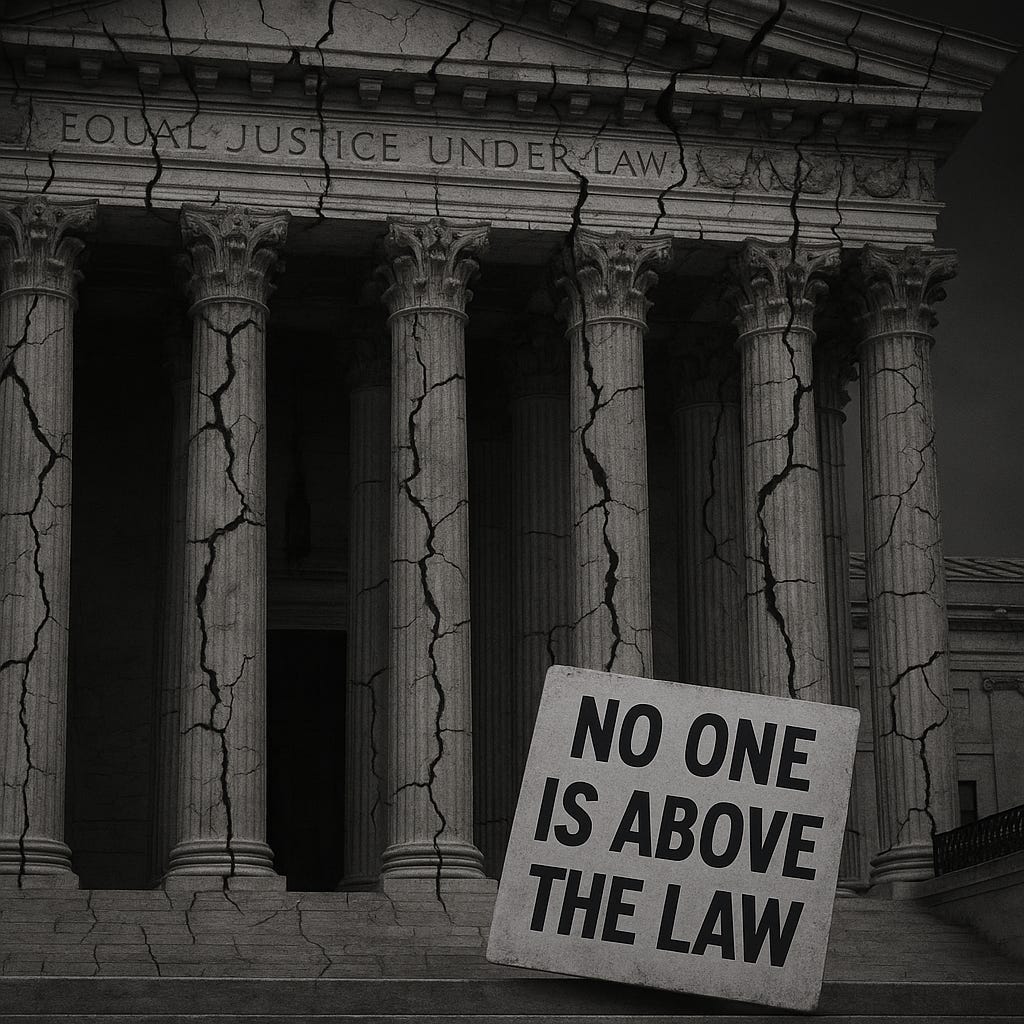
Corruption Without Consequence
The Supreme Court loves to tell the American people that it is above politics. What it doesn’t mention is that it may also be above the law.
Start with Clarence Thomas. For years, he accepted luxury travel, private school tuition for a relative, and real estate deals, all courtesy of billionaire Republican megadonor Harlan Crow. Thomas failed to disclose any of it. In one case, Crow even had business before the Court. Thomas ruled anyway.
Then there’s Samuel Alito, who took a lavish fishing trip paid for by a hedge fund billionaire, whose firm also had cases before the Court. Alito didn't recuse. He didn’t apologize. Instead, he published a preemptive op-ed arguing the trip was fine. He wrote it for the Wall Street Journal. Not a joke.
But it doesn’t stop at yachts and jets. Alito was also caught flying two separate flags associated with the Stop the Steal movement — one of them upside-down, the other used by January 6 insurrectionists — outside his homes in 2021 and 2023. When asked if he’d recuse from Trump-related or January 6 cases, he refused.
Let’s be clear: If a federal judge anywhere else in the country took gifts from a party with a case before them, they’d be investigated. If they flew insurrectionist flags, they’d be removed.
But these aren’t just any judges. They’re the nine most powerful people in the judiciary, appointed for life, answerable to no one, operating under no enforceable code of ethics.
See our reporting here on how Thomas and Alito selectively enforce freedom of speech:
Note: This article is more than 45 days old and now lives in our archive. Consider becoming a paid subscriber for the full 700+ article archive and exclusive perks.

Congress has asked for answers. The justices shrugged.
The public has demanded recusal. They’ve refused.
And the cases keep coming — about abortion, elections, executive power, and more — all decided by a bench that can’t even be bothered to pretend it's impartial.
This isn’t a few bad apples. It’s a system built to protect its own elite, regardless of how compromised they may be. If these justices can’t be held accountable, if they’re insulated from the very rules they impose on the rest of us, then what they’re practicing isn’t justice. It’s supremacy.
So, who’s supposed to keep the Court in check? Congress. And what have they done? Not nearly enough.
What Congress Could Do But Won’t
Congress isn’t powerless. It’s paralyzed by politics, fear, and, in some cases, open collaboration with the very justices undermining democracy.
Let’s start with what it could do. The Constitution gives Congress the authority to regulate the judiciary. That includes the power to:
Impeach justices for misconduct or corruption
Expand or shrink the Court (as has been done seven times in U.S. history)
Strip jurisdiction, limiting what types of cases the Court can hear
Pass legislation enforcing ethics rules, recusals, and disclosure laws
Investigate justices who abuse their power or violate the public trust
So why isn’t any of that happening?
Because Congress won’t move unless it’s forced to.
The House won’t initiate impeachment — not even symbolic resolutions — because Republicans are in lockstep behind the Court’s hard-right rulings, and Democrats are terrified of being labeled “radical” for holding anyone accountable.
The Senate Judiciary Committee held hearings. They got headlines, but no subpoenas, no enforcement, and no consequences.
Ethics legislation, like the Supreme Court Ethics, Recusal, and Transparency Act, exists. Still, it’s rotting in legislative purgatory because too many Senators, especially on the Judiciary Committee, refuse to take on the black-robed aristocracy that rules over them.
Even so-called moderates, like Joe Manchin and Kyrsten Sinema, have expressed “concerns” and done nothing. They’d rather protect the illusion of institutional dignity than confront the very real corruption eating the Court from within.
Meanwhile, Mitch McConnell and the Federalist Society have spent decades building this moment, installing justices loyal not to the law but to an ideology of power and deregulation.
Let’s call it what it is: strategic inaction.
Congress isn’t standing by because it can’t act. It’s standing by because it won’t.
If the institutions won’t save us, it’s on us to change the game. Here’s how we fight back, not someday, but right now.
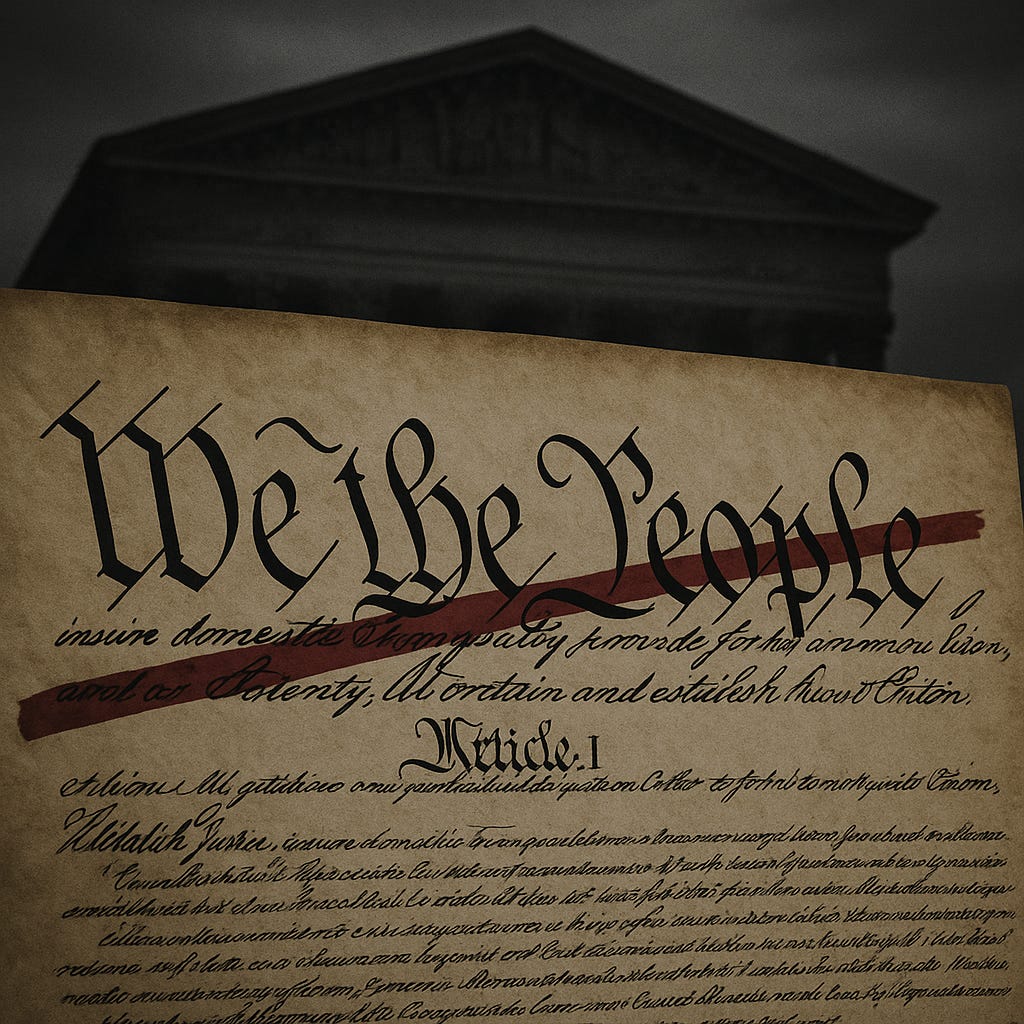
What We Can Do Now
They want you to feel powerless. They want you to believe that unless you're a senator or a billionaire, you can't touch the Supreme Court. That’s the lie that keeps them safe.
But history tells a different story, one where people outside the halls of power forced change inside them. When courts upheld segregation, people organized in response. When Watergate exposed unchecked executive power, people demanded reform. And when the system tried to protect itself, people tore the veil off and rebuilt it.
We’re there again. Here’s how we fight back.
1. Expose
They thrive in silence. We break that.
Amplify reporting from watchdogs like ProPublica, CREW, and Fix the Court. Don’t just share it. Burn it into public conversation.
Call out corruption by name. Say: Clarence Thomas accepted gifts from a billionaire and ruled on his cases. That’s corruption.
Use ethics complaint portals, FOIA tools, media tip lines. Truth spreads if we push it.
2. Pressure
Make power uncomfortable. That’s the only language it hears.
Call your reps: (202) 224-3121
“I demand action on judicial ethics reform. Mandatory recusals. Public disclosures. No exceptions.”Show up: Town halls, banner drops, social media storms. Noisier = harder to ignore.
3. Organize
Movements don’t start in marble buildings. They begin at kitchen tables and in the streets.
Join groups like Demand Justice, Take Back the Court, and Fix the Court.
Build local coalitions. Student orgs. Unions. Faith leaders. Climate activists. The Court impacts all of us, so the resistance should too.
4. Elect
If Congress won’t act, replace them.
2026 matters. The Senate confirms judges and sets the stage for reform.
Back candidates who call out the Court, not coddle it.
Primary the complacent. Make inaction a career-ending move.
You want checks and balances? Be one.
But this goes deeper than tactics. It’s about reclaiming the soul of democracy and remembering that no one is coming to save us. So we will.
No One’s Coming to Save Us, So We’ll Save Us
The cavalry isn’t coming.
Not the Senate. Not the Department of Justice. Not a magical ethics panel or a better-behaved Court. If they were going to act, they would’ve done it before the justices accepted luxury vacations from billionaires, before they carved presidential immunity into the Constitution, and before they hollowed out environmental protections, worker rights, and election law with a few strokes of a pen.
So no, no one’s coming to save us.
But here’s the truth that scares them the most: we don’t need rescuing. We need organizing.
America has been here before, and every time an elite institution overreached, it was the people who forced change.
This fight isn’t over; it’s just beginning.
So pick up the tools, raise your voice, and remember: They wear robes, but we hold the line.
Call to Action
Pick up the phone
📞 (202) 224-3121
“I demand action on Supreme Court ethics reform. No more delays. No more excuses. Pass enforceable rules for recusal, transparency, and accountability — or prepare to be replaced.”
Join the movement
Spread the truth
Share this article. Talk to your neighbors. Call out corruption by name. If the media won’t hold these justices accountable, we will.
Vote like the Court is on the ballot, because it is
In every state, at every level, your vote shapes who writes the rules, confirms the judges, and decides if reform lives or dies.
Power concedes nothing without a demand.
Let’s be the demand they can’t ignore.
We just hit 17,000 subscribers—thank you!
Get exclusive access for just $1/week or $52 a year.
Get exclusive analysis and fearless reporting you won’t find in corporate media.
Bibliography
Trump v. United States. Supreme Court of the United States. No. 23‑939, decided July 1, 2024.
“Justices Rule Trump Has Some Immunity from Prosecution.” SCOTUSblog, July 1, 2024.
“Justice Clarence Thomas Acknowledges He Should Have Disclosed Luxury Travel and Gifts.” ProPublica, April 2024.
“Alito Took Unreported Luxury Trip With GOP Donor Paul Singer.” ProPublica, June 20, 2023.
“Justice Alito Took Undisclosed Trip with GOP Donors.” PBS, June 21, 2023.
“Senate Review of Supreme Court Ethics Finds More Luxury Trips, Urges Enforceable Code.” Associated Press, Dec 21, 2024.
I really don't understand why a head of state, wherever he is, is given immunity and can do whatever he wants without ever being called to account. That really is crazy.
The truth is very hard to bare.