


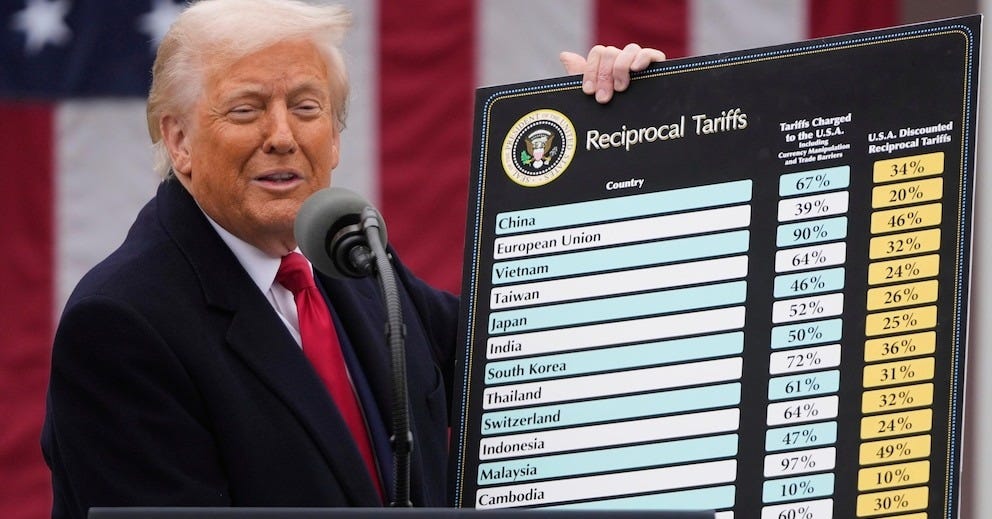
A new Federal Reserve Bank of New York report confirms that the lion’s share of President Trump’s recent tariffs was paid by American consumers and businesses, not foreign exporters — a finding with major implications for U.S. trade and inflation debates.
The study looked at tariff impacts in 2025, a year when the average U.S. tariff rate jumped from roughly 2.6% to around 13% on imported goods. Rather than foreign companies absorbing those costs, the New York Fed’s analysis found that about 90% of the economic burden was passed through to U.S. buyers and firms.
That dynamic creates tension between reported data and political claims. The Trump administration repeatedly argued that other countries would bear the cost of higher tariffs, a point underscored in a recent Wall Street Journal defense of the policy. Yet independent analysis shows overwhelming pass-through into U.S. import prices, meaning Americans paid more at the checkout.
The New York Fed economists — Mary Amiti, Chris Flanagan, Sebastian Heise and David Weinstein — noted that 94% of tariff costs were passed on to U.S. importers early in 2025, falling only slightly to 86% by November, as some exporters began absorbing a small share.
Related: Biden Beats Trump on Job Performance in Latest National Polls
According to the report, foreign exporters have only modestly reduced their prices in response to higher U.S. import taxes, leaving domestic firms and households to shoulder most of the cost.
“The bulk of the tariff incidence continues to fall on U.S. firms and consumers,” the New York Fed economists wrote in their analysis.
The findings undercut a key argument for the tariffs and support similar estimates by the Congressional Budget Office that most of the price increases are passed on to U.S. consumers.
Related: House Republicans Break Ranks, Vote With Democrats to End Trump’s Canada Tariffs
However, not all economists agree. Some policymakers at the Federal Reserve have argued that tariff effects on prices and economic activity have been more muted than these studies suggest.
As legal and political challenges to Trump’s tariff authority move forward, the debate over who truly pays the price will remain central to U.S. trade policy discussions.
Related: New CBO Report Says U.S. Debt Could Hit $64 Trillion by 2036