


Utah has just approved a 1,300-bed facility for unhoused people in the Salt Lake Valley. Officials are calling it a step toward stability, a “homeless services campus” with wraparound support. However, a closer look reveals something far more complex and far more troubling.
The facility will include over 300 beds for civil commitment. Not familiar? It is political speak for involuntary psychiatric confinement. The rest will be “work-conditioned housing,” a term raising alarm among advocates who fear it means access to shelter will require unpaid or low-wage labor. According to one housing advocate, this model “means forced labor,” especially given that the facility is expected to be coupled with stricter anti-camping enforcement, making refusal to participate a criminalized act.
On paper, it sounds like a comprehensive system. In practice, it’s the first known instance in the U.S. of a state-run homeless containment facility that merges involuntary treatment, work-requirements, and long-term housing under one roof on a massive scale. Worse, it’s being rolled out with little precedent, little public input, and no grounding in the best practices of homeless services.
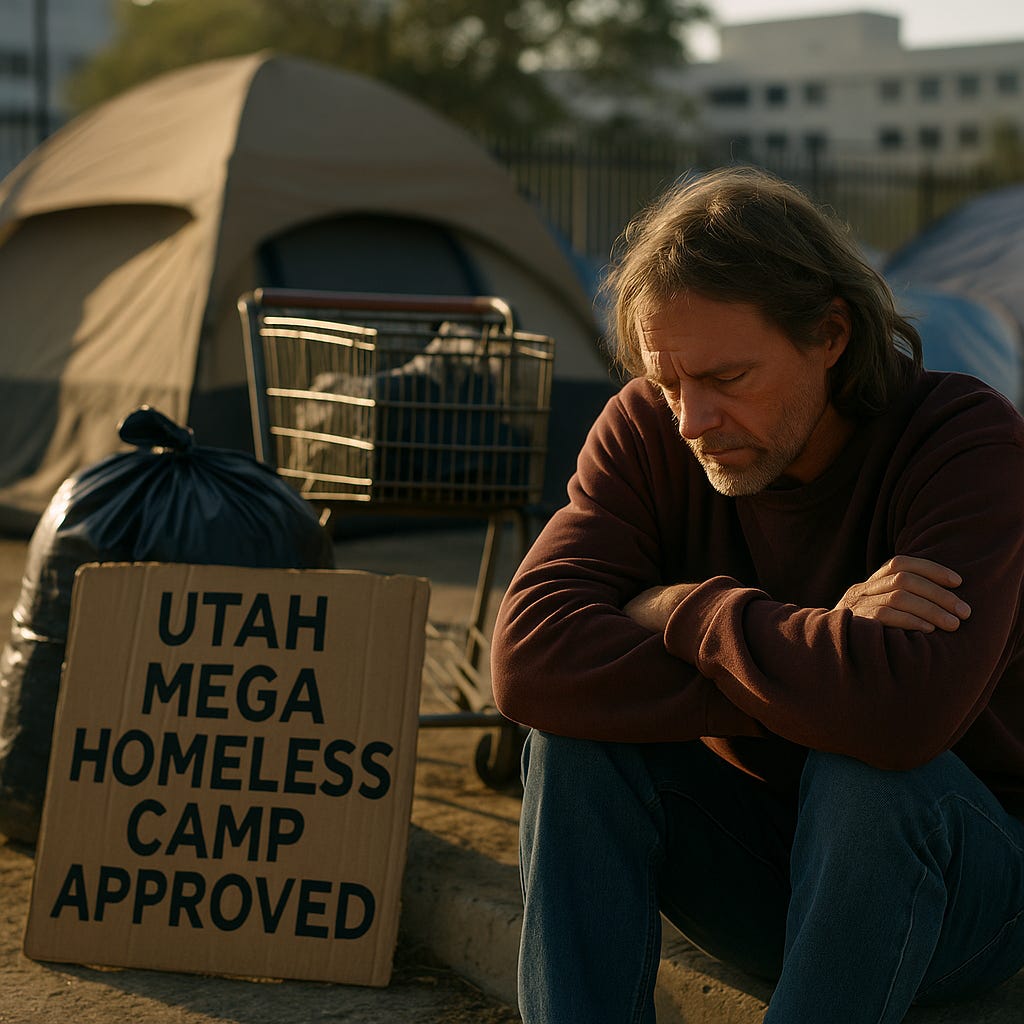
AI-generated image
Because democracy doesn’t defend itself, and neither does your sanity. Subscribe here to keep your eyes open and your sarcasm sharp.
A Model Without Expertise
This facility isn’t just large. It’s novel. Despite efforts to frame it as a step forward, no other state appears to have implemented a campus that blends:
Civil commitment
Labor-conditioned housing
Involuntary confinement risk
and full state operation of homeless services
There is no body of research to support this model— no peer-reviewed evidence, no recommendation from HUD, SAMHSA, or the National Alliance to End Homelessness. In fact, the model runs directly counter to the prevailing consensus among service providers: that homelessness is best addressed through flexible, trauma-informed, housing-first systems, not institutional warehousing.
What works — and has been proven to work — is the hub-and-spoke model: a central shelter or outreach team that refers individuals to specialized services. Mental health care is handled by clinicians. Addiction treatment by trained recovery staff. Housing support by case managers. Employment support by job trainers.
Each “spoke” is built for its purpose. Clients can engage at their own pace, choosing what fits their needs. It’s nimble, person-centered, and responsive.
The “all-in-one” model Utah is proposing is the opposite. It tries to do everything under one roof, and ends up compromising every component. Detox next to psychosis. Forced labor alongside untreated trauma. Families, youth, and severely mentally ill individuals all mixed together, navigating a system designed more for containment than care.
Where This Is Coming From
This isn’t happening in a vacuum.
In July, the Trump administration issued a sweeping Executive Order: Ending Crime and Disorder on America’s Streets, which instructs states and cities to:
Clear homeless encampments
Prioritize public order
Use civil commitment as a tool to remove visibly unhoused people
Shift federal funds away from voluntary housing models and toward “treatment-based” institutional settings
In short: hide the problem. Get people off the streets by any means necessary.
Utah appears to be the first major test case for this policy, with its proposed campus serving as a physical manifestation of the EO’s logic: that visibility, not vulnerability, is the true crisis.
But the EO, like the campus, is not based in expertise. It was not crafted by social workers, housing advocates, mental health professionals, or people with lived experience. It was drafted as a public order policy, not a human services one.
And it shows.
Why This Strategy Is Doomed to Fail
On the surface, Utah’s mega-campus model may look promising. Fewer tents. Cleaner sidewalks. People “off the streets.” However, these optics are a temporary illusion. Without addressing the conditions that lead people into homelessness in the first place, we are simply cycling them through a new kind of institution, one that may be more sanitized, but no less harmful.
It treats symptoms, not causes, and that makes it doomed to fail.
It ignores the housing crisis.
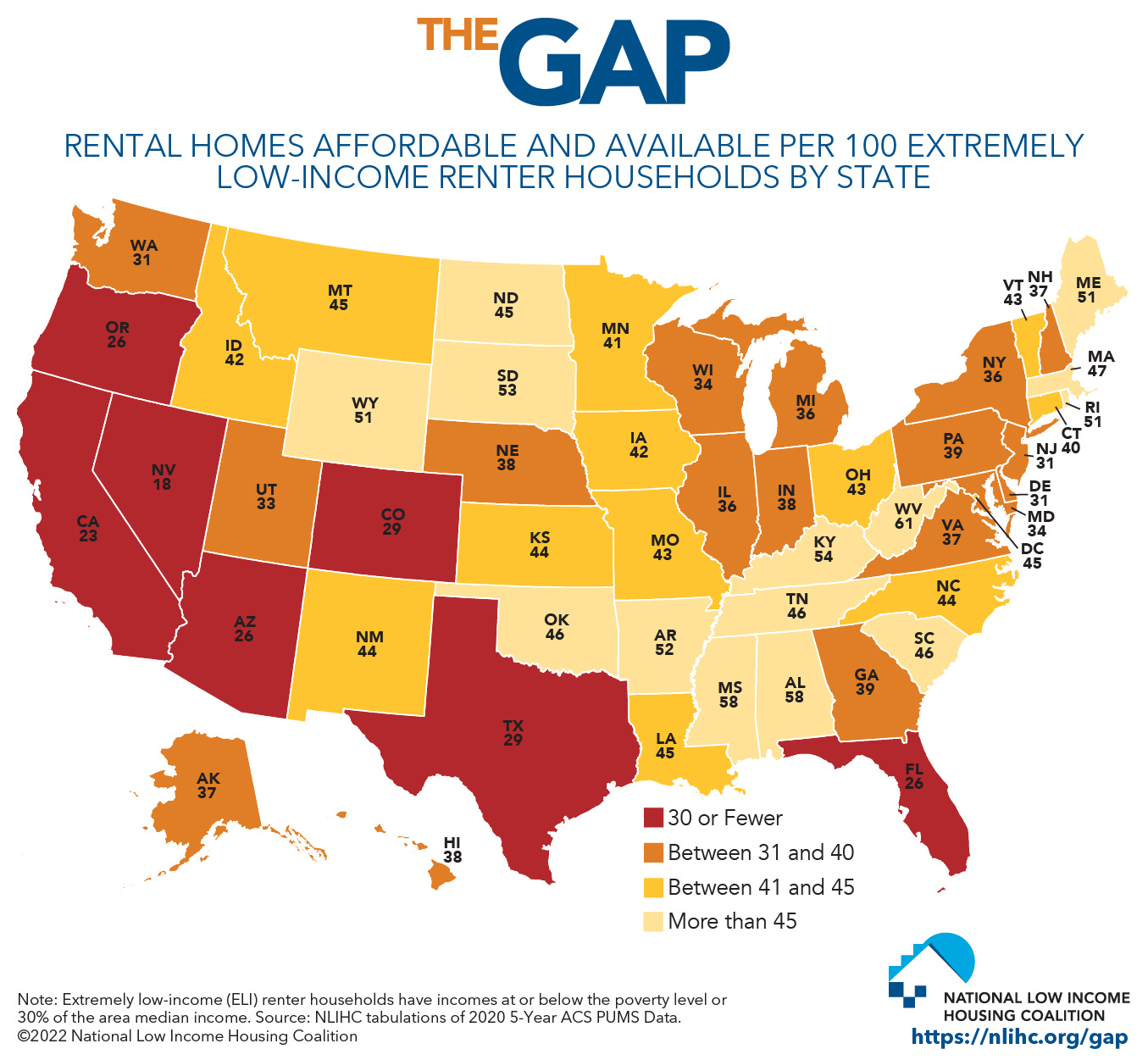
At the core of the homelessness epidemic is a brutal truth: there simply isn’t enough affordable housing in the U.S. According to the National Low Income Housing Coalition, the country faces a shortage of more than 7 million units for extremely low-income renters.
The map below shows that no state has an adequate supply of homes for its lowest‐income renters. In some states, there are fewer than 20 affordable homes per 100 extremely low‐income renters.
NLIHC.org
In many cities, rent has skyrocketed while wages have remained stagnant. There are people sleeping in cars, tents, and shelters not because they don’t want housing, but because there is none they can afford. Utah’s facility does nothing to change that. No new permanent housing is being built as part of the plan. No protections for renters is being implemented. No changes to zoning or subsidies are proposed. There are just beds, behind fences, with conditions attached.
It does nothing for wages and working conditions.
Many people experiencing homelessness do have jobs. Some work full-time and still cannot afford rent. Others are trapped in gig work, under-the-table labor, or low-wage industries with no benefits. And yet, Utah’s solution is “work-conditioned housing,” as if labor itself is the missing link. But work isn’t the problem. Poverty is. While corporations celebrate record profits, employees continue to be underpaid, even as the cost of living skyrockets. A work-requirement for shelter may sound like empowerment to policymakers, but in practice it risks becoming coercive, especially for people with disabilities, untreated trauma, or inconsistent mental health. It rebrands survival labor as “rehabilitation” while doing nothing to raise wages, improve employment protections, or create sustainable career pathways.
It criminalizes illness and trauma.
Many people experiencing homelessness live with mental illness, addiction, or both. But they are not dangerous or broken. They are hurting. Trauma, often beginning in childhood, is a common thread. And recovery from trauma requires trust, stability, and choice. Civil commitment offers none of those. It is not a substitute for long-term, community-based mental health care. For many, it’s a deeply traumatic experience that prioritizes stabilization over healing. The EO’s emphasis on institutional treatment assumes that forcing someone inside will make them well. However, in reality, it often causes more harm than good, especially for people already struggling with control, abandonment, and systemic betrayal.
It ignores the fragility of survival.
Most people are far closer to homelessness than they think— one medical emergency, one job loss, one car accident, one eviction. And yet, there is no part of the EO or Utah’s model that strengthens the safety net. There is no expansion of Medicaid or protections against medical bankruptcy. It provides no emergency rental assistance. We are living in an economy where survival depends on perfect luck, and when that luck runs out, there’s no net to catch the fall. The people being criminalized under this new framework aren’t failing the system. The system is failing them.
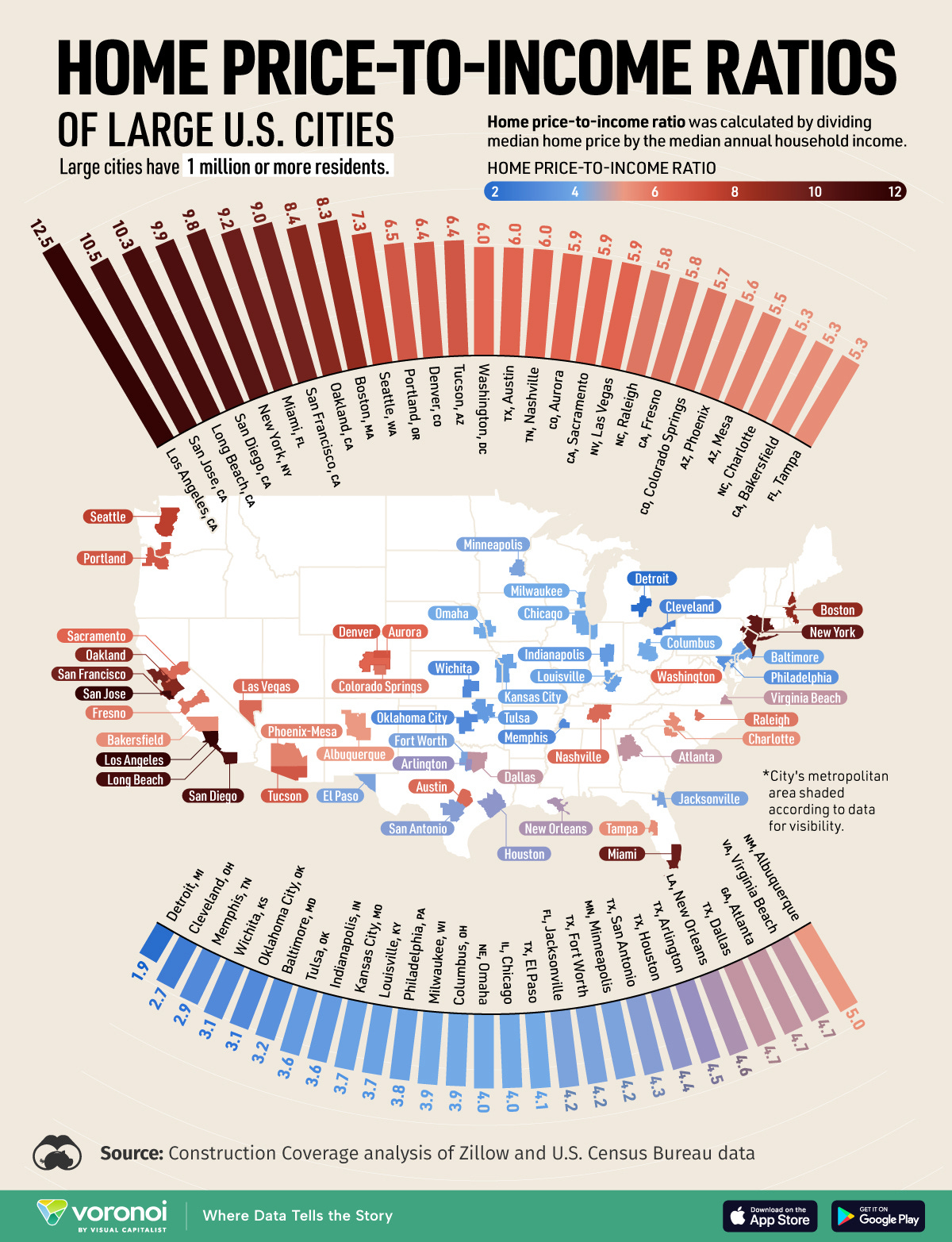
Mapped: Home Price-to-Income Ratio of Large U.S. Cities
What Should Be Done Instead
There’s no mystery about what works. We’ve had decades of research, pilot programs, and lived experience telling us what people need to exit homelessness for good — and it’s not commitment orders or forced labor.
As Representative Jen Dailey‑Provost (D‑Salt Lake City) puts it, “I wonder if it’s not necessarily inefficiencies but underinvestment in the infrastructure that we do have.”
The first step is simple: housing. Not temporary beds. Not shelters behind fences. Actual, stable, affordable housing.
But contrary to what we’re often told, this country doesn’t lack housing stock. It lacks accessible housing. Corporate landlords, hedge funds, and private equity firms have scooped up homes and rental properties across the country, jacking up prices and forcing renters into overcrowded or unstable conditions. Housing has been turned into a commodity, something to extract value from, not something to live in.
Solving homelessness means reversing that logic.
It means strengthening tenant protections, capping predatory rent increases, and taking homes out of speculative markets through community land trusts, public housing investments, and nonprofit housing models. It means not just housing first, but people first. It means affordable homeownership, which as been out or range for decades.
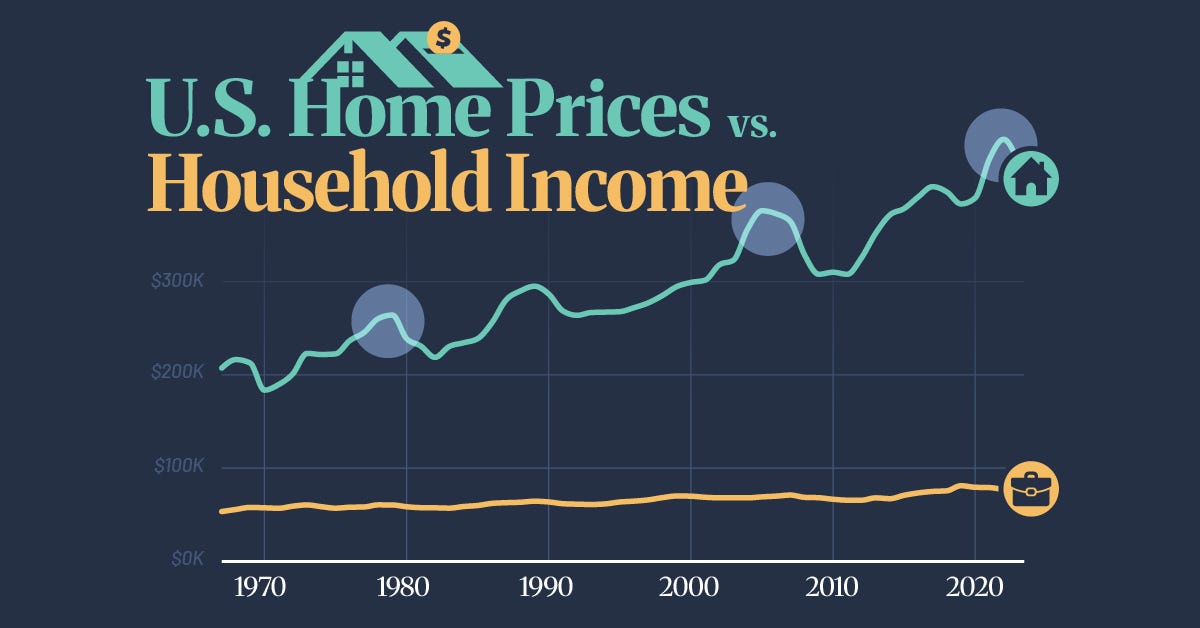
Charted: The Decline of U.S. Housing Affordability (1967–2023)
For renters, the numbers are brutal. The Census reports nearly half now spend more than 30% of their income on rent alone, before utilities, food or healthcare.
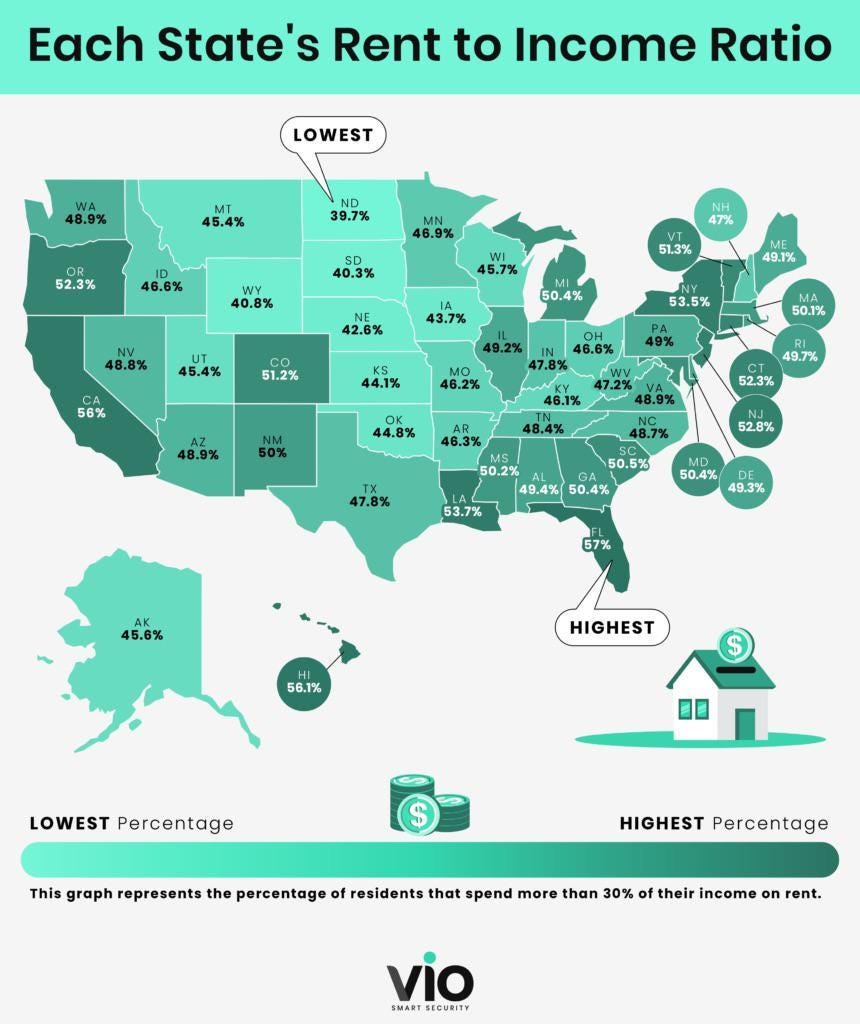
Each State’s rent to income ratio. - Maps on the Web
But housing alone isn’t enough. People also need:
Voluntary, trauma-informed services for mental health, addiction, and recovery
Income supports and fair wages so work is actually a pathway to stability
Access to affrodable healthcare so a diagnosis or injury doesn’t spiral into eviction
Post-incarceration and rehabilitation support to transition to stable housing
A social safety net robust enough to catch people when they fall
And above all, people need dignity and agency, the freedom to choose services, to heal on their own terms, and to build lives that aren’t governed by institutions but supported by communities.
Care is not compliance. Healing is not submission. Housing should never be conditioned on obedience.
Utah Is the First. But It Won’t Be the Last.
What Utah is building is not an answer to homelessness. It’s a mirror, a reflection of a country that would rather institutionalize poverty than confront the forces that create it.
This facility, and the federal Executive Order behind it, reframe homelessness not as a failure of systems, but as a failure of personal responsibility. It assumes that people are on the streets because they are broken, and that the solution is at best to fix them through confinement, control, and coercion, and at worst to make them invisible.
But we know better.
We know people are falling into homelessness because of rising rents, falling wages, predatory housing markets, inaccessible healthcare, and the utter failure of the safety net. We know the solution isn’t to lock people away, but to build systems that meet them with care, offer them options, and put housing within reach.
The Utah campus may be the first of its kind, but unless we speak clearly and act boldly, it won’t be the last. Other states will follow. More cities will build compounds. More people will be funneled into systems that call themselves “supportive” while stripping away autonomy.
This is a defining moment.
Do we believe in a society where help is something offered, not forced? Where housing is a right, not a reward? Where dignity isn’t earned, but recognized?
If we let this model spread unchecked, we are not ending homelessness. We are only hiding it. And in doing so, we risk hiding our own humanity right along with it.
Don’t let the bastards sneak anything past you. Subscribe and get your daily dose of rage and receipts delivered fresh, before the spin doctors can scrub it.
Sources:
“Utah officials unveil site for 1,300‑bed homeless campus after long, secretive search” — Utah News Dispatch, Sept 3, 2025.
“West‑side Salt Lake City neighbors air fears of planned 1,300‑bed homeless campus” — Utah News Dispatch, Sept 4, 2025.
“Utah’s new homeless campus should have 300‑plus beds for civil commitment, board chair says” — Utah News Dispatch, Sept 18, 2025.
“Utah selects site for 1,300‑bed homeless services campus” — Axios, Sept 3, 2025.
“ENDING CRIME AND DISORDER ON AMERICA’S STREETS” — White House, July 24, 2025.
“Fact Sheet: President Donald J. Trump Takes Action to End Crime and Disorder on America’s Streets” — White House, July 24, 2025
“ACLU Condemns Trump Executive Order Targeting Disabled and Unhoused People” — American Civil Liberties Union (ACLU), July 24, 2025.
“Trump orders cities to clear homeless from streets” — Times of San Diego, July 25, 2025.
“NLIHC Releases The Gap 2025: A Shortage of Affordable Homes” — National Low Income Housing Coalition, Mar 13, 2025.
*“The Gap” (affordable housing shortage data) — National Low Income Housing Coalition
“Out of Reach 2025: The High Cost of Housing” — National Low Income Housing Coalition, Jul 18 ,2025.
“Latest State of the Nation’s Housing Report Finds Record Number of Housing Cost‑Burdened Renters” — National Low Income Housing Coalition, Jun 30, 2025.

This is another concept for "freedom cities", a rebirth of the old company mining towns which will eventually be converted to kingdoms run by the morbidly wealthy. Welcome to the new feudal system.
Is there any way to challenge a Mega-Campus (slave camp) being built without due process? I can see this gleefully spreading to other states.