


Ghislaine Maxwell isn’t just serving time. She’s holding it hostage. Convicted of trafficking minors for a pedophile with presidential connections, Maxwell now sits in federal prison, offering America a sick trade: her silence for her freedom. Testimony, she says, can be bought, but only with immunity or a presidential pardon.
It’s not a cry for justice. It’s a power play.
This isn’t just about what she did — it’s about who she could expose. Her client list spans the globe’s elite: Wall Street, Buckingham Palace, Capitol Hill, Silicon Valley. The last woman alive who knows the full extent of Epstein’s operation is dangling testimony like a lit match over a tank of gasoline — and she knows it.
But she’s not volunteering it out of conscience. She wants to be untouchable.
The timing is no coincidence. Congress is circling. The Epstein files are rattling their cage. Trump — the man who once banished Epstein from Mar-a-Lago and now controls the pardon pen again — is back in the White House. And Maxwell is betting the same system that protected predators for decades will protect her once more.
But what if she’s wrong?
A pardon might spare her from federal prison. It might even silence the halls of Congress. But it won’t erase state-level criminal exposure. It won’t stop victims from suing. And it might just crack open sealed court records that name names, hers and others’.
This isn’t just a legal gamble. It’s a last-ditch power move. And if the justice system still has a pulse, it’s one that could blow up in her face.
Want to Know Your Rights?
Download a free digital copy of the U.S. Constitution—the same document Trump is trying to bulldoze. Learn exactly what he's breaking… and how to fight back.
📬 Stay Informed. Stay Loud.
Subscribe to The Coffman Chronicle for no-BS political analysis, action guides, and weekly truth bombs you won’t get from corporate media.
Maxwell’s Testimony Conditions: Immunity or Bust
Ghislaine Maxwell says she’s willing to speak, but only if Congress gives her everything she wants. And what she wants is leverage, not justice.
In a letter sent through her legal team, Maxwell outlined four non-negotiable conditions before she would consider testifying about Epstein’s network and her role in it:
Full immunity from prosecution, including retroactive protection for any crimes she may admit to.
The right to testify outside of prison, in a more “neutral” location of her choosing.
All questions submitted in advance, giving her time to prepare — or filter — her answers.
A delayed timeline, pending the outcome of her appeal to the U.S. Supreme Court and any future habeas filings.
She didn’t stop there. Her lawyers added that if she were granted a presidential pardon, she would testify publicly and fully, dropping all the previous conditions. In other words, clemency is her price for cooperation.
The House Oversight Committee, currently leading the inquiry into Epstein’s criminal network and federal failures to stop it, was blunt in its response: No deal. Chairman James Comer made it clear that immunity is off the table. Congress is not in the business of negotiating with convicted traffickers who want to rewrite the rules of accountability.
Maxwell’s position is clear: she will not speak without protection. And that refusal may be strategic. So long as she withholds her voice, she keeps her secrets. So long as she’s in legal jeopardy, she can hide behind the Fifth Amendment.
But her message is unmistakable: Give me freedom, and I’ll give you the names.
The question now isn’t just whether Congress will take that deal. The question is whether someone else already has or plans to.
What a Federal Pardon Does and Doesn’t Do
A presidential pardon is one of the most powerful tools in American law, but it’s not magic, and it’s not a shield from everything Ghislaine Maxwell is trying to avoid.
Under Article II of the Constitution, a president can pardon anyone convicted of a federal crime. That means Maxwell’s 2021 conviction for child sex trafficking and conspiracy, prosecuted in the U.S. District Court for the Southern District of New York, could be wiped away with a single signature from Donald J. Trump.
But here’s what a pardon doesn’t do:
It doesn’t apply to state charges.
It doesn’t protect against civil lawsuits.
It doesn’t erase the facts.
It doesn’t guarantee silence.
Maxwell may believe that a pardon ends the story. Legally, it’s more like changing the venue. Federal prison might go away, but a courtroom in Albany, a lawsuit in Manhattan, or a subpoena from a state grand jury could be waiting around the corner.
In short: a pardon would close one door, but it might blow open several others.
Does a Pardon Unseal Maxwell’s Records?
If Ghislaine Maxwell is counting on a pardon to bury the truth, she might want to read the fine print.
While a presidential pardon won’t automatically fling open the sealed records in her federal case, it could create the perfect legal storm to pry them loose.
Currently, numerous documents related to Maxwell’s conviction and appeal remain sealed, including evidence, filings, and potentially explosive names redacted “to protect the integrity of ongoing investigations” or the privacy of third parties. But that protective veil is tied to the fact that Maxwell is still technically in jeopardy. She’s appealing. She’s incarcerated. She’s invoking her rights.
A pardon would end that.
By accepting clemency, Maxwell would likely terminate her appeal, rendering much of the case legally moot. Once that happens, courts are no longer bound by the same rules of confidentiality. Judges, media organizations, and even Congress can — and likely will — petition to have sealed records reviewed or released.
And there’s a deeper twist: under federal precedent (Burdick v. United States, 1915), accepting a pardon is a legal admission of guilt. That strips away her ability to claim Fifth Amendment protection in civil court and weakens any argument that unsealing the records would harm her.
It doesn’t stop there. A pardon would also:
Reopen the door to civil discovery from Epstein’s victims.
Empower journalists to file FOIA lawsuits with renewed strength.
Remove the government’s incentive to withhold redacted content under “ongoing prosecution” exceptions.
In short, the second she accepts a pardon, the protective legal shell around her records starts to crack.
Maxwell may think clemency is the key to silence, but in reality, it could be the thing that finally lets the public hear everything.
Could New York Still Prosecute?
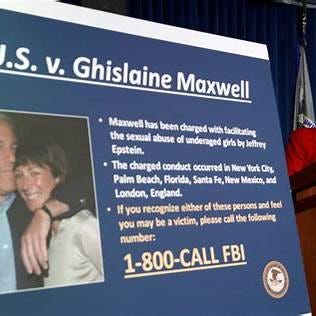
Yes, and if Ghislaine Maxwell gets a federal pardon, New York might be the next to knock.
The Constitution draws a clear line: presidential pardons apply only to federal crimes. That means Maxwell’s conviction, handed down by a federal court in the Southern District of New York, could be wiped clean. But that would not, and cannot, stop state prosecutors from charging her under New York law for the same underlying conduct.
And New York has reasons and legal tools to do exactly that.
Many of the crimes linked to Epstein’s operation took place in Manhattan. His E. 71st Street townhouse wasn’t just a residence; it was a trafficking hub. Multiple survivors have alleged abuse in that very location, and Maxwell is accused of recruiting, coordinating, and covering for it.
Thanks to recent legal reforms, New York has removed the statute of limitations for many sex crimes involving minors. That means prosecutors are not locked out by the clock. If they can build a case, and if victims are willing to testify, charges can still be brought today, pardon or not.
There’s also precedent. When Donald Trump pardoned Paul Manafort in 2020, Manhattan prosecutors tried to indict him for state-level fraud charges based on similar facts. When he pardoned Steve Bannon, New York came back with state fraud charges over the same “We Build the Wall” scheme. In Bannon’s case, those charges stuck.
Maxwell may believe a Trump pardon ends her legal peril. In truth, it just relocates it. If state prosecutors in New York decide that justice wasn’t fully served — or that the federal system was hijacked for political convenience — they have every legal right to reopen the case under state law.
To date, no state charges have been filed against Maxwell. But that does not mean they won’t be, only that the system hasn’t moved yet. And if it fails to act in the wake of a federal pardon, that silence will be as political as the clemency itself.
What Would State Charges Look Like?
If Ghislaine Maxwell thinks she’s out of reach, she hasn’t read the New York penal code lately.
Should state prosecutors decide to act, they wouldn’t be starting from scratch; they’d be picking up where federal prosecutors left off. The same acts that earned Maxwell a 20-year sentence under federal law could easily qualify for charges under New York’s criminal statutes.
Here’s what she could face:
Sex trafficking of a child (NY Penal Law § 230.34-a)
A class B felony. Just one conviction carries up to 25 years.Criminal sexual act in the first degree (§ 130.50)
If physical acts occurred in Manhattan, and a minor was involved, the sentence could range up to 25 years.Conspiracy (§ 105.15, § 105.20)
Prosecutors could charge her as part of a broader criminal enterprise, especially if other names emerge alongside hers in unsealed documents.Endangering the welfare of a child (§ 260.10)
A lower-level charge, but politically symbolic and still prosecutable, particularly if witnesses now feel safe to come forward.Enterprise corruption (NY’s RICO-equivalent, § 460.20)
If the DA can prove this was a coordinated system of exploitation involving Maxwell, Epstein, and others, this charge could bring another 25 years.
And unlike federal cases, where political pressure and presidential interference can muddy the waters, state prosecutors answer only to the voters in their district. That means no White House favors, no clemency deals, and no executive branch lifeline.
The Manhattan District Attorney and New York Attorney General have both shown a willingness to go after high-profile targets, especially when federal accountability fails. From Harvey Weinstein to Trump’s business empire, New York has stepped in where others stepped back.
If Maxwell gets her pardon, don’t be surprised if a courtroom in Manhattan becomes her next destination. This time, there won’t be any powerful friends left to hide behind.
Is This All a Stall?
Maxwell’s lawyers say she wants to cooperate, but her demands tell a different story. She’s not preparing to talk; she’s running out the clock while the people in power buy her more time.
Donald Trump is already back in the White House. The man who once banned Jeffrey Epstein from Mar-a-Lago and now holds the pardon pen again is overseeing a DOJ that has shown zero interest in transparency. If Maxwell is stalling, it’s not for some future promise. It’s for a pardon that could land on her lap any day now.
Her conditions are surgical: no testimony unless it’s outside prison, with immunity, with questions submitted in advance, and only after her Supreme Court appeal plays out. That’s not cooperation; that’s containment.
And it looks strategic.
Because Maxwell isn’t just protecting herself. She’s protecting others. Her silence shields men in suits, on screens, in boardrooms, and possibly in government. And the longer she drags this out, the more time those men have to shred documents, intimidate witnesses, and rewrite history.
Her sudden willingness to testify isn’t some act of conscience. It’s a message to the powerful: I still know everything. And I still haven’t talked. Let’s keep it that way.
This is what elite impunity looks like— not a courtroom drama, but a slow, calculated freeze, not an explosion, but a suffocating stall.
And unless Congress, the courts, or the public act fast, she may get away with it. Again.
Her Federal Time Could Be Just Chapter One
If Ghislaine Maxwell is banking on a Trump pardon to bury her crimes, she might want to check the foundation beneath her.
Yes, a presidential pardon could wipe out her federal conviction. It could spring her from prison and shut down her appeal. But that doesn’t mean she walks free. It just means she walks into the next fight.
Because when the federal door closes, others swing open.
The sealed files she’s desperate to keep hidden? A pardon could dismantle the legal arguments holding them shut. Civil suits waiting in the wings? A pardon removes her Fifth Amendment shield. And New York, where Epstein’s townhouse still looms like a crime scene with a mortgage, has both the legal authority and the political appetite to bring charges of its own.
Maxwell’s conviction wasn’t the end of the story. It was a foothold. And if she escapes it now under the cover of presidential favor, the responsibility falls to the rest of the system, to state prosecutors, to Congress, to survivors, and to the public, to keep pushing.
Because what’s at stake isn’t just whether one woman walks free. It’s whether the powerful can buy silence, stall justice, and bury the truth one layer deeper.
Let Maxwell have her pardon, if that’s what this government chooses.
But let her and the world know: Her federal time was just Chapter One.
And we’re still reading.
Stay Informed. Stay Loud.
Subscribe to The Coffman Chronicle for no-BS political analysis, action guides, and weekly truth bombs you won’t get from corporate media.
Bibliography:
Chung, Andrew. “Amid Epstein Furor, Ghislaine Maxwell Seeks Relief from US Supreme Court.” Reuters, July 25, 2025.
“Ghislaine Maxwell Wants Immunity Before She Will Testify to Congress.” The Washington Post, July 29, 2025.
“US House Panel Rejects Immunity Request by Epstein Associate Maxwell.” Reuters, July 29, 2025.
“Ghislaine Maxwell Requests Immunity in Exchange for Testimony in Front of House Committee.” People, July 29, 2025.
United States v. Maxwell, No. 22‑1426 (2d Cir. Sept. 17, 2024). Justia.
Campbell, Lucy, and Agencies. “Ghislaine Maxwell Interviewed Again by Deputy US Attorney General.” The Guardian, July 25, 2025.
“Ghislaine Maxwell Demands Immunity Before Testifying to Congress.” The Guardian, July 29, 2025.
Burdick v. United States, 236 U.S. 79 (1915)
New York Penal Law §§ 230.34‑a; 130.50; 105.15‑.20; 260.10; 460.20
The Maxwell case was crucial. Epstein and Trump are complicit. They are pedophiles.
I would never have believed that there were so many padophiles. What are they thinking? How do they justify this to themselves and their children and families?