


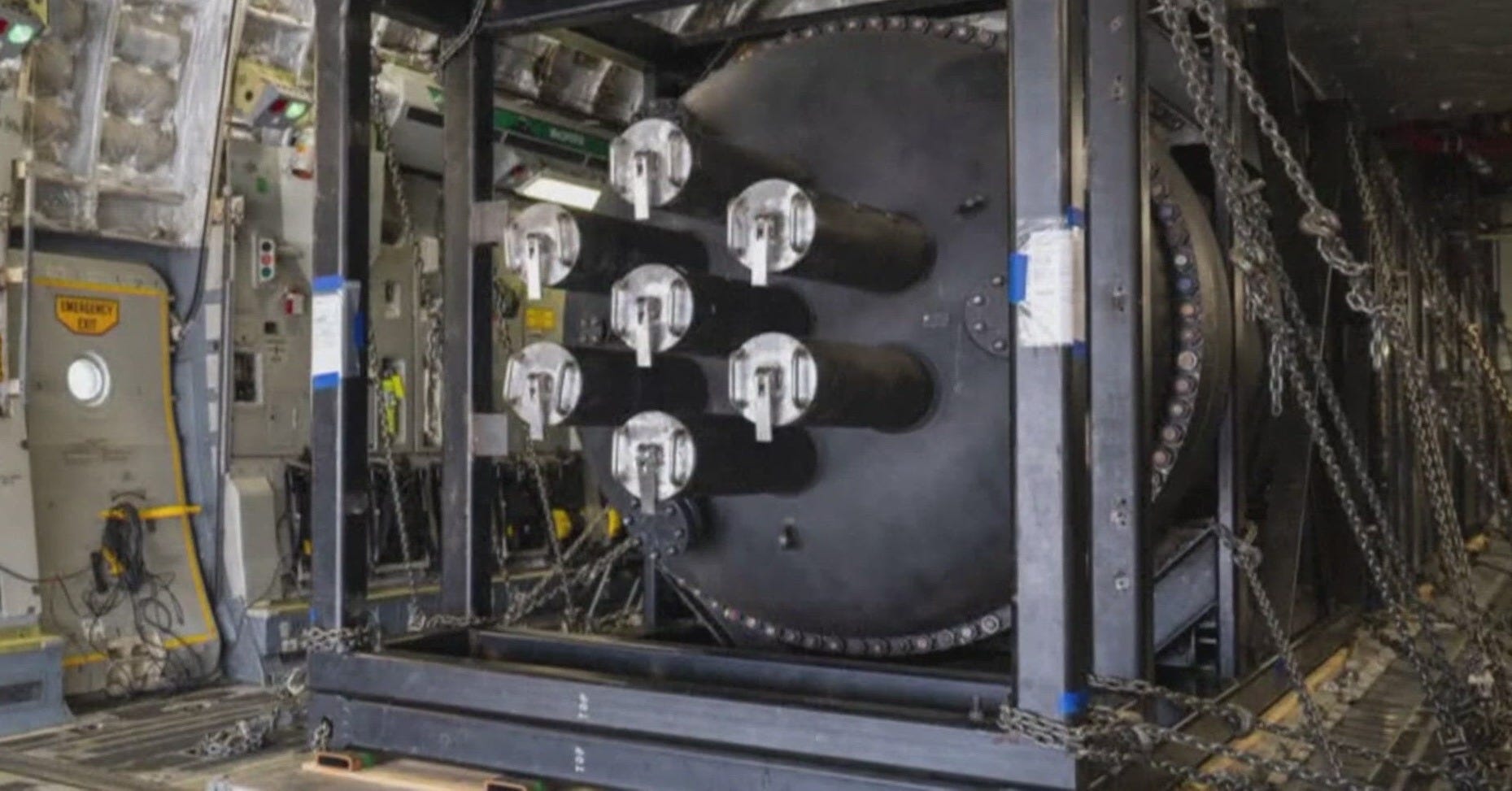
The U.S. military has completed a historic airlift of a small nuclear microreactor, a mission officials say showcases Washington’s ability to rapidly deploy portable nuclear energy for defense and civilian use. Last weekend’s flight reflects the Trump administration’s push to expand nuclear power amid soaring energy demands and strategic concerns.
The nearly 700-mile journey of the Ward 250 microreactor — carried unfueled in a C-17 cargo plane from March Air Reserve Base in California to Hill Air Force Base in Utah — highlights rising stakes in national security and energy resilience. Critics, however, warn the push leaves unresolved questions about safety and long-term waste management.
According to AP News, Energy Secretary Chris Wright and Undersecretary of Defense Michael Duffey rode aboard the military transport alongside the privately built reactor, hailing the mission as a milestone in fast-tracking commercial licensing for advanced reactors. The reactor, roughly the size of a minivan and capable of producing up to 5 megawatts of electricity, is now bound for testing at the Utah San Rafael Energy Lab.
Related: Epstein Files Reveal Offer to Buy Pentagon-Linked Property
Officials are targeting multiple small reactors to reach “criticality” — the point where a sustained nuclear reaction can occur — by July 4, aligning with presidential directives to swiftly expand next-generation nuclear capacity. This flight is described as the first of its kind by defense agencies, setting a precedent for future deployments.
“Today is history. A multi-megawatt, next-generation nuclear power plant is loaded in the C-17 behind us,” Wright said before the flight, framing the operation as part of a broader energy renaissance.
Yet experts from the Union of Concerned Scientists argue that transporting unfueled hardware does not prove economic feasibility or safety once fuel and waste handling are factored in.
What happens next is a multi-stage testing phase at Utah’s energy lab, safety evaluations, and potential regulatory hurdles before any wider deployment of microreactors across military bases or civilian grids.
Related: U.S. Military Airstrike in Caribbean Kills 3 Suspected Drug Traffickers, Pentagon Says