


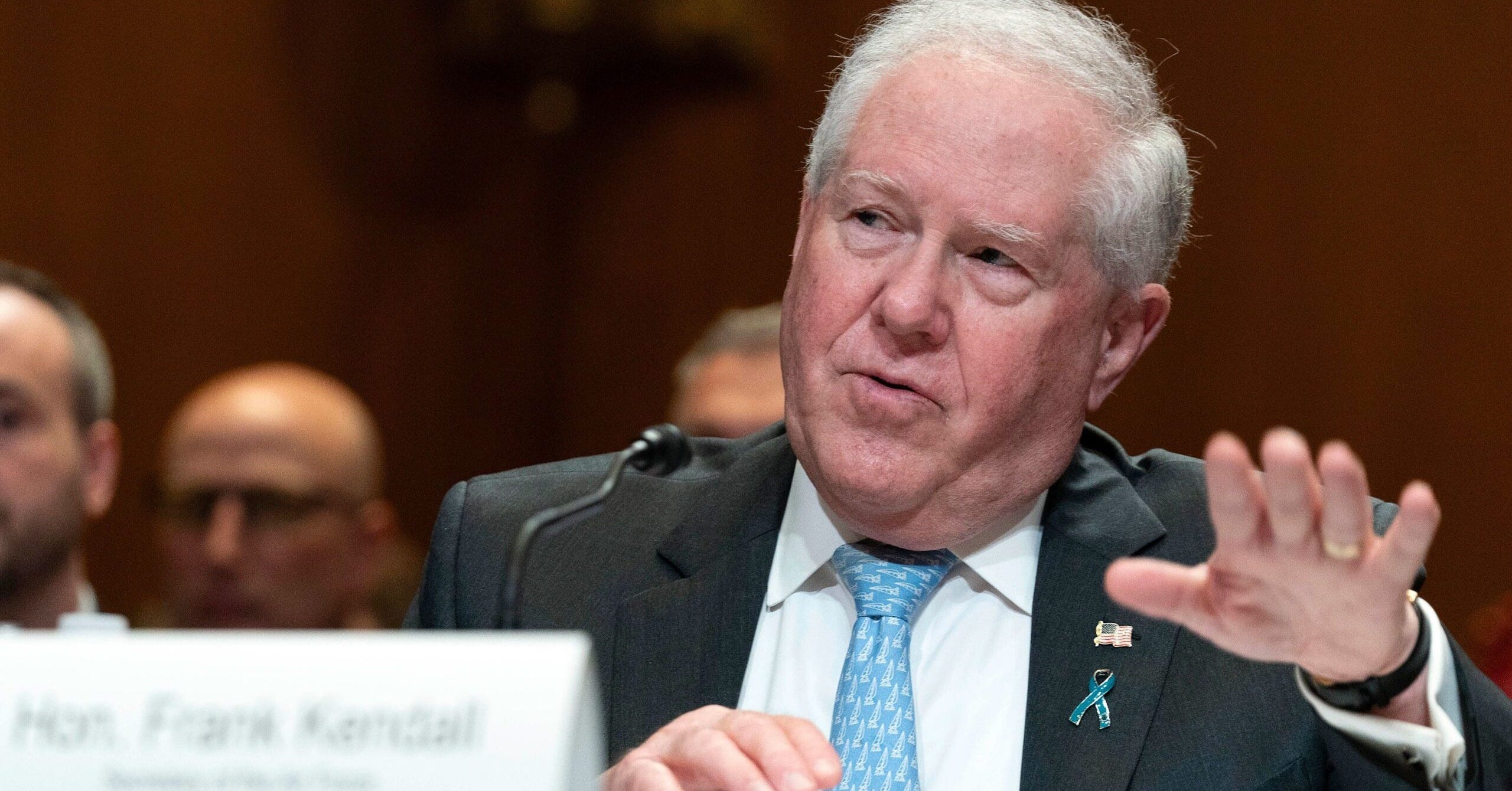
The Pentagon has revoked former Air Force Secretary Frank Kendall’s eligibility to access classified information, alleging he made an unauthorized disclosure about Air Force One capabilities to the media.
The Associated Press reported that Kendall was also barred from holding “any sensitive position.” The action follows reporting on security concerns involving a Qatari-gifted aircraft used as Air Force One, including questions about whether it lacked advanced defensive capabilities compared with the older presidential aircraft.
The move turns an aircraft-security dispute into a classified-information enforcement case. Pentagon spokesman Sean Parnell said safeguarding classified information is a non-negotiable duty, according to AP and The Wall Street Journal.
Kendall is not a minor former official. The Defense Department biography says he served as the 26th secretary of the Air Force and oversaw the organization, training, and equipping of the Air and Space Forces.
Subscribe free for daily political analysis they won’t broadcast. Join 110K+ readers →
The practical consequence could be significant. WSJ reported that former officials often keep security clearances after leaving government so they can work on classified projects, serve on advisory boards, or consult on sensitive matters. Losing a clearance can affect future defense-sector work.
The legal path remains unclear. AP reported the Pentagon did not say whether Kendall had been referred for prosecution and did not immediately answer questions on that point. Kendall did not immediately respond to AP’s call and text seeking comment.
Public reaction online focused on clearance rules and consistency. In a Reddit Military thread, users questioned why former officials retain access after leaving office and compared the allegation with other classified-information controversies.
The story also fits a broader pattern. Axios reported in 2025 that the Trump administration revoked clearances of 37 current and former national security officials, making Kendall’s case part of a recurring fight over classified access, loyalty, and national-security authority.
Subscribe free for daily political analysis they won’t broadcast. Join 110K+ readers →