


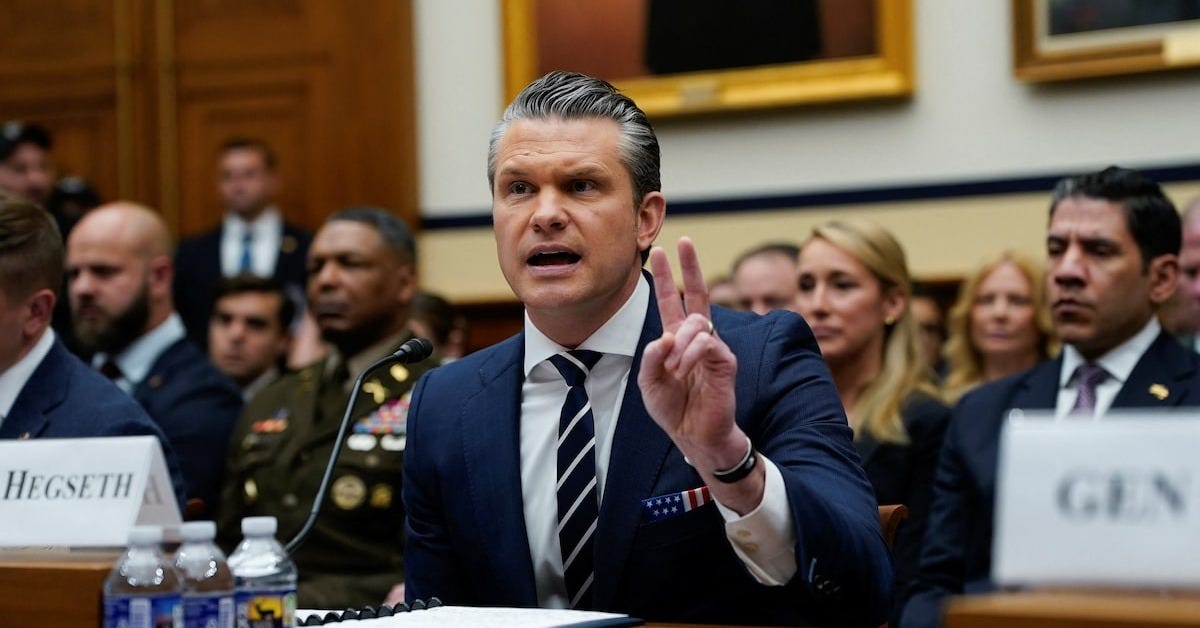
Defense Secretary Pete Hegseth returned to Capitol Hill for a second day of hearings as lawmakers pressed for answers on the status and direction of the ongoing U.S. war with Iran, a conflict that has entered a fragile ceasefire but remains unresolved.
The war, launched in late February as a joint U.S.–Israel campaign, has already cost an estimated $25 billion, with additional funding requests expected. Senators from both parties questioned whether the administration has a clear strategy or timeline, with Democrats focusing on civilian casualties and legal concerns tied to the War Powers Act.
Hegseth defended the operation as necessary for national security and rejected claims that it has become a prolonged or mismanaged conflict. Still, lawmakers raised concerns about the Pentagon’s leadership shakeups and the broader credibility of U.S. military planning.
Subscribe free for daily political analysis they won’t broadcast. Join 110K+ readers →
The current state of the war reflects a temporary pause rather than a resolution. A ceasefire is holding, but negotiations remain stalled, and U.S. military leaders are preparing additional options, including potential new strikes or expanded operations tied to the Strait of Hormuz.
Complicating the situation, U.S. officials confirmed that Russia has provided support to Iran, increasing fears of a wider geopolitical confrontation.
The conflict is also having measurable economic consequences. Disruptions to global energy flows have pushed oil prices higher, contributing to inflation concerns in the United States.
For now, the war remains in a tense holding pattern—active, costly, and politically divisive—while Congress weighs whether to constrain or expand U.S. involvement in the weeks ahead.
Download a FREE Pocket Constitution NOW →
