


The Billionaire Shrug
Peter Thiel, the tech billionaire known for his intellectual swagger and libertarian philosophies, found himself at a loss for words recently. During an interview with Piers Morgan, Thiel was asked a seemingly straightforward question: What does he think of people calling the UnitedHealthcare CEO’s murderer a hero? His response? A stuttering, evasive, and ultimately empty statement: “I don’t know what to say.”
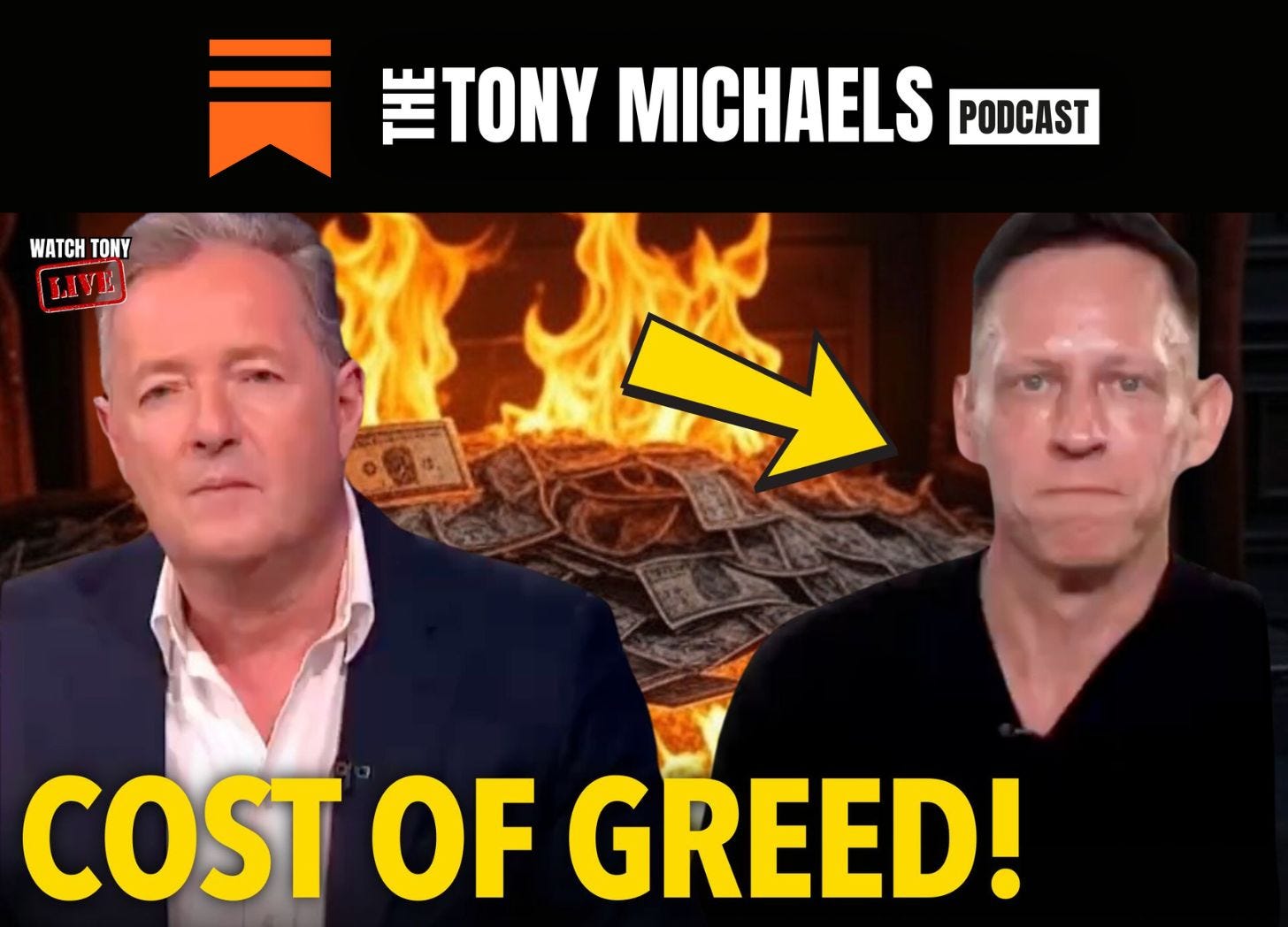
For a man who has built his reputation on bold contrarian takes, Thiel’s sudden inability to articulate a coherent thought was striking. But more than that, it was revealing. Thiel’s response wasn’t just a PR misstep—it was a microcosm of how the billionaire class handles accountability: with a shrug, a dodge, and a complete lack of responsibility for the systems they helped create.
Healthcare, Violence, and Anger
The story itself is as American as it gets. Luigi Mangione, a man enraged by the healthcare system’s failures, targeted Brian Thompson, CEO of UnitedHealthcare. Mangione, like millions of others, had likely experienced the crushing weight of denied coverage, unaffordable premiums, or life-threatening delays. While his actions were inexcusable, the anger fueling them was anything but surprising.
UnitedHealthcare, after all, represents everything people hate about America’s for-profit healthcare system: faceless bureaucracies deciding who lives and who dies, all in the name of shareholder value. Thompson’s death, while tragic, became a flashpoint for a deeper debate: What happens when a system so fundamentally broken drives people to despair and, in some cases, violence?
That’s the question Piers Morgan handed Peter Thiel. And Thiel, a man who loves to pontificate on disruption and revolution, suddenly had nothing to say.
A Billionaire’s Escape Hatch
Thiel’s response wasn’t just disappointing—it was profoundly telling. Instead of addressing the real issue—the intersection of systemic injustice and public anger—he opted for a vague, philosophical cop-out: “You should try to make an argument.”
Here’s the problem: People have been making arguments. For decades, activists, policy experts, and ordinary citizens have been shouting from the rooftops about the cruelty of America’s healthcare system. The problem isn’t a lack of arguments. It’s a lack of accountability from the people who benefit most from the status quo.
Thiel didn’t want to engage with the particulars, as he put it, because the particulars are damning. They expose how the systems he supports and profits from—deregulation, privatization, and market absolutism—lead directly to the kind of despair that fuels tragedies like this one. For someone like Thiel, the safest option isn’t to answer the question. It’s to dodge it entirely.
The Up vs. Down Divide
Thiel’s evasion is a perfect example of what’s really happening in America today. The divide isn’t left vs. right—it’s up vs. down. Billionaires like Thiel exist in a world that’s insulated from the chaos they help create. While the rest of us are stuck navigating a healthcare system that bankrupts families and kills thousands, people like Thiel float above it all, pontificating about freedom and disruption.
This isn’t just a healthcare issue. It’s a systemic issue. The billionaire class profits from a broken system, fans the flames of public anger, and then recoils in shock when that anger turns violent. They promote ideas that destabilize society—distrust of institutions, glorification of individualism, disdain for government—while avoiding the consequences of those ideas.
When the system finally breaks under the weight of its own inequality, billionaires like Thiel are the first to distance themselves. They act like observers rather than participants, shrugging their shoulders and saying, “I don’t know what to say.”
The Villain No One Wants to Defend
While Thiel’s non-answer was infuriating, let’s not forget the other major player in this story: UnitedHealthcare. The murder of Brian Thompson, while unjustifiable, didn’t happen in a vacuum. It happened within a system that prioritizes profits over lives, where CEOs like Thompson are richly rewarded for denying coverage and maximizing shareholder value.
UnitedHealthcare isn’t just a symbol of corporate greed—it’s a direct contributor to the despair that led to this tragedy. And yet, the system continues to operate with impunity. Politicians on both sides of the aisle accept its donations, pundits avoid criticizing it too harshly, and the public is left to suffer the consequences.
The Great Distraction
One of the most insidious tactics of the billionaire class is to keep us distracted. While we argue about whether this murder was justified or whether healthcare is a human right, the people at the top continue to profit. They want us fighting each other because it keeps us from fighting them.
Peter Thiel and UnitedHealthcare may seem like separate stories, but they’re two sides of the same coin. Both represent a system that’s rigged against the majority, a system where power flows upward and accountability flows nowhere. And when that system fails—when people are pushed to the brink—Thiel’s response is the same as the system’s: “I don’t know what to say.”
The Argument Has Already Been Made
Thiel’s suggestion that we need to “make an argument” is a slap in the face to everyone who’s been doing exactly that. The argument is clear: America’s healthcare system is broken. The billionaire class, including Thiel, profits from that brokenness. And the anger bubbling beneath the surface of society isn’t going away—it’s only getting worse.
The real question isn’t whether the argument has been made. It’s whether people like Thiel are willing to listen. And the answer, as we’ve seen, is no. Because listening would require acknowledging their role in the problem. It would require taking responsibility. And billionaires don’t do responsibility—they do evasion, distraction, and empty platitudes.
A Call for Accountability
The murder of Brian Thompson was a tragedy. But it was also a symptom of a larger disease: a system that values profits over people and a billionaire class that hides from the consequences of its own ideology.
We don’t need more arguments. We don’t need more empty words from people like Peter Thiel. What we need is accountability—from corporations, from billionaires, and from the politicians who enable them.
Because if we don’t hold them accountable, the system will keep grinding people down. The anger will keep building. And tragedies like this one will keep happening.
The next time Peter Thiel says, “I don’t know what to say,” we should respond with this: “Then step aside and let someone else fix the mess you helped create.”
Subscribe for more:
If this resonates with you, don’t miss more takes like this. Let’s keep exposing the people at the top and fighting for the people at the bottom. Because the fight isn’t left vs. right—it’s all of us vs. the system.
The shift of the argument from left vs right, to up vs. down is happening throughout the internet.
I never heard the obvious psychopath Thiel speak. I wasn’t missing much. He appears to be a blubbering, sweaty mess uttering platitudes. And yet he is one of the owners of the US.