


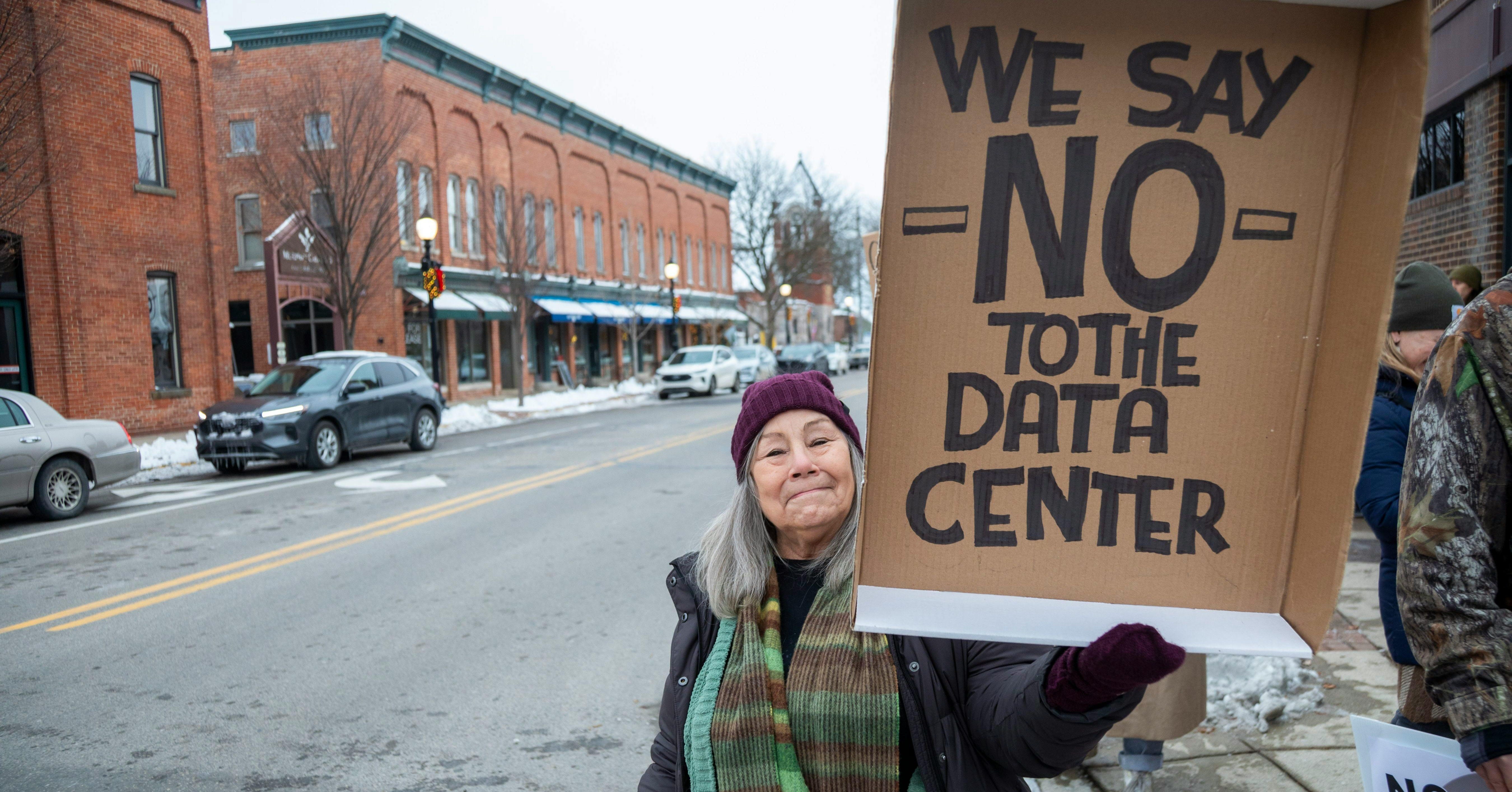
The political battle over artificial intelligence is rapidly becoming a political battle over data centers.
Across the United States, communities are organizing against the massive facilities that power AI systems, citing concerns ranging from electricity demand and water use to land consumption and quality-of-life impacts. Polling released this year found that roughly 70% of Americans oppose building AI data centers in their local communities.
That opposition has translated into political action.
Voters in California recently backed a permanent local ban on data centers, while lawmakers in New York advanced legislation that could impose a temporary statewide moratorium. Charlotte approved a temporary halt on new construction, and Seattle officials are considering similar restrictions.
Yet despite rising public anger, politicians in both parties have largely stopped short of embracing outright bans. Washington Post reporting found many elected officials remain cautious even as opposition grows in battleground states.
Subscribe free for daily political analysis they won’t broadcast. Join 110K+ readers →
The reason is that data centers have become intertwined with the broader race for AI leadership.
Technology companies and policymakers increasingly view AI infrastructure as a strategic asset tied to economic growth, national competitiveness, cloud computing, and future technological development. Restricting new facilities risks limiting investment and slowing AI deployment.
At the same time, grassroots opposition is becoming more organized.
Community groups, environmental advocates, labor activists, and some local officials argue that residents bear many of the costs while receiving limited benefits. Concerns frequently focus on electricity prices, water consumption, land use, and the pace of development.
The result is an emerging political conflict that no longer fits traditional partisan lines. Opposition has appeared in conservative rural communities, liberal urban neighborhoods, and fast-growing suburban regions alike.
Rather than a simple debate over technology, the dispute is evolving into a broader fight over who should control the infrastructure behind the AI economy.
Subscribe free for daily political analysis they won’t broadcast. Join 110K+ readers →