


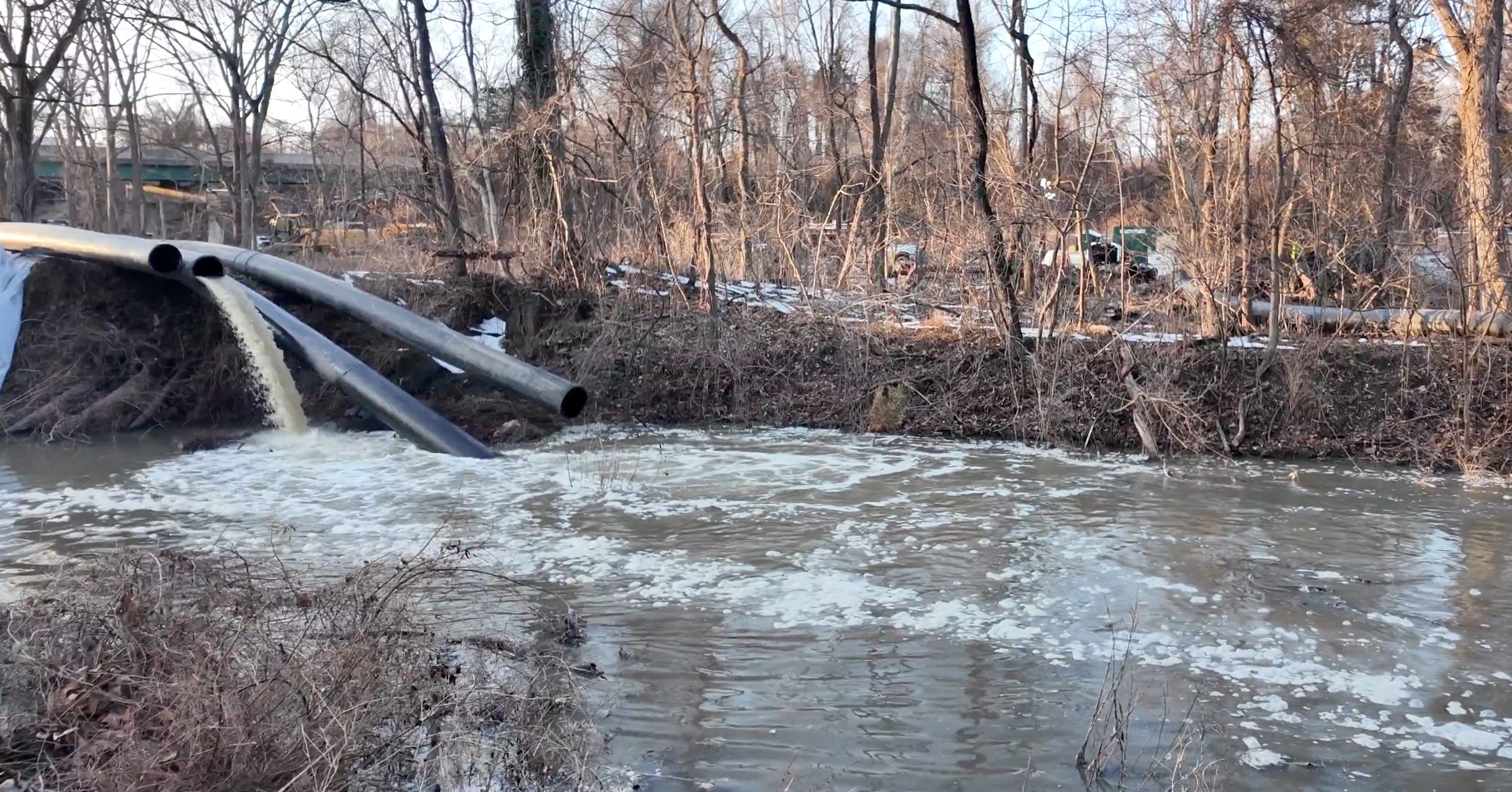
A 243 million-gallon sewage spill into the Potomac River from a collapsed sewer main has triggered ongoing emergency repairs and political firestorms in the Washington region.
The breach of a 72-inch-wide section of the Potomac Interceptor on Jan. 19 began unleashing raw wastewater near the Clara Barton Parkway, and DC Water’s own monitoring estimates roughly 243 million gallons overflowed before bypass systems cut new discharge.
Officials warn health risks remain, and public advisories still urge people to avoid contact with the river, though local drinking water systems have not been impacted by the spill.
Related: Trump White House Announces Repeal of Key Climate Rule That Regulated Carbon Emissions
DC Water, the utility responsible for the aging sewer line, says crews have now installed an enhanced bypass system and are preparing to isolate and repair the damaged section of pipe. Emergency repairs are expected to take 4–6 more weeks, followed by a significant long-term rehabilitation phase of the interceptor infrastructure.
Political tensions have flared: President Trump has directed federal authorities to coordinate the response and sharply criticized Maryland’s governor, who has pushed back that federal agencies and DC Water have primary operational responsibility.
“DC Water has been coordinating with federal and state partners while focusing on containment and safe repairs,” a utility spokesperson said in a recent update.
Related: The Bridge Is Already Built, So Why Is Trump Threatening to Block It?
Why it matters: The spill ranks among the largest untreated wastewater releases in U.S. history, with environmental groups noting levels of harmful bacteria many times above safe recreation standards.
What happens next: Emergency bypass systems will continue operations as crews excavate and remove obstructions before sealing and replacing the broken interceptor segment, with restoration expected by spring and broader clean-up efforts ongoing.
The region remains on alert as repairs proceed and reassessment continues.