


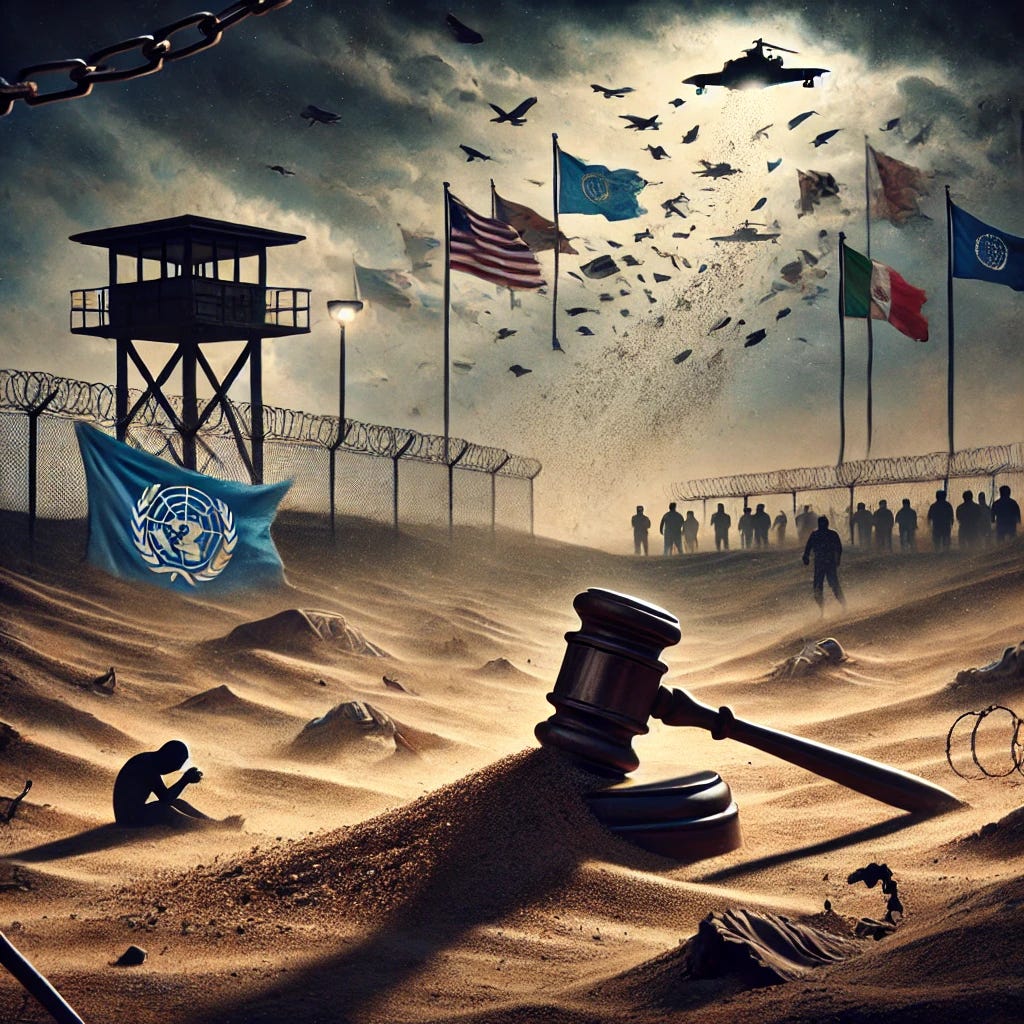
President Donald Trump sent a clear message by withdrawing the United States from the United Nations Human Rights Council (UNHRC) in February 2025: his administration no longer feels bound by international human rights standards. But this decision is not an isolated move. When examined alongside his comments about razing Gaza, his administration’s expansion of Guantánamo Bay for migrant detention, the outsourcing of U.S. prisoners to El Salvador, and Project 2025’s blueprint for authoritarian governance, a pattern emerges. This is not just an abandonment of international norms—it is an embrace of policies that justify and encourage human rights abuses at home and abroad.
The Coffman Chronicle is powered by YOU—no billionaires, no corporate overlords. Help us keep exposing the BS, delivering sharp insights, and keeping you informed.
For just $8 a month or $80 a year, you can fuel the fight and be part of the movement.
Not ready to subscribe? No worries, chaos loves company, and you're always welcome. But if you’re fired up to keep us loud, proud, and unfiltered, smash that subscribe button now!
Project 2025 and the Rise of Authoritarianism
Trump’s decision to withdraw from the UNHRC aligns with Project 2025's agenda. The plan aims to expand executive power, weaken regulatory agencies, and gut institutions that oversee government actions, including those that ensure human rights protections.
Withdrawing from the UNHRC is a textbook authoritarian move. When nations like China and Russia face scrutiny for human rights violations, their typical response is to delegitimize international bodies rather than cooperate. Trump is following the same playbook, ensuring that his administration’s policies—immigration, foreign wars, and law enforcement—are shielded from international criticism.
The Global Impact: Ukraine and Gaza
The UNHRC plays a key role in investigating war crimes and holding violators accountable. By exiting, Trump is sending a signal that the U.S. will no longer play a leading role in defending human rights abroad—including in places like Ukraine.
Ukraine relies on international pressure and Western support to counter Russia’s ongoing aggression. Without the U.S. pushing human rights concerns, Russia is further emboldened to commit war crimes with impunity.
Similarly, Trump’s statements regarding Gaza and refusal to acknowledge Palestinian civilian suffering show that his administration is comfortable with large-scale human rights abuses as long as they serve political goals. His recent statements suggest he is comfortable with others committing abuses and willing to participate or even lead them.
His administration’s withdrawal from the UNHRC removes a key forum where these violations could be addressed, giving a blank check to nations to continue their most extreme policies.
Immigration, Guantánamo Bay, and the Criminalization of Migrants
Trump’s human rights retreat is not just about foreign policy—it is also about what happens inside U.S. borders. His administration’s immigration policies have become increasingly draconian, criminalizing migrants at an unprecedented scale:
ICE raids have intensified, targeting communities indiscriminately. Families are torn apart without due process, and citizens are caught in the dragnets.
Guantánamo Bay, a facility notorious for indefinite detention and torture, is now being repurposed to detain migrants—some of whom haven’t committed any crime beyond seeking asylum.
The administration is actively considering sending American citizens convicted of violent crimes to El Salvador in a pay-for-incarceration scheme, outsourcing imprisonment to a country with a history of human rights abuses in its prison system.
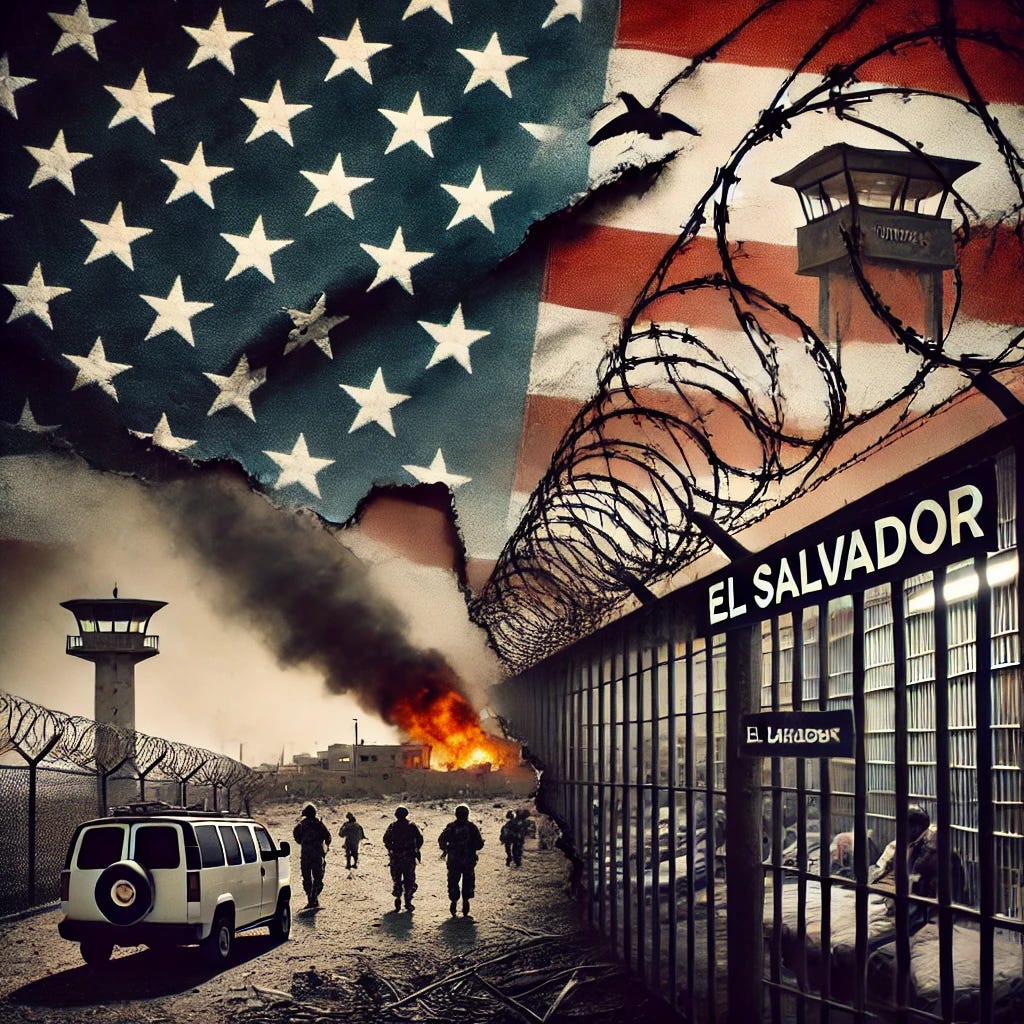
This outsourcing of detention and incarceration is particularly alarming. The U.S. has never before sent its citizens to foreign prisons as a matter of policy. Doing so would set a dangerous precedent, opening the door to a future where citizens can be stripped of their rights and sent abroad for punishment—a hallmark of dictatorial regimes.
Encouraging Human Rights Abuses Through Policy Choices
The unifying theme in these moves is that the U.S. is abandoning its commitment to human rights while legitimizing authoritarian tactics.
Withdrawing from the UNHRC means the U.S. will no longer pretend to care about international accountability.
Pushing for mass deportations and detentions undercuts legal norms and creates a system where people can be imprisoned without trial.
Supporting the razing of Gaza normalizes collective punishment and war crimes.
Allowing El Salvador to house American prisoners for a “small fee” turns incarceration into a commodity and sidesteps U.S. legal protections.
The U.S. is on the path to becoming a country that not only tolerates but actively participates in human rights violations.
What This Means for the Future
America has long positioned itself as a leader in global human rights, even when its actions did not always match its rhetoric. Under Trump, the gap between U.S. policy and human rights principles is no longer just hypocrisy—it’s a deliberate rejection of those principles altogether.
If the U.S. officially turns its back on human rights, it will not only harm those directly affected (migrants, civilians in war zones, political dissidents) but will also reshape the world order:
Autocratic regimes will be emboldened, knowing that the U.S. will not intervene.
Allies will distance themselves, preferring to work with nations that uphold democratic values.
Domestic repression will increase as fewer checks exist to stop government overreach, indefinite detention, and mass surveillance.
This is not just about one policy but a systematic shift toward authoritarianism. The U.S. is walking away from human rights protections and replacing them with a government that operates with impunity. If this trajectory continues, America will no longer be a democracy that champions human dignity—but a nation that discards it as a political inconvenience.