


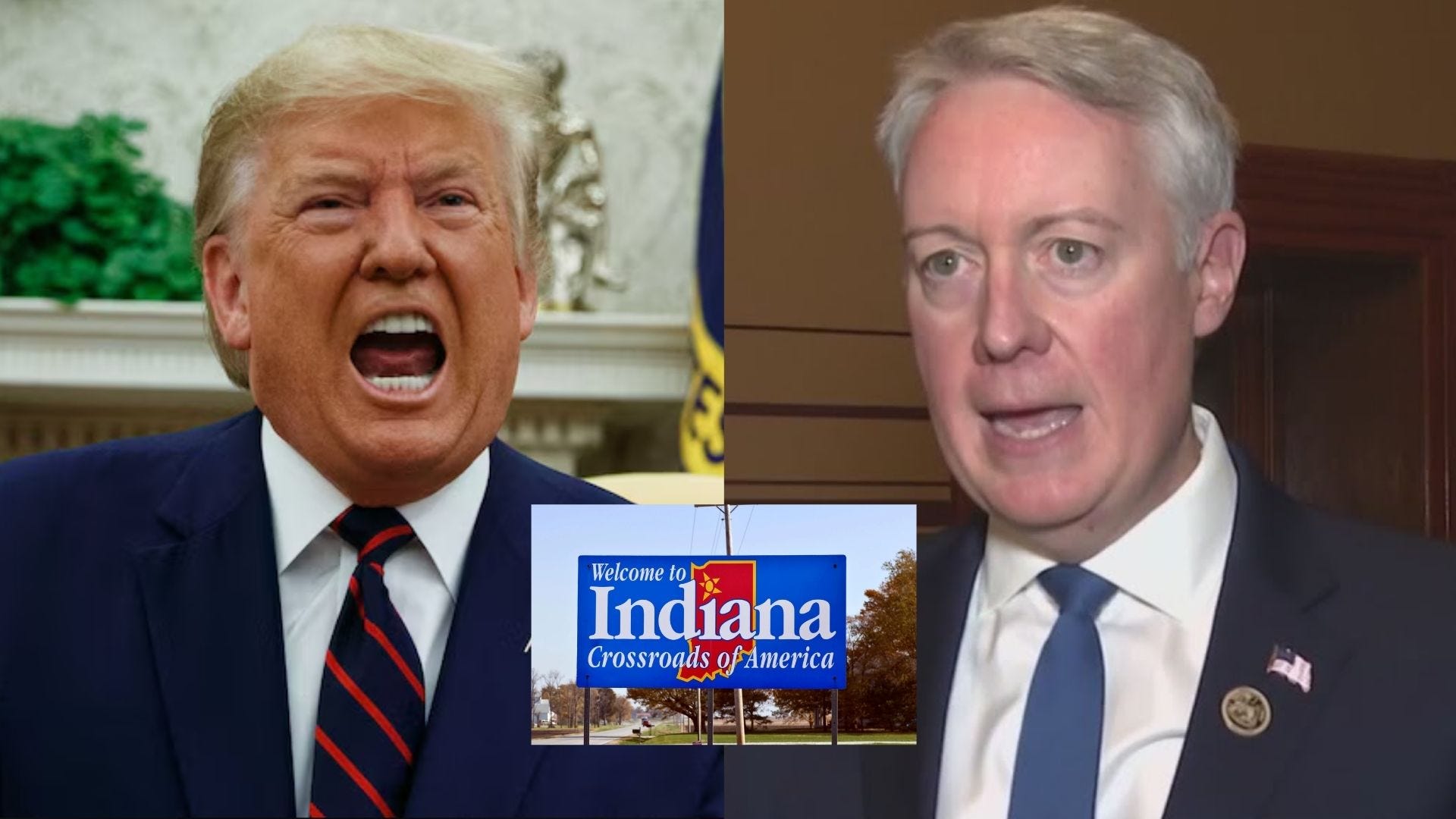
An Indiana Republican lawmaker says he’s facing threats of “violence at my home” after being publicly targeted by President Donald Trump, marking a new escalation in the political backlash aimed at Republicans who break with Trump’s agenda.
Follow The Coffman Chronicle on NewsBreak for daily breaking political coverage.
State Sen. Greg Goode, a Republican from Vigo County, was among several Indiana lawmakers criticized by Trump over redistricting. Shortly after Trump’s post, police responded to a swatting incident at Goode’s home — a fake emergency call intended to trigger an armed law-enforcement response. No one was harmed, but investigators confirmed the call was fraudulent.
Goode reported receiving additional warnings suggesting potential violence at his residence, calling the situation “reflective of the volatile nature of our political climate.” Law enforcement is continuing to investigate.
Indiana officials say Goode is not alone. At least eight Republican lawmakers in the state have reported harassment, threatening messages, or swatting attempts following Trump’s public attacks on GOP members who didn’t align with him on key issues. The governor’s office has acknowledged the pattern and confirmed multiple ongoing security reviews.
The incident highlights a growing trend: political rhetoric turning into real-world intimidation. While threats against public officials have risen nationwide, this case underscores how Trump’s criticism can spur backlash not just against Democrats, but against Republicans within his own party.
Goode has not directly blamed Trump for the threats, but the timing has raised concern among state leaders about how online targeting can escalate into safety risks for elected officials and their families.
Local authorities have urged the public to report suspicious activity and emphasized that swatting is a criminal offense. No arrests have been announced.
The situation leaves Republicans in Indiana navigating both political pressure from Trump and heightened personal security concerns — a sign of how intense intra-party conflicts have become heading into the 2026 election cycle.