


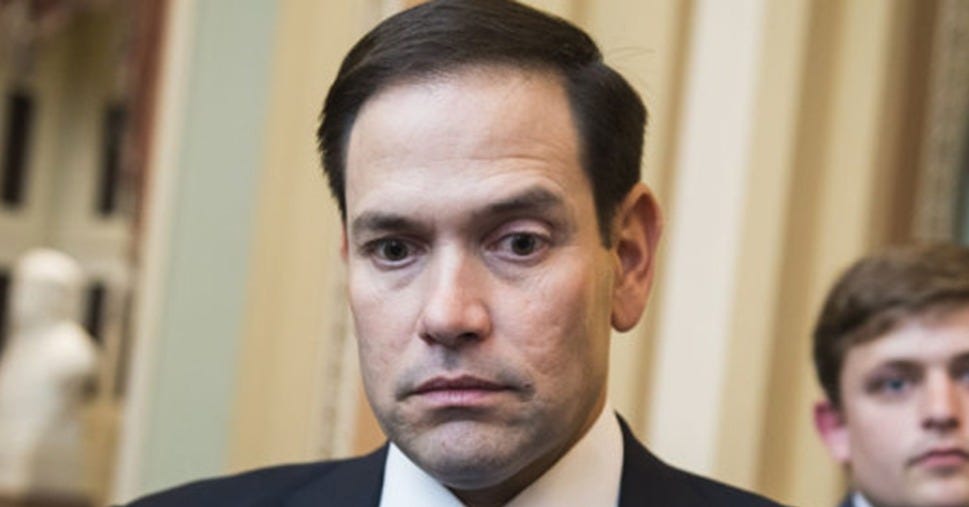
A resurfaced 2014 video of then–Sen. Marco Rubio, now serving as U.S. secretary of state, criticizing the West’s response to Russia’s first invasion of Ukraine is drawing renewed attention amid fresh U.S.-led peace talks involving Kyiv and Moscow.
The clip, dated March 25, 2014, shows Rubio arguing on the Senate floor that Ukraine’s security was tied to its decision to give up the world’s third-largest nuclear arsenal following the collapse of the Soviet Union. Ukraine agreed to transfer its nuclear weapons to Russia in the 1990s in exchange for security assurances under the Budapest Memorandum, signed by the United States, the United Kingdom, and Russia.
In the footage, filmed shortly after Russia’s annexation of Crimea, Rubio warned that failing to support Ukraine would represent a moral failure and undermine global nuclear nonproliferation efforts. He argued that abandoning Ukraine after it complied with denuclearization agreements would send a dangerous message to other nations weighing whether to surrender nuclear capabilities.
The Budapest Memorandum, signed in 1994, committed its signatories to respect Ukraine’s sovereignty and territorial integrity and to refrain from the use of force or economic coercion. It did not, however, constitute a formal mutual defense treaty or obligate automatic military intervention. Russia has been widely accused of violating the agreement through its actions in Crimea in 2014 and its full-scale invasion of Ukraine in 2022.
Follow The Coffman Chronicle on NewsBreak for daily breaking political coverage.
The clip has resurfaced amid U.S.-led peace efforts during President Donald Trump’s second term. Trump recently described talks with Ukrainian President Volodymyr Zelenskyy as productive, while emphasizing efforts to avoid deploying U.S. troops or committing to open-ended military aid.
Rubio’s more recent public comments have focused on limiting prolonged U.S. involvement in the conflict, framing the war as primarily a European security issue and calling for a negotiated settlement. That shift has drawn criticism from some Ukraine supporters, who contrast his current stance with his 2014 warnings about U.S. credibility and international commitments.
Supporters of the current approach argue that the Budapest Memorandum offered political assurances rather than binding defense obligations and that seeking a negotiated resolution is preferable to continued escalation. Online debate over the resurfaced clip remains polarized as diplomacy continues to evolve.
Follow The Coffman Chronicle on NewsBreak for daily breaking political coverage.