


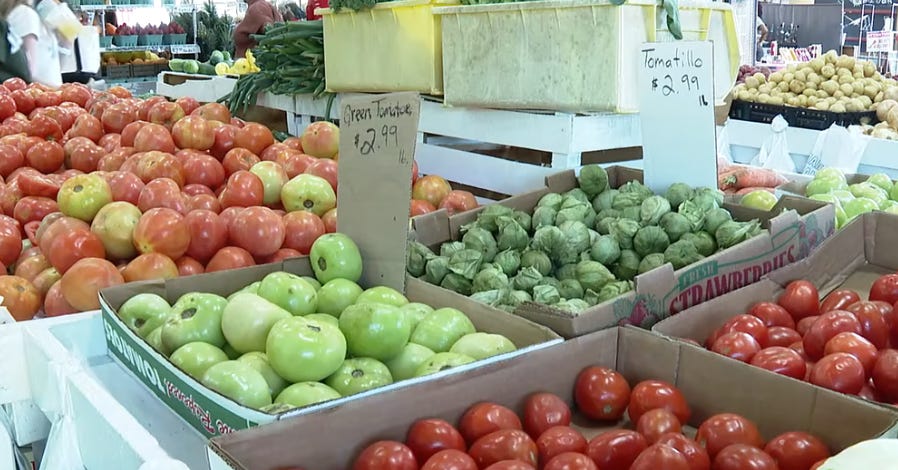
Southern California restaurants and farmers are facing new pressure from rising produce costs, and tomatoes have become one of the clearest examples of how farm inflation can move through the American economy.
CBS News Los Angeles reported that local restaurants and farmers are dealing with higher produce costs tied to transportation, tariffs, fuel, packaging, and other expenses.
Federal data shows the pressure is not just anecdotal. Tomatoes were up 39.7% year over year and rose 15.3% in March, according to the Bureau of Labor Statistics. Fresh vegetables were up 11.5% year over year.
USDA data shows the strain starts earlier in the supply chain. Farm-level fresh vegetable prices were 49% higher in March 2026 than in March 2025, and USDA forecast farm-level vegetable prices to rise 16.4% in 2026.
That matters because restaurants do not buy food the way households do. They need large volumes, consistent quality and reliable delivery. When costs rise quickly, owners may have to raise menu prices, change recipes, reduce portions or absorb weaker margins.
Subscribe free for daily political analysis they won’t broadcast. Join 110K+ readers →
The issue is also gaining attention online. In a Reddit discussion about rising tomato prices, users talked about grocery costs, farmers market prices and growing tomatoes at home. One commenter described seeing restaurant-supply tomato prices jump sharply in recent months.
The social reaction does not prove the price trend by itself. But it shows why the story resonates Food inflation is one of the most visible forms of inflation because people encounter it every week.
The economic consequence is plain. Higher farm costs can become higher grocery prices, higher restaurant costs and tighter household budgets. For farmers and restaurants, the cost of produce does not stay on the farm.
Subscribe free for daily political analysis they won’t broadcast. Join 110K+ readers →