


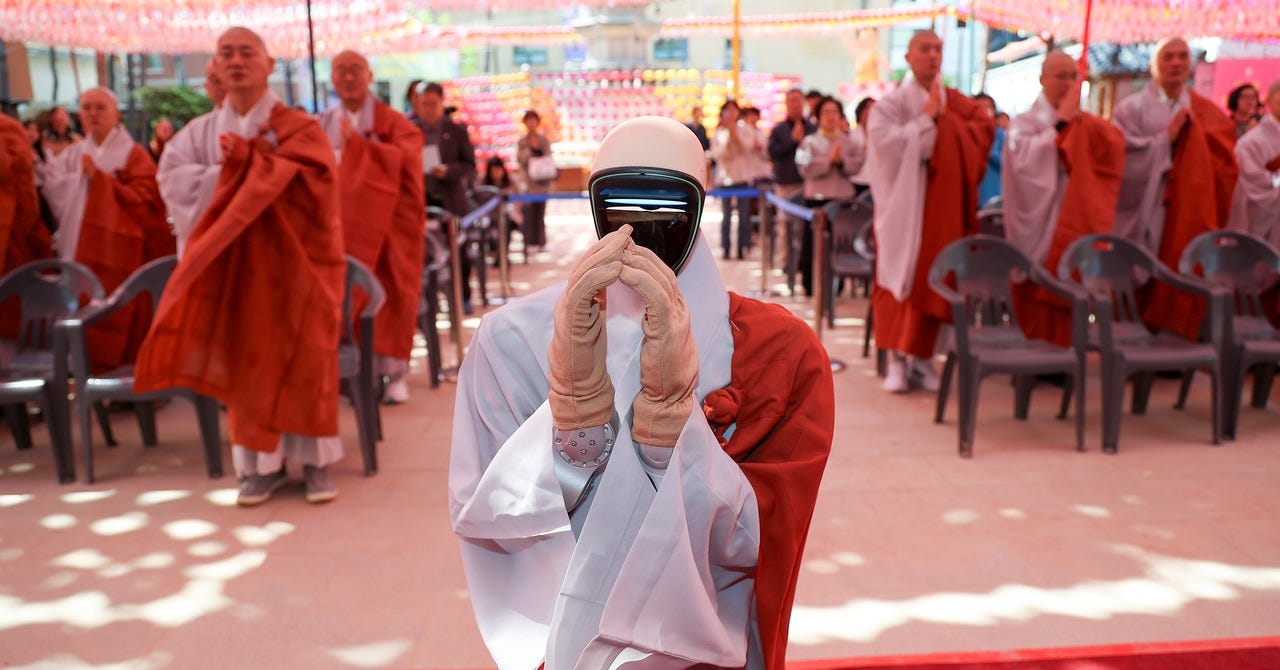
A humanoid robot named Gabi has gone viral after taking part in a Buddhist precept ceremony in Seoul, but the larger issue is not whether a machine can become spiritual.
It is whether robots are moving into human spaces faster than workers and institutions can adapt.
Gabi appeared at Jogye Temple during a ceremony held by the Jogye Order of Korean Buddhism, South Korea’s largest Buddhist order. The 1.3-meter robot wore ceremonial robes, bowed before monks, received a 108-bead rosary and answered ritual questions during the event.
The robot was also given modified Buddhist precepts written for machines. They included respecting life, not damaging other robots or objects, avoiding deceptive behavior and conserving energy by not overcharging.
That does not mean Gabi replaced a monk. Khaosod English reported that Gabi was ordained as a lay follower, not a fully ordained monk, though the robot is expected to serve a symbolic “honorary” monk role during the upcoming festival season.
Subscribe free for daily political analysis they won’t broadcast. Join 110K+ readers →
Still, the image is powerful because it comes as AI and robotics are forcing a wider labor debate. BCG estimates that 50% to 55% of U.S. jobs could be reshaped by AI over the next two to three years, while 10% to 15% could eventually be vulnerable to elimination. The firm also cautions that its analysis is not an unemployment forecast.
That context changes how the Gabi story reads. A robot in a temple may look harmless, even charming. But it also shows how quickly machines are being introduced into roles involving presence, trust, performance and human interaction.
The Seoul ceremony did not create a labor crisis. It did, however, give the AI job-loss debate a striking new symbol: a robot stepping into one of society’s oldest human rituals.
Subscribe free for daily political analysis they won’t broadcast. Join 110K+ readers →