


Public fears of nuclear war are rising again as fighting between the United States, Israel, and Iran escalates across the Middle East.
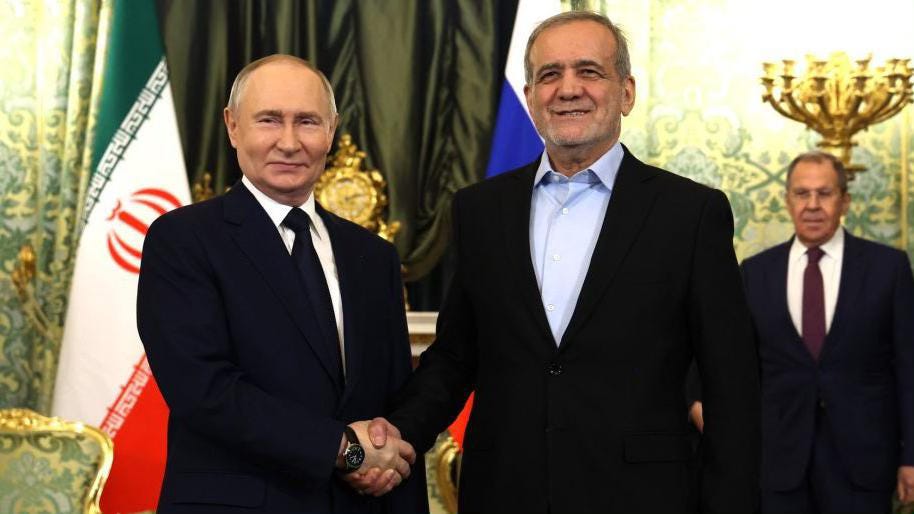
The anxiety intensified after U.S. officials revealed that Russia may be sharing intelligence with Iran that could help locate American military assets in the region.
According to the Associated Press and the Wall Street Journal, Russian sources have allegedly provided information about U.S. ships and aircraft operating in the Persian Gulf. Officials believe the intelligence could assist Iranian missile or drone attacks, though the Kremlin denies direct involvement.
The conflict began Feb. 28 when U.S. and Israeli forces launched strikes against Iranian targets. Iran has since responded with waves of drone and missile attacks across the region, including one strike that killed six U.S. Army Reserve soldiers in Kuwait.
Subscribe free for daily political analysis they won’t broadcast. Join 117K+ readers →
“I don’t think a World War III is likely, but it’s not a crazy question,” historian Niall Ferguson said in a CBS News interview.
Experts say the deeper concern is what happens if nuclear weapons ever enter the conflict.
Research from nuclear risk organizations shows a single nuclear detonation in a major city could destroy infrastructure, overwhelm hospitals, and leave large areas contaminated by radiation. Emergency planners say even one blast could exceed the capacity of disaster response systems.
Subscribe free for daily political analysis they won’t broadcast. Join 117K+ readers →
The consequences would extend far beyond the immediate destruction. Scientists warn that even a limited nuclear exchange between nations could disrupt global climate and food systems, potentially triggering famine in parts of the world.
Government emergency plans assume that daily life would not simply continue the next day. Major evacuations, radiation sheltering, and military retaliation would likely dominate the first days after a nuclear detonation.
For now, analysts say the current conflict remains conventional — but the geopolitical stakes continue to rise.
Subscribe free for daily political analysis they won’t broadcast. Join 117K+ readers →