


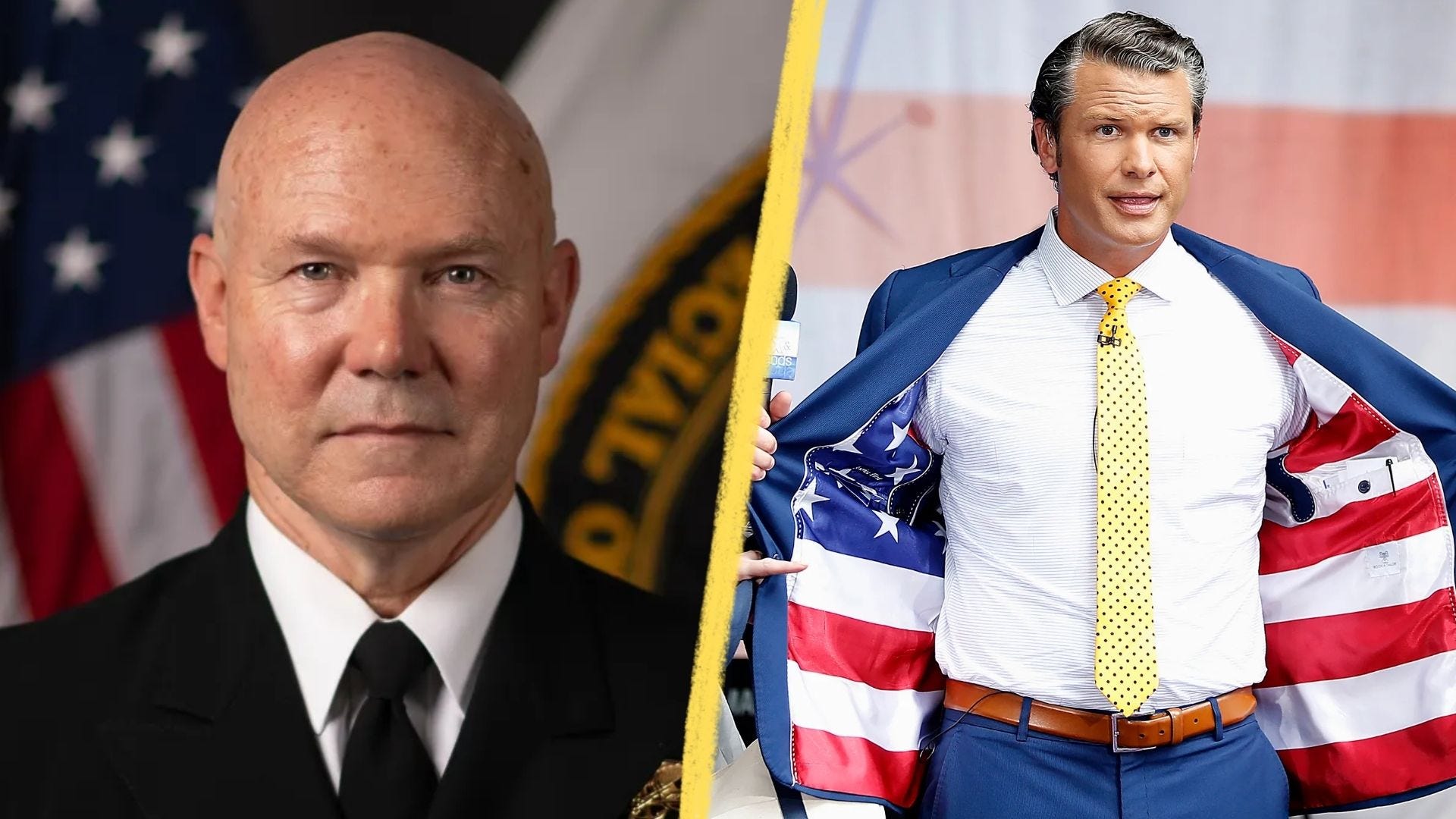
The White House confirmed Monday that Adm. Frank M. Bradley ordered the second strike on a suspected narcotics-smuggling vessel in the Caribbean — a follow-up hit that reportedly killed survivors from the first attack. But conflicting accounts from national-security reporters, leaked call notes, and earlier military reporting have now triggered a new central question: who actually issued the command that set the second strike in motion?
Follow The Coffman Chronicle on NewsBreak for daily breaking political coverage.
In the daily press briefing, Press Secretary Karoline Leavitt said Bradley “acted within his authority and the law” when he authorized the follow-up strike. She declined to address detailed reports that survivors were alive in the water when the second missile was fired, or whether that would violate the laws of armed conflict.
But the administration’s statement is now colliding with earlier reporting and leaked internal accounts.
A Washington Post investigation by national-security correspondent Alex Horton previously reported that Defense Secretary Pete Hegseth had given an overarching directive to “kill everyone” on board during the Sept. 2 interdiction mission. After the first strike left two people alive and “clinging to the wreckage,” a second strike was launched to “finish off” the remaining survivors, according to those reports.
Adding to the confusion, new details shared by defense analyst Shashank Joshi describe a secure conference-call briefing where Bradley allegedly told personnel that the survivors were still “legitimate targets” because they could “theoretically call reinforcements.” Legal scholars have called that justification highly questionable under the Geneva Conventions, which prohibit attacking shipwrecked or incapacitated individuals.
The White House has not clarified how Bradley’s claimed authority intersects with Hegseth’s earlier instructions — or whether either official was acting on guidance from the President. That ambiguity has become the key point of concern for lawmakers in both parties, who are preparing oversight inquiries to determine who in the chain of command ultimately authorized the lethal second strike.
With pressure growing for the release of drone footage, targeting assessments, and after-action reports, legal experts say the question of who gave which command, and when, will determine whether the mission fell within U.S. rules of engagement — or crossed into potentially unlawful territory.
Follow The Coffman Chronicle on NewsBreak for daily breaking political coverage.