


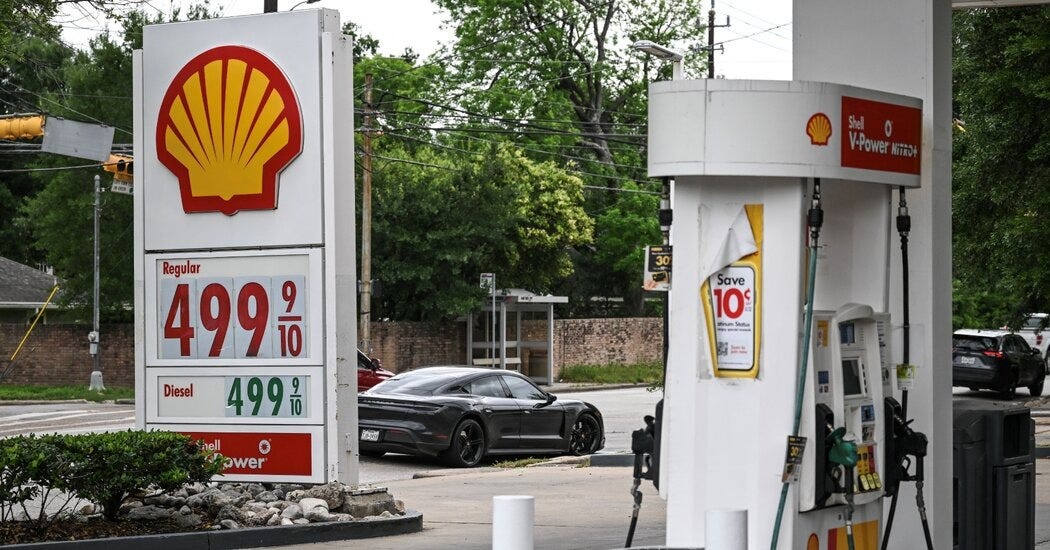
Shell reported a sharp first-quarter profit increase after oil prices surged during the Iran war, underscoring how global conflict can quickly move from energy markets into household and business costs across the United States.
The London-based oil giant posted $6.92 billion in adjusted earnings, beating analyst expectations and rising from $5.58 billion a year earlier, according to Reuters. Shell also raised its dividend by 5% while trimming its quarterly share buyback program to $3 billion.
The results reflect a central tension in the global economy. Energy companies can benefit when conflict drives up oil and gas prices, while consumers and businesses absorb the cost through higher fuel, shipping, and production expenses.
For Americans, the most immediate impact is gasoline and diesel. Higher crude prices can raise costs for commuters, truckers, airlines, farmers, delivery companies, and manufacturers. Those added costs can filter into grocery prices, travel, utilities, and everyday goods.
Subscribe free for daily political analysis they won’t broadcast. Join 110K+ readers →
That matters because inflation is already a key pressure point for U.S. households and policymakers. A new energy shock can make it harder for the Federal Reserve to feel confident that inflation is moving lower, especially if businesses pass transportation and fuel costs to consumers.
Shell’s earnings also revived criticism from climate and tax advocates who argue that oil companies are benefiting from wartime price spikes while consumers face higher bills. The Guardian reported fresh calls for windfall taxes after Shell’s profit increase.
The next question is whether oil prices stabilize or remain elevated. If volatility continues, the U.S. economy could face another round of energy-driven inflation pressure.
Subscribe free for daily political analysis they won’t broadcast. Join 110K+ readers →