


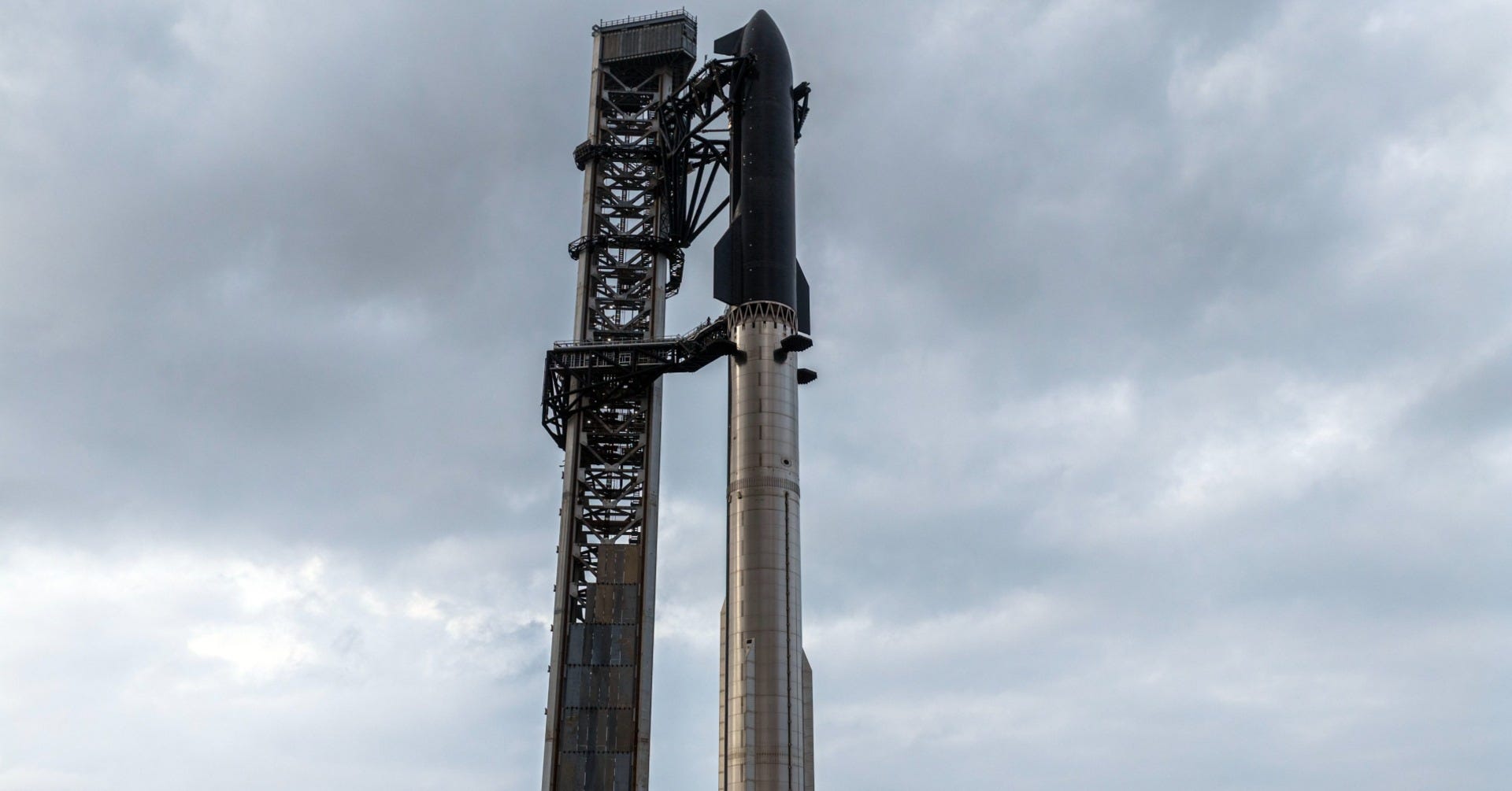
SpaceX is preparing to launch the first Starship V3 test flight from Starbase, Texas, in one of the company’s most closely watched rocket tests to date.
The flight is expected to test whether the upgraded Starship system can move closer to the reusable heavy-lift vehicle SpaceX says it needs for Moon missions, Mars ambitions, Starlink expansion and lower-cost access to orbit.
The test, known as Starship Flight 12, is targeted during a launch window opening at 6:30 p.m. EDT. SpaceX’s plan calls for the Super Heavy booster to perform launch, ascent, stage separation, boostback and landing-burn tests before splashing down offshore in the Gulf of Mexico. Starship is expected to continue on a suborbital path and splash down in the Indian Ocean.
The company does not plan to recover either stage on this flight. That makes the mission less about landing hardware and more about proving the redesigned system can survive major phases of flight.
Subscribe free for daily political analysis they won’t broadcast. Join 110K+ readers →
The stakes extend beyond SpaceX. NASA selected SpaceX’s Starship human landing system for Artemis lunar missions, and later awarded a second contract option to further develop Starship for long-term Moon exploration.
That makes today’s test a practical checkpoint for the future of U.S. space exploration. Starship still has to prove capabilities that are far more complex than a single launch, including repeated reuse, payload delivery, heat-shield reliability and eventually in-space refueling.
If the flight succeeds, SpaceX gains momentum toward turning Starship from a prototype into a working transportation system. If it fails, the company may still learn from the test, but pressure will grow around its timeline for NASA, commercial launches and Musk’s longer-term Mars plans.
Subscribe free for daily political analysis they won’t broadcast. Join 110K+ readers →