


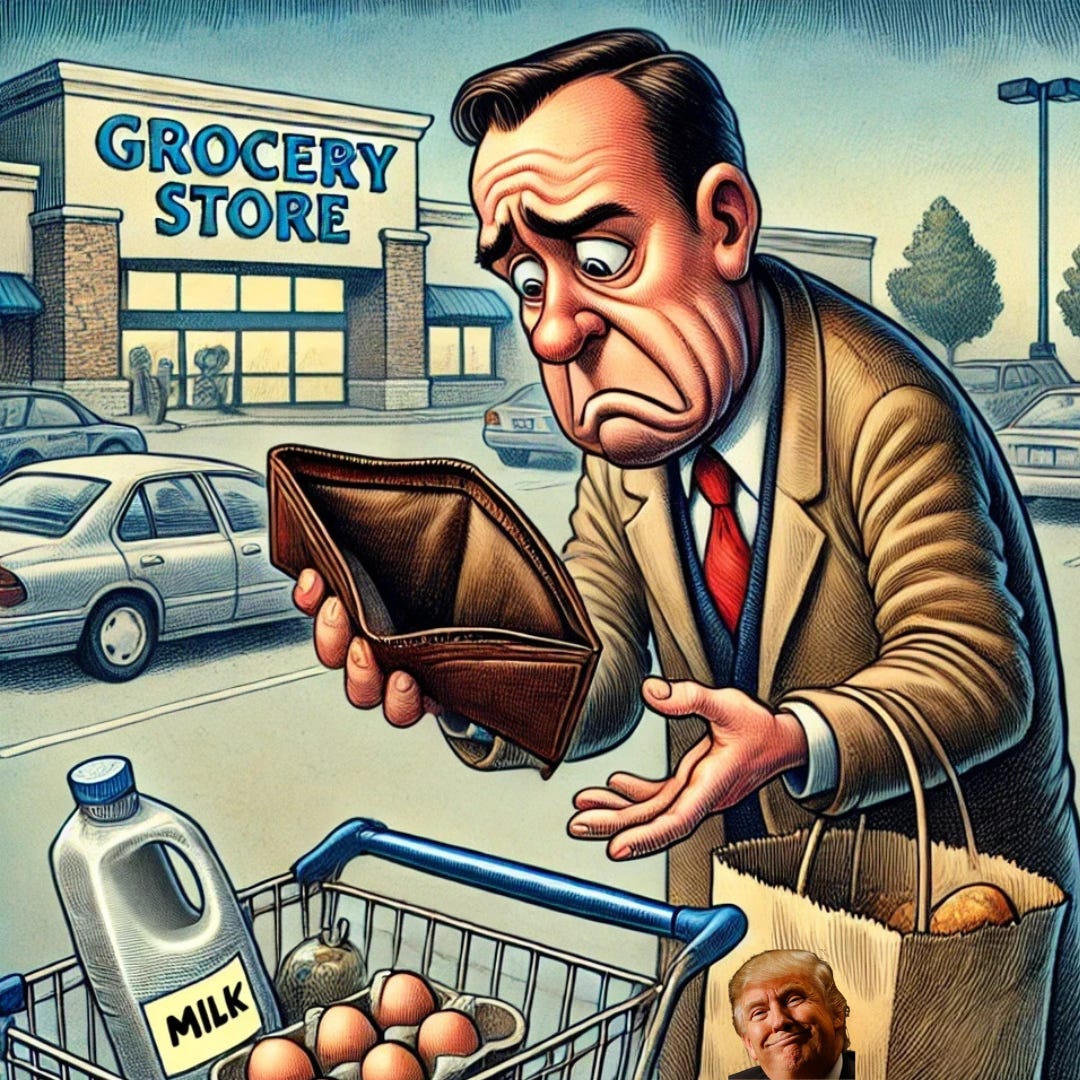
Grocery prices are rising again, leaving many Americans struggling to keep up with the cost of everyday essentials. While inflation has been a persistent issue in recent years, recent spikes in food prices are driven by supply chain disruptions, disease outbreaks, climate issues, and trade policies. The most affected products are eggs, coffee, chocolate, garlic, and beef—all of which have seen unusual price increases in the past six months. As these staples become more expensive, low-income families, seniors, small businesses, and ethnic communities bear the burden.
The Coffman Chronicle is powered by YOU—no billionaires, no corporate overlords. Help us keep exposing the BS, delivering sharp insights, and keeping you informed.
For just $8 a month or $80 a year, you can fuel the fight and be part of the movement.
Not ready to subscribe? No worries, chaos loves company, and you're always welcome. But if you’re fired up to keep us loud, proud, and unfiltered, smash that subscribe button now!
The Avian Flu Effect on Eggs and Poultry
Few grocery items have been hit harder than eggs, and a staggering 65% price increase has been seen in the last six months. The primary driver? A severe avian influenza (bird flu) outbreak has led to the culling of millions of egg-laying hens. It takes five to six months for new hens to produce eggs. This slow recovery means that egg shortages—and high prices—will likely persist for the foreseeable future.
Meanwhile, poultry prices have also increased, though not as dramatically. The reason? Broiler chickens have shorter life cycles, allowing the industry to recover more quickly from disruptions. Still, many consumers feel the squeeze at the checkout line as poultry prices continue rising.
Why Is Beef Getting More Expensive?
Beef prices have also been rising steadily due to multiple factors. Feed costs have surged, making it more expensive to raise cattle. Additionally, drought conditions in key cattle-producing states like Texas and Oklahoma have reduced herd sizes, limiting supply.
Another primary concern is Trump’s potential tariffs on Canadian and Mexican beef imports, which could further drive up prices. The U.S. imports a significant portion of its beef from these neighboring countries, and new trade policies could increase consumer costs (The Guardian). With beef already among the more expensive protein sources, further price hikes could push more shoppers toward cheaper alternatives like chicken or pork.
Coffee, Chocolate, and Climate Challenges
The morning routine is getting more expensive. Coffee prices are expected to rise by 20% in 2025. Droughts and unpredictable weather patterns in Brazil and Colombia, the world’s largest coffee producers, have severely impacted crop yields.
Similarly, chocolate lovers are facing sticker shock. Cocoa prices have tripled to $12,000 per ton due to poor harvests in West Africa, where most of the world’s cocoa is grown. Diseases affecting cocoa trees and extreme weather events have created a supply crisis that chocolate manufacturers and consumers now feel.
The Role of Trade and Immigration in Food Prices
Beyond disease and climate factors, trade policies also contribute to rising food costs. The U.S. relies heavily on imports of garlic, tomatoes, avocados, and peppers from Mexico and China. New tariffs on these imports are expected to raise prices significantly.
In addition, recent Immigration and Customs Enforcement (ICE) raids and threats of mass deportation have further strained the U.S. food supply. The agricultural sector heavily depends on undocumented workers, about 45% of farm labor. Increased enforcement actions have led to labor shortages in farming and food processing, which means that certain crops, particularly fresh produce like berries, tomatoes, and garlic, may go unharvested, leading to higher prices and supply shortages in the coming months.
Who’s Hit the Hardest?
Not all consumers are impacted equally by rising food prices. Some groups are disproportionately affected due to their economic status, dietary needs, or cultural food preferences:
Low-Income Families – Higher prices on eggs, beef, and garlic make it harder to afford nutritious meals.
Seniors on Fixed Incomes – Rising grocery prices force retirees to cut back on essential foods or switch to lower-quality alternatives.
Restaurant Owners & Small Businesses – Many food businesses rely on eggs, beef, garlic, coffee, and chocolate, making price increases particularly damaging.
Hispanic and Asian Communities – Garlic, beef, and tomatoes are staples in Mexican, Chinese, and Indian cuisines, meaning these communities will feel the impact more directly.
Coffee & Chocolate Consumers – Rising costs due to climate and supply chain issues mean lower-quality brands or reduced consumption for many.
Athletes & High-Protein Diet Followers – High beef and egg prices make it challenging to maintain protein-heavy diets.
Conclusion
The current rise in grocery prices is driven by a perfect storm of factors: avian flu, climate change, trade policies, and labor shortages. While some of these issues are temporary, others—like climate-driven crop failures—may have long-term consequences for food prices.
Trump’s tariff war and immigration policies promise to prolong this, and thus far, his administration has done little to combat avian flu. Unless policy changes address supply chain vulnerabilities, food prices will continue to rise, making it even harder for everyday Americans to afford the essentials.
Bibliography
NerdWallet – "Why Are Eggs So Expensive?"
Reuters – "Bird Flu Spurs Diner Chain Waffle House to Add 50-Cent Fee Per Egg"
ERS USDA – "Food Price Outlook, Summary Findings"
The Guardian – "Consumers Face Price Rises as Trade Experts Warn of Tariff Impacts"
AllRecipes – "Chocolate Prices Are Rising in 2025"
Food & Wine – "Trump Tariffs Could Drive Up Prices on Everyday Foods"
Investigate Midwest – "Mass Deportation Could Affect the Nation’s Food Supply"
Minnesota Reformer – "Mass Deportation and Its Impact on U.S. Food Prices"
The bottom line is Trump is a harbinger of doom. Trump left us with millions dead after his first go at the presidency, and now he’s just picking up where he left off.
Great, chocolate and coffee two of my very favorite things.