


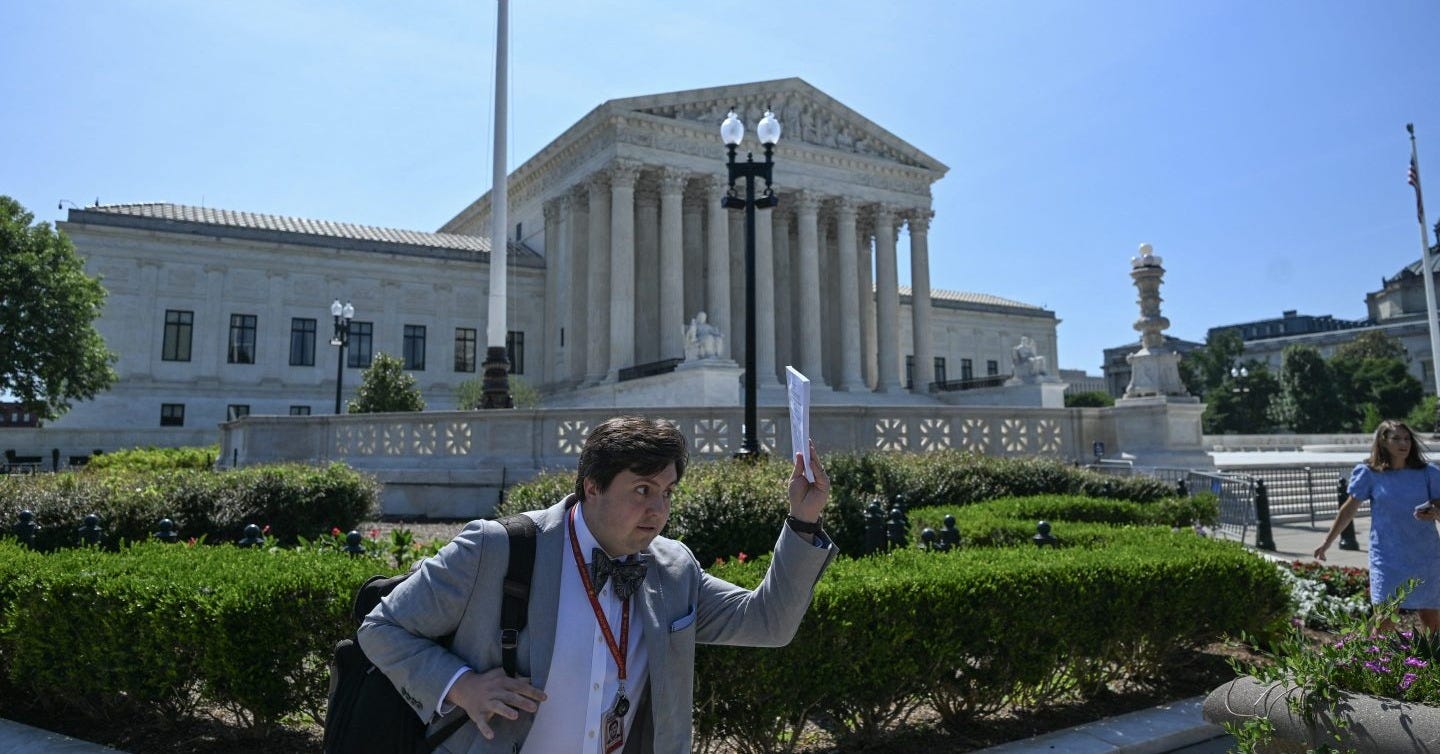
The Supreme Court rejected President Donald Trump’s attempt to restrict birthright citizenship, preserving automatic citizenship for children born in the United States to parents who are unlawfully or temporarily present.
The ruling in Trump v. Barbara held that those children are “subject to the jurisdiction” of the United States and are citizens at birth under the Fourteenth Amendment’s Citizenship Clause. The decision blocks an executive order that sought to deny citizenship based on a parent’s immigration status.
The legal consequence is immediate. The president cannot use that executive order to rewrite the constitutional rule for birthright citizenship.
The economic consequence is broader. A peer-reviewed study published through the Center for Migration Studies estimated that birthright citizenship beneficiaries will contribute about $7.7 trillion to the U.S. economy between 1975 and 2074, measured in 2024 dollars. The same research estimated major labor-force contributions tied to those beneficiaries.
Subscribe free for daily political analysis they won’t broadcast. Join 110K+ readers →
That number should be read carefully. The Court did not hand the economy $7.7 trillion overnight. Instead, the ruling preserved a citizenship framework that researchers say is tied to long-term income, labor participation, and workforce development.
The Trump administration argued that children born to parents unlawfully or temporarily present were not covered by the Citizenship Clause. Dissenting justices also disputed the majority’s interpretation, arguing for a narrower reading of who is “subject to the jurisdiction” of the United States.
The decision keeps the constitutional baseline intact while leaving future fights over immigration enforcement, birth tourism, and citizenship policy to Congress, agencies, and the courts.
Subscribe free for daily political analysis they won’t broadcast. Join 110K+ readers →