


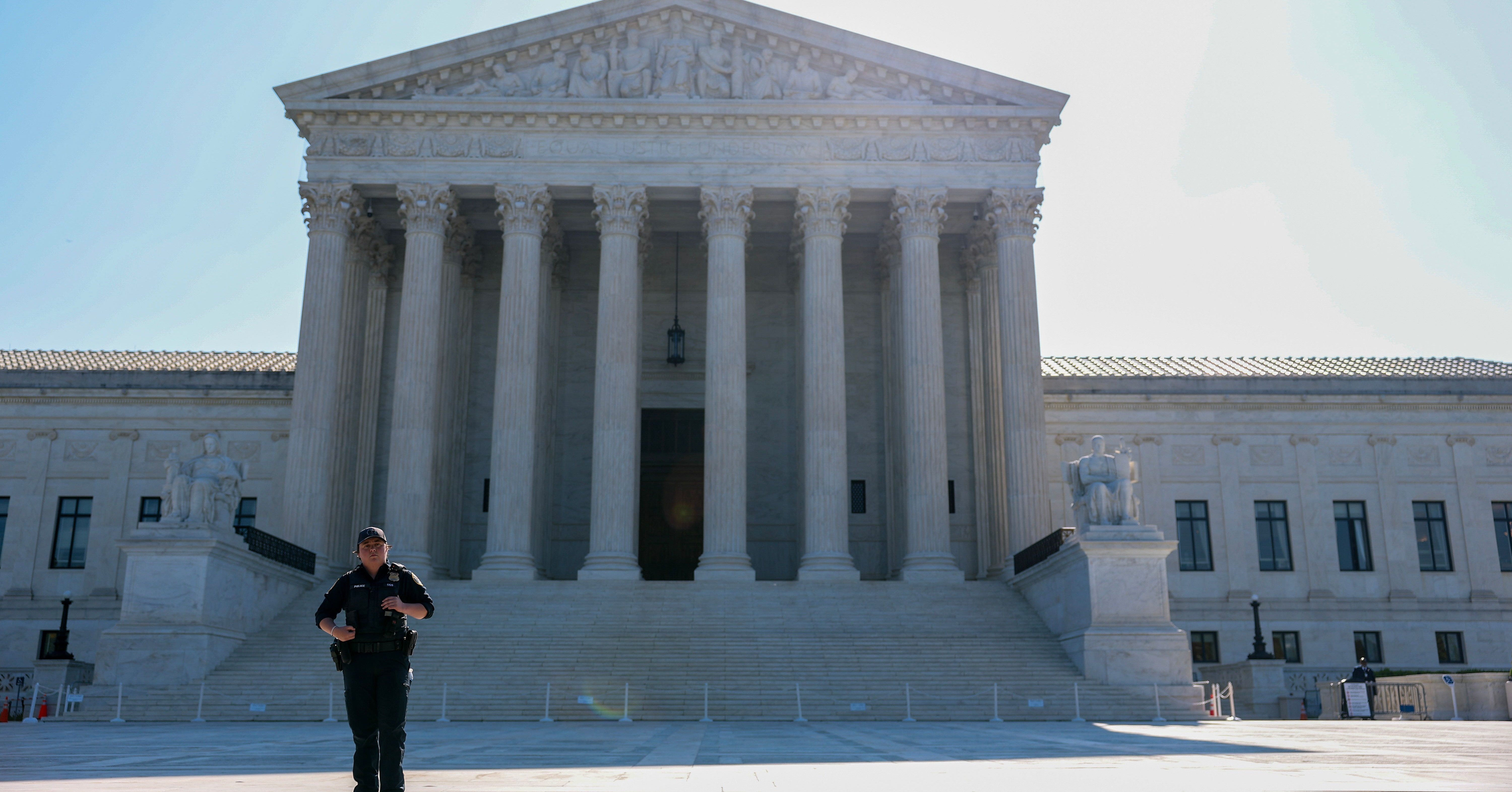
The U.S. Supreme Court declined Thursday to allow Alabama to execute death row inmate Jeffery Lee by nitrogen hypoxia, leaving intact lower-court rulings that found the state’s execution protocol unconstitutional. The 6-3 order came hours after Lee’s execution had been scheduled to begin and effectively halted what would have been another use of Alabama’s controversial nitrogen gas method.
The ruling represents a significant legal obstacle for Alabama, which became the first state to use nitrogen hypoxia in 2024 and has promoted the method as an alternative to lethal injection. Federal courts reviewing Lee’s challenge concluded that the protocol creates a substantial risk that inmates experience severe air hunger, anxiety, and physical distress before losing consciousness, violating the Eighth Amendment’s ban on cruel and unusual punishment.
Subscribe free for daily political analysis they won’t broadcast. Join 110K+ readers →
Lee was convicted in the 1998 killings of Jimmy Ellis and Elaine Thompson during a pawnshop robbery near Orrville, Alabama. Although jurors recommended a sentence of life without parole, a judge imposed the death penalty through Alabama’s former judicial override system, a practice the state ended in 2017.
Alabama Attorney General Steve Marshall criticized the outcome and pledged to continue pursuing Lee’s execution through lawful means. Death penalty opponents, meanwhile, described the ruling as a major development in ongoing litigation over nitrogen hypoxia.
The immediate effect is limited to Lee’s case, but the broader consequence could be far-reaching. Alabama has relied heavily on nitrogen hypoxia since adopting the method, and additional challenges are already pending. The Supreme Court’s refusal to intervene leaves unresolved constitutional questions that could eventually return to the justices in a future case.
Subscribe free for daily political analysis they won’t broadcast. Join 110K+ readers →