


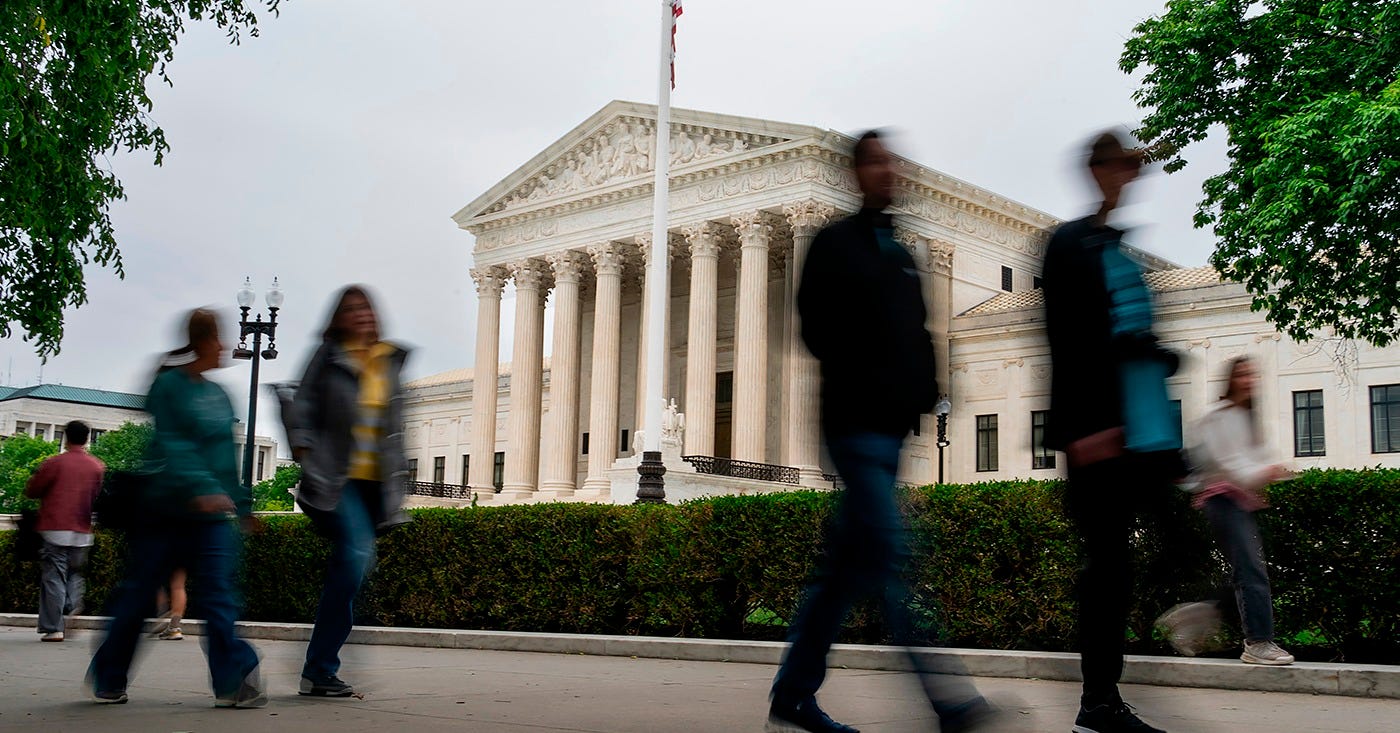
The U.S. Supreme Court declined to revive a Democratic-backed challenge involving Virginia’s congressional redistricting map, leaving the current district boundaries in place as both parties intensify preparations for the 2026 midterm elections.
The ruling immediately drew attention across political and election-law circles online, where strategists and voting-rights advocates described the decision as another sign that federal courts may remain reluctant to aggressively intervene in partisan map disputes.
That matters because congressional redistricting has become one of the most important, and least visible, battles shaping control of the U.S. House.
Even relatively small district changes can influence competitive races, fundraising strategy, voter turnout operations, and the balance of power in closely divided elections.
Subscribe free for daily political analysis they won’t broadcast. Join 110K+ readers →
The Virginia dispute is part of a larger national fight that has continued long after the 2020 census, with both parties increasingly shifting their focus toward state courts, state constitutions, and localized election-law strategies ahead of 2026.
Political analysts now expect redistricting litigation to remain a major front in the next congressional power struggle.
Subscribe free for daily political analysis they won’t broadcast. Join 110K+ readers →