


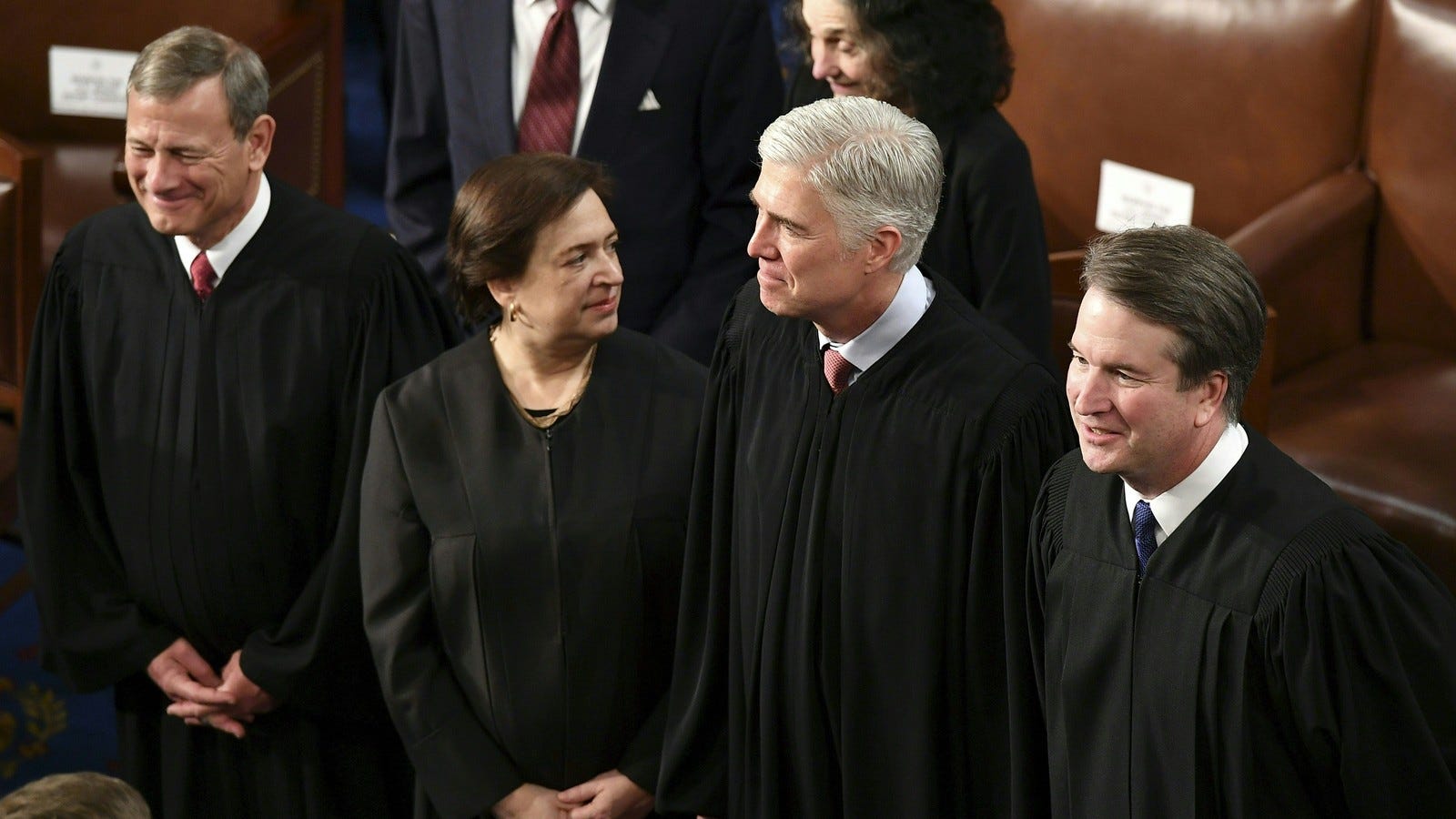
Chief Justice John Roberts could soon achieve what The Atlantic calls a lifelong legal objective: significantly weakening the Voting Rights Act, a cornerstone of U.S. civil-rights law.
The stakes are high as the Supreme Court weighs cases that could further limit how the landmark law is applied nationwide, raising concerns from voting-rights advocates and lawmakers alike.
According to The Atlantic’s David Daley, Roberts’s efforts date back to his first job at the Justice Department in 1982, where he shaped a strategy to reauthorize the Voting Rights Act in ways that would make enforcement difficult.
Roberts’s early work was just the start of what the article portrays as a long game, culminating in 2013’s Shelby County v. Holder, which effectively nullified a key federal oversight mechanism that required certain states to get approval before changing voting rules.
Follow The Coffman Chronicle on NewsBreak for daily breaking political coverage.
Now, with a conservative majority on the Court and cases pending that could redefine how the Voting Rights Act is interpreted, the possibility of further erosion has intensified political conflict in Washington.
“The chief justice has been working to neuter the Voting Rights Act since the beginning of his career,” the article states.
If the Court moves in that direction, voting rights litigation — especially challenges to laws alleged to dilute minority voting strength — could become much tougher.
Democrats and civil-rights groups have promised legislative responses, but without bipartisan support in Congress, potential reforms face long odds.
The next term’s decisions could come as early as spring or summer 2026.
For now, the nation watches whether Roberts’s once academic legal arguments will translate into sweeping changes affecting elections and representation.
Follow The Coffman Chronicle on NewsBreak for daily breaking political coverage.