


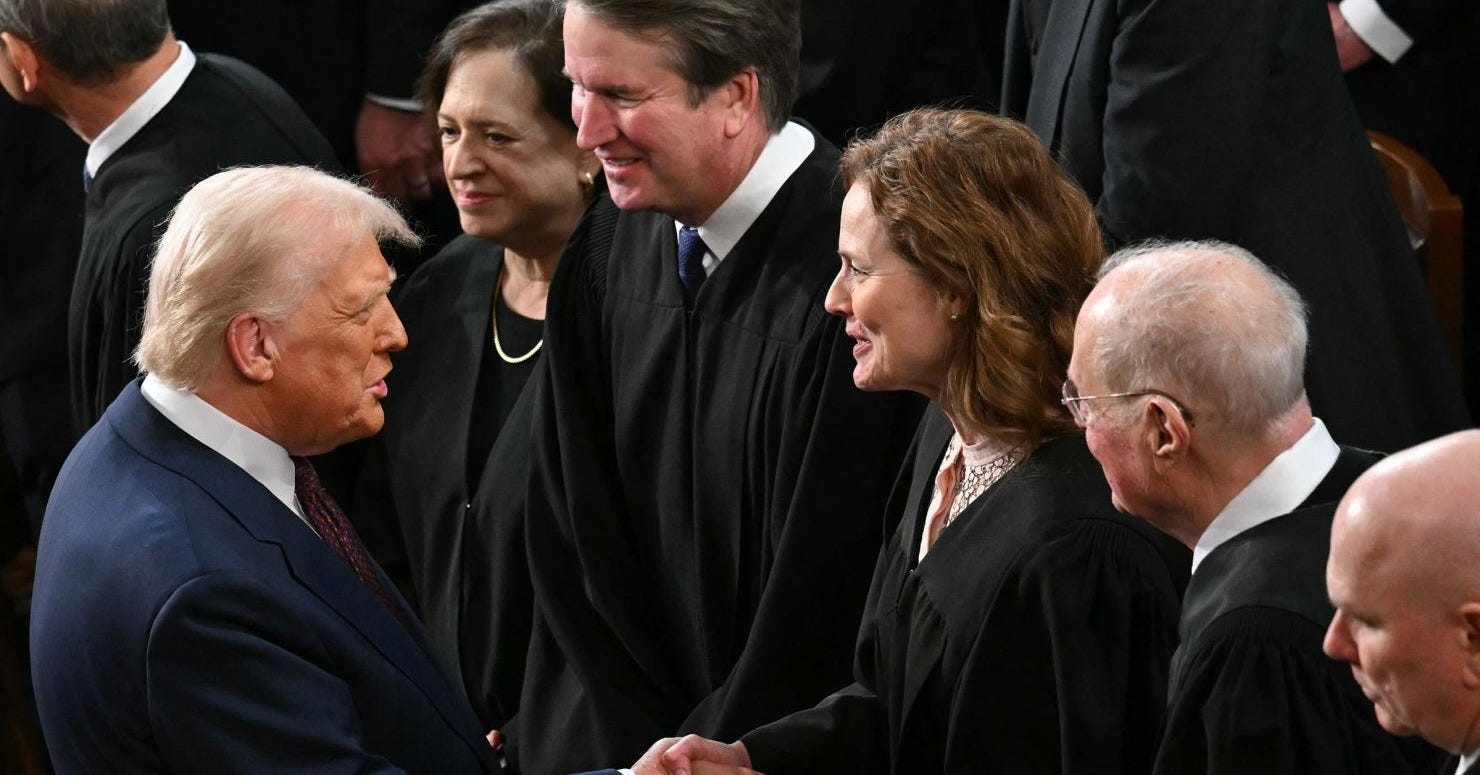
The U.S. Supreme Court has agreed to decide a high-stakes question about birthright citizenship in 2026, whether automatic citizenship for nearly all children born on U.S. soil is a constitutional right. According to legal trackers, Trump v. Barbara, a challenge to President Donald Trump’s executive order limiting birthright citizenship, is now on the Court’s docket.
The issue has sparked intense legal and political conflict over immigration policy and constitutional rights. Lower courts have blocked the executive order with preliminary injunctions, so it is not in effect, but the Supreme Court’s review puts the long-standing interpretation of the 14th Amendment’s Citizenship Clause at risk.
Multiple legal challenges from states and civil rights groups argue the order violates the 14th Amendment, which says “all persons born or naturalized in the United States…are citizens.” That language is central to the case before the justices.
Follow The Coffman Chronicle on NewsBreak for daily breaking political coverage.
The Trump administration asked the Court to fast-track review after lower courts repeatedly upheld blocks on its policy. Oral arguments are expected in the spring of 2026, with a ruling likely before early summer.
“A decision here will affect millions of families and the meaning of citizenship in the United States,” said a constitutional law expert.
This decision matters because it could reshape immigration policy, redefine constitutional citizenship rights, and set a precedent for how far presidential executive action can go. The outcome will be closely watched across the country, with impacts potentially reaching far beyond this term. A Supreme Court ruling is expected before July 2026.
Follow The Coffman Chronicle on NewsBreak for daily breaking political coverage.