


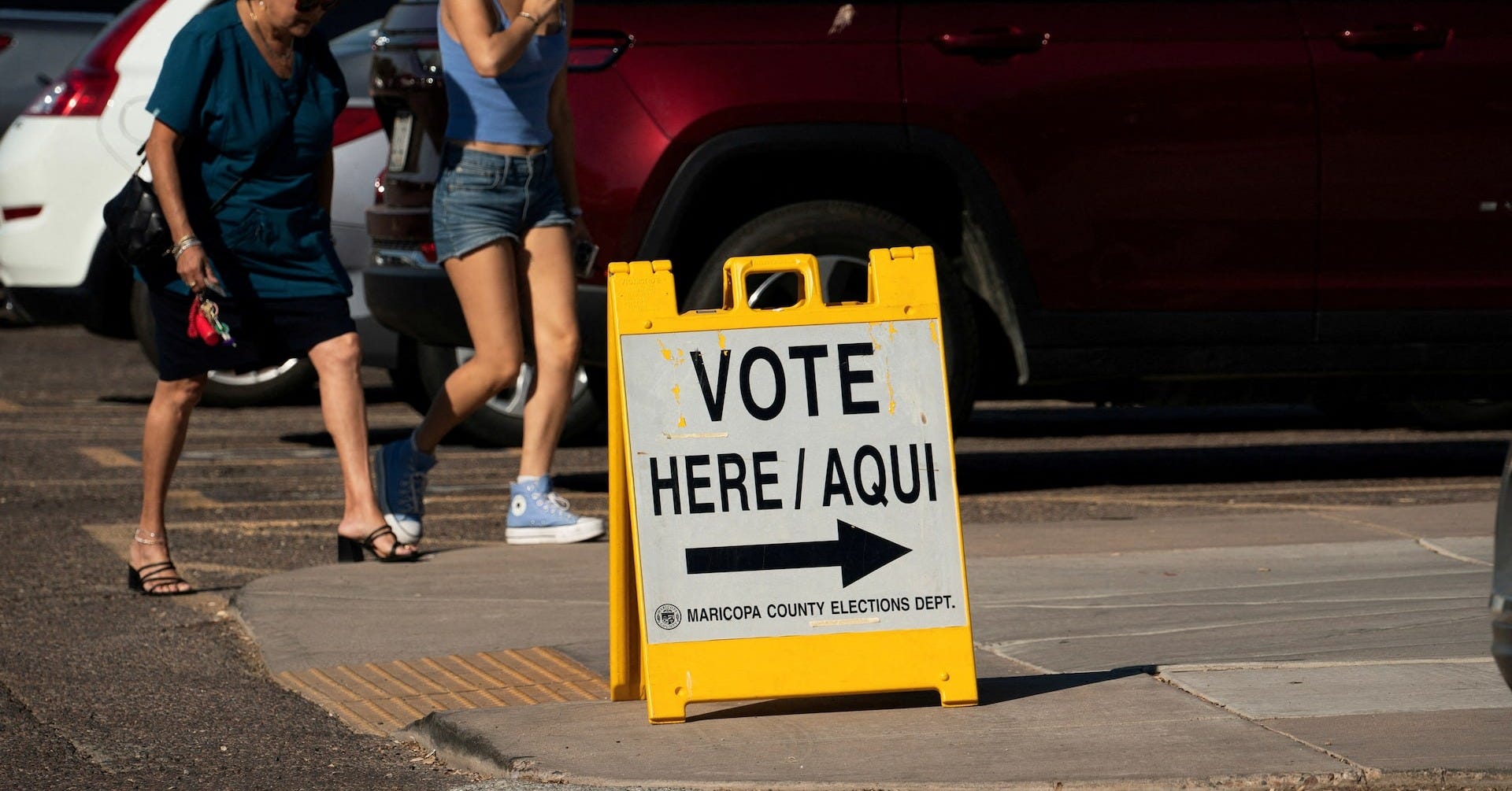
The Supreme Court agreed Monday to hear a Republican-backed appeal seeking to revive Arizona voting restrictions that require documentary proof of citizenship for certain voter registrations and allow voter-roll removals when citizenship cannot be confirmed.
The case centers on whether Arizona’s 2022 election law conflicts with the National Voter Registration Act, the federal law that governs registration procedures for federal elections. Lower courts blocked key parts of the Arizona law after finding the provisions violated federal voting protections.
The RNC’s petition asks whether federal law or a prior consent decree prevents Arizona from requiring “satisfactory evidence” of U.S. citizenship on the state registration form. It also asks whether federal law blocks Arizona from canceling registrations within 90 days of a federal election when officials conclude a voter is not a citizen.
The practical stakes are clear. A ruling for Arizona Republicans could give states more room to demand documents such as passports or birth certificates during parts of the registration process. A ruling against them would reinforce federal limits on state voting rules.
Subscribe free for daily political analysis they won’t broadcast. Join 110K+ readers →
Republicans argue the Arizona law is needed to protect election integrity. Former Arizona Gov. Doug Ducey said when signing the law that election integrity requires counting lawful votes and preventing illegal voting attempts. Critics argue the law creates extra voting barriers and disproportionately affects Latino, Native American and student voters.
AP reported that the Supreme Court previously allowed part of Arizona’s proof-of-citizenship requirement to take effect temporarily for state and local elections, but not federal races. The court is expected to hear arguments in the fall and issue a decision after the midterm elections.
The case now becomes one of the next major Supreme Court tests over how much control states have over election rules when federal voting law points in another direction.
Subscribe free for daily political analysis they won’t broadcast. Join 110K+ readers →