


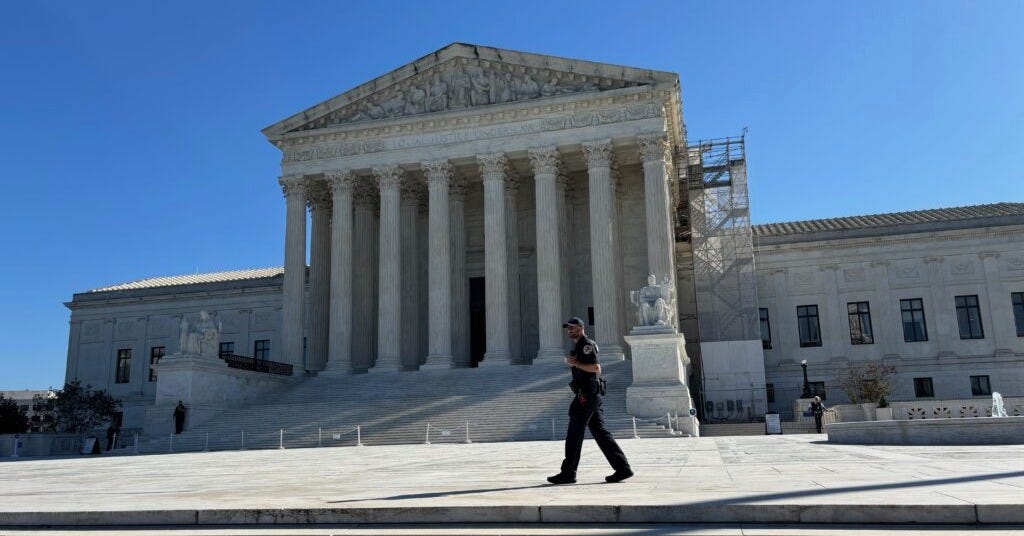
The Supreme Court has delivered a ruling that could reshape modern voting rights battles, narrowing a key pathway used for decades to challenge racial vote dilution.
The 6-3 decision centered on Louisiana maps, but its stakes reach nationally as states weigh how far race can factor into redistricting.
The tension is larger than one case.
Supporters say the ruling reins in unconstitutional racial line-drawing.
Critics say it weakens one of the last strong protections of the Voting Rights Act and could open new fights over minority representation.
According to reporting from Reuters and The Washington Post, the court raised the threshold for Section 2 claims while stopping short of eliminating the provision outright.
Subscribe free for daily political analysis they won’t broadcast. Join 110K+ readers →
That lands in a country with a long history of voting-rights reversals.
From post-Reconstruction suppression to literacy tests, from Selma to the Voting Rights Act, and from Shelby County to current redistricting disputes, the struggle has often advanced and retreated through courts.
Now a new contradiction emerges.
The ruling may intensify partisan map battles even as it restricts one of the tools used to challenge them.
“Under the Court’s new view, a State can dilute minority voting power,” Justice Elena Kagan wrote in dissent.
That warning could fuel fresh litigation and political fallout.
Civil rights groups may test the ruling in future cases, while lawmakers could renew pressure for federal voting protections.
What happens next may depend less on this decision alone than on whether another chapter in America’s long voter-rights fight moves back to Congress, or back to the streets.
The conflict did not end with this ruling.